
Title
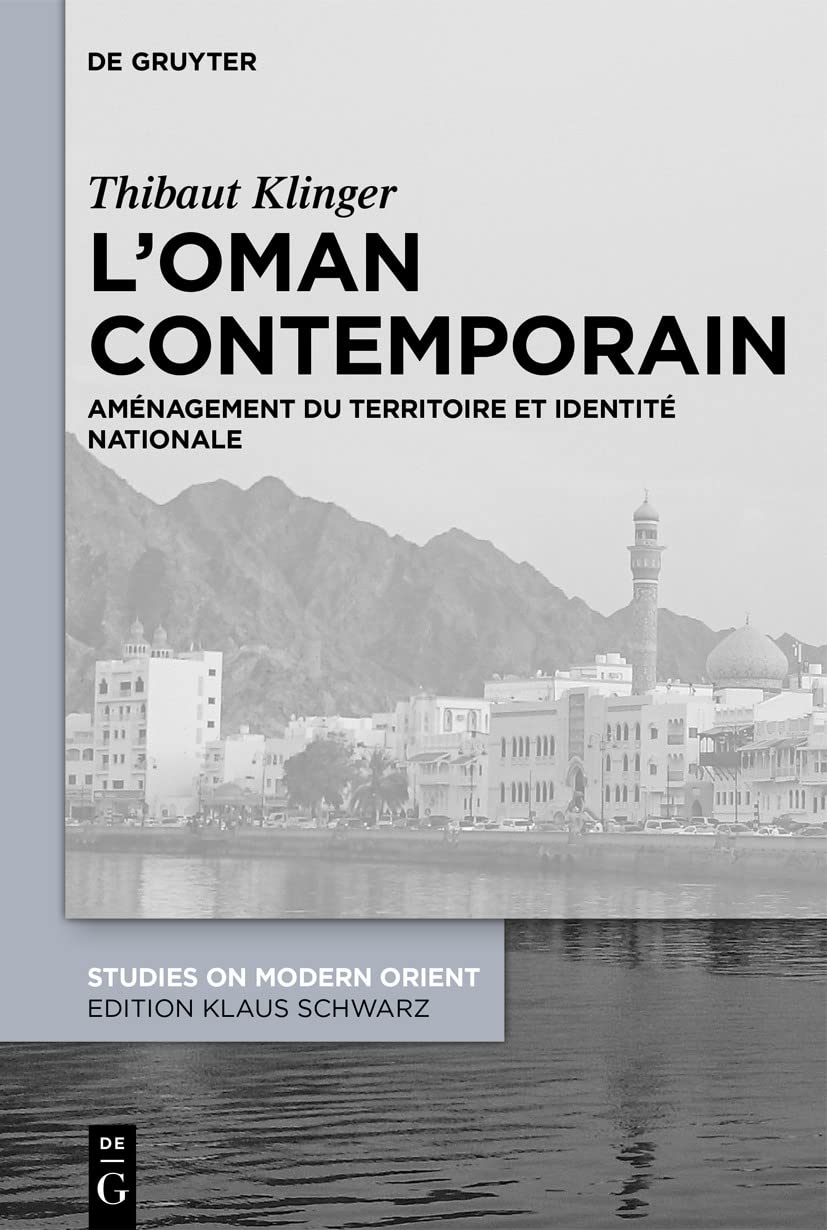
LOman contemporain: Amnagement du territoire et identit nationale (Studies on Modern Orient, 41) (French Edition),Used
Sold by Ergodebooks, an authorized reseller.
Returns accepted within 30 days | support@ergodebooks.com
Shipping Information
- Free Standard Shipping — United States only
- Processing Time: 3–5 business days
- Estimated Delivery: 6–10 business days after dispatch
- Double-boxed, fully insured & discreetly packaged
- Tracking number sent via email once dispatched
Returns & Refund
Returns accepted within 30 days of delivery.
Damaged or Defective Item
Free return shipping + replacement or full refund
Wrong Item Received
Free return shipping + replacement or full refund
Change of Mind
Return shipping at customer's expense · 25% restocking fee applies
Payment Option

Product DescriptionSince 1970, Oman has taken up the challenge of shaping an "imagined community" and unifying an ancient territory that was torn apart in the past by secession or civil wars. Spatial planning has been at the heart of its policy, guided by a carefully defined national identity to broadly integrate the physical and human components of the country. With the integration into globalization and the emphasis on tourism to diversify the economy too dependent on hydrocarbons, the "national narrative" becomes a brand. What are the reciprocal effects of branding and spatial planning? Tourism particularly reveals these interactions but also the effects on the governance of the sultanate, while heritage plays a complex role, anchoring branding in a deep political project. The image of tolerance, a true "brand" of Oman in a regional environment of religious divisions, is clearly part of the country's territory, strongly associating branding and spatial planning.La gographie actuelle dOman reste peu tudie : ce travail de doctorat explore la mise en uvre de lamnagement du territoire depuis 1970, laide danalyses pluridisciplinaires et dune vaste enqute photographique. Louvrage montre une vritable production de lespace (Henri Lefebvre) omanais en vue de faonner une identit nationale et de lgitimer le pouvoir. La promotion de la maison individuelle na pas t seulement le moyen de moderniser le pays mais aussi dun contrle de la population jusquau plus intime. Elle a conduit la recomposition du quartier et la rinterprtation des espaces de sociabilit. A partir des annes 1990, linsertion accrue dans la mondialisation et la ncessaire diversification conomique conduisent dvelopper le tourisme : branding et agencification inflchissent lamnagement du territoire au profit de llite conomique. Cette volution se traduit aussi par la mise en scne de lidentit nationale, par lEtat et, en partie, par la population. Comme monographie, louvrage offre une comprhension en profondeur des enjeux gopolitiques dun pays qui appartient la fois la pninsule arabique et au monde de locan Indien. Les tudes de cas rparties sur lensemble du territoire et la mobilisation de la bibliographie existante pourront servir de rfrence dautres recherches sur Oman.About the AuthorThibaut Klinger, Universit de Tours, France.
⚠️ WARNING (California Proposition 65):
This product may contain chemicals known to the State of California to cause cancer, birth defects, or other reproductive harm.
For more information, please visit www.P65Warnings.ca.gov.