If you have any questions, you are always welcome to contact us. We'll get back to you as soon as possible, withing 24 hours on weekdays.
Customer service
All questions about your order, return and delivery must be sent to our customer service team by e-mail at yourstore@yourdomain.com
Sale & Press
If you are interested in selling our products, need more information about our brand or wish to make a collaboration, please contact us at press@yourdomain.com
Help
If you have any questions, you are always welcome to contact us. We'll get back to you as soon as possible, withing 24 hours on weekdays.
Customer service
All questions about your order, return and delivery must be sent to our customer service team by e-mail at yourstore@yourdomain.com
Sale & Press
If you are interested in selling our products, need more information about our brand or wish to make a collaboration, please contact us at press@yourdomain.com
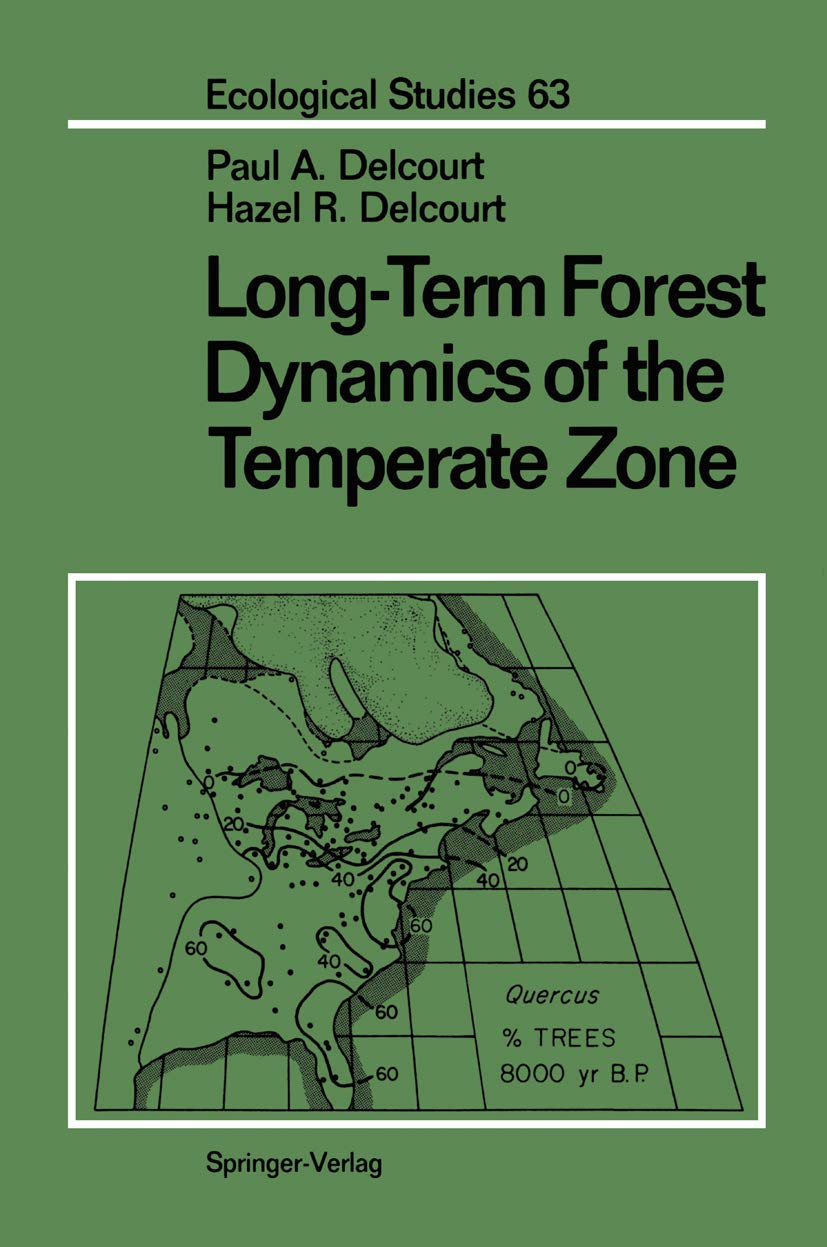
The synthesis presented in this volume is a direct outgrowth of our tenyear FORMAP Project (Forest Mapping Across Eastern North America from 20,000 yr B.P. to the Present). Many previous research efforts in paleoecology have used plantfossil evidence as proxy information for primarily geologic or climatic reconstructions or as a bio stratigraphic basis for correlation of regional events. In contrast, in this book, we deal with ecological questions that require a holistic perspective that integrates the interactions of biota with their dynamically changing environments over time scales up to tens of thousands of years. In the FORMAP Project, our major research objective has been to use lateQuaternary plantecological data sets to evaluate longterm patterns and processes in forest de velopment. In order to accomplish this objective, we have prepared subcontinentscale calibrations that quantitatively relate the production and dispersal of arboreal pollen to dominance in the vegetation for the major tree types of eastern North America. Quantification of pollenvegetation relationships provides a basis for developing quan titative plantecological data sets that allow further ecological analysis of both individual taxa and forest communities through time. Application of these calibrations to fossil pollen records for interpreting forest history thus represents a fundamental step beyond traditional summaries based upon pollen percentages.
⚠️ WARNING (California Proposition 65):
This product may contain chemicals known to the State of California to cause cancer,
birth defects, or other reproductive harm.
For MAP (Minimum Advertised Price) violations and Intellectual Property (IP) or Trademark concerns, please contact:
support@ergodebooks.com
⚠️ California Proposition 65 Warning: Some products sold on this website may expose you to chemicals known to the State of California to cause cancer, birth defects, or other reproductive harm. For more information, visit www.P65Warnings.ca.gov.