
Title
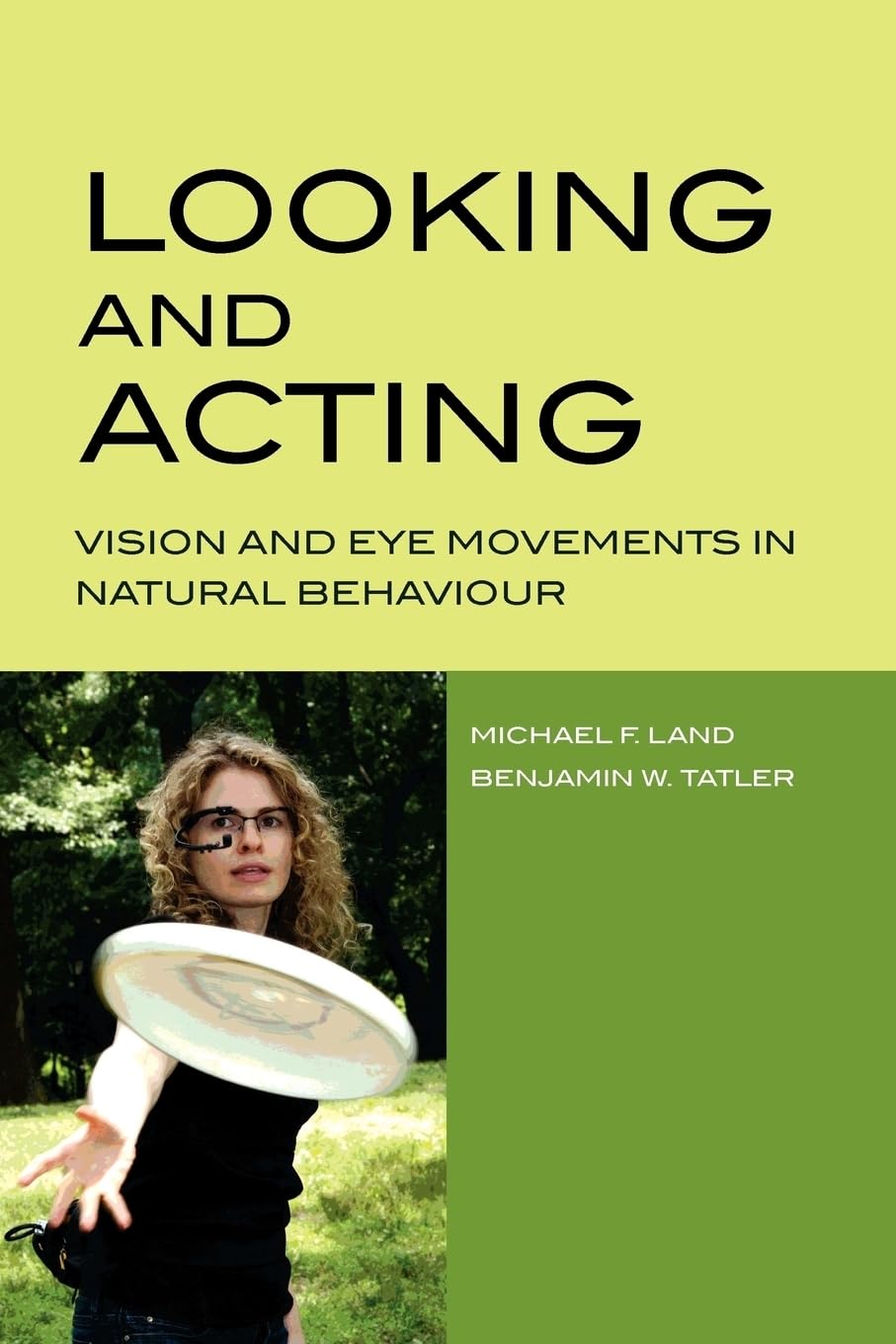
Looking And Acting: Vision And Eye Movements In Natural Behaviour
Sold by Ergodebooks, an authorized reseller.
Returns accepted within 30 days | support@ergodebooks.com
Shipping Information
- Free Standard Shipping — United States only
- Processing Time: 3–5 business days
- Estimated Delivery: 6–10 business days after dispatch
- Double-boxed, fully insured & discreetly packaged
- Tracking number sent via email once dispatched
Returns & Refund
Returns accepted within 30 days of delivery.
Damaged or Defective Item
Free return shipping + replacement or full refund
Wrong Item Received
Free return shipping + replacement or full refund
Change of Mind
Return shipping at customer's expense · 25% restocking fee applies
Payment Option

The cooperative action of different regions of our brains gives us an amazing capacity to perform activities as diverse as playing the piano and hitting a tennis ball. Somehow, without conscious effort, our eyes find the information we need to operate successfully in the world around us. The development of headmounted eye trackers over recent years has made it possible to record where we look during different active tasks, and so work out what information our eyes supply to the brain systems that control our limbs. We are now in a position to explore the strategies that the eye movement system uses in the initiation and guidance of action.Looking and Acting examines a wide range of visually guided behaviour, from sedentary tasks like reading and drawing, to dynamic activities such as driving and playing cricket. A central theme is that the eye movement system has its own knowledge about where to find the most appropriate information for guiding action information not usually available to conscious scrutiny. Thus each type of action has its own specific repertoire of linked eye movements, acquired in parallel with the motor skills themselves. Starting with a brief background to eye movement studies, the book then reviews a range of observations and analyses of different activities. It ends with discussions of the nature of visual representation, the neurophysiology of the systems involved, and the roles of attention and learning.Opening a field in eye movement research, this fascinating book will be of great interest to all vision scientists (psychologists, physiologists, ophthalmologists) whether at professional, graduate, or advanced undergraduate levels. It will also be of value to musicians, artists, sports scientists, and transport engineers, and indeed anyone intrigued by the way we sample the visual world.
⚠️ WARNING (California Proposition 65):
This product may contain chemicals known to the State of California to cause cancer, birth defects, or other reproductive harm.
For more information, please visit www.P65Warnings.ca.gov.