
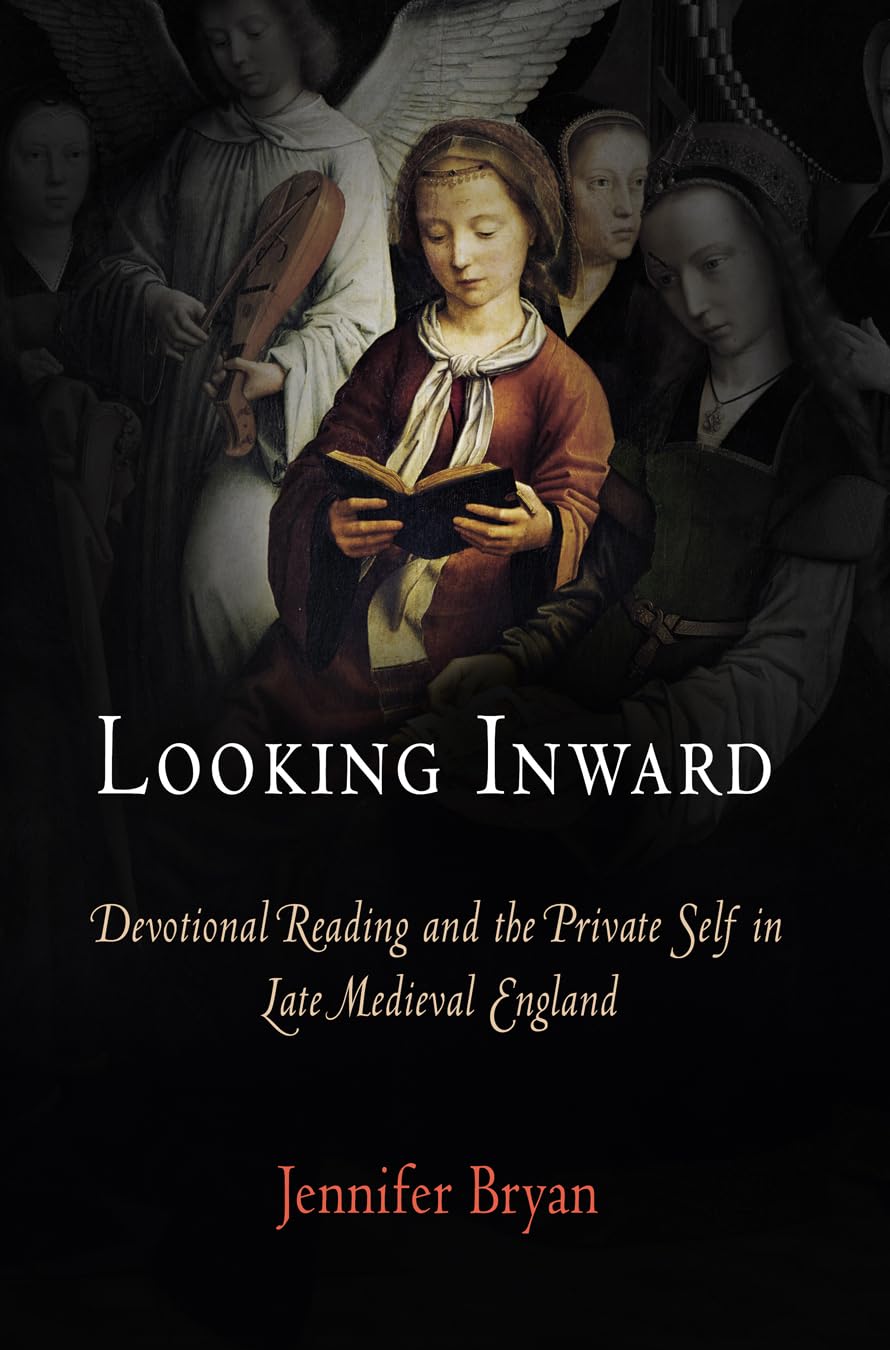
Title
Looking Inward: Devotional Reading And The Private Self In Late Medieval England (The Middle Ages Series),New
Sold by Ergodebooks, an authorized reseller.
Returns accepted within 30 days | support@ergodebooks.com
Shipping Information
- Free Standard Shipping — United States only
- Processing Time: 3–5 business days
- Estimated Delivery: 6–10 business days after dispatch
- Double-boxed, fully insured & discreetly packaged
- Tracking number sent via email once dispatched
Returns & Refund
Returns accepted within 30 days of delivery.
Damaged or Defective Item
Free return shipping + replacement or full refund
Wrong Item Received
Free return shipping + replacement or full refund
Change of Mind
Return shipping at customer's expense · 25% restocking fee applies
Payment Option

You must see yourself.' The exhortation was increasingly familiar to English men and women in the two centuries before the Reformation. They encountered it repeatedly in their devotional books, the popular guides to spiritual selfimprovement that were reaching an evergrowing readership at the end of the Middle Ages. But what did it mean to see oneself? What was the nature of the self to be envisioned, and what eyes and mirrors were needed to see and know it properly?Looking Inward traces a complex network of answers to such questions, exploring how English readers between 1350 and 1550 learned to envision, examine, and change themselves in the mirrors of devotional literature. By all accounts, it was the most popular literature of the period. With literacy on the rise, an outpouring of translations and adaptations flowed across traditional boundaries between religious and lay, and between female and male, audiences. As forms of piety changed, as social categories became increasingly porous, and as the heart became an increasingly privileged and contested location, the growth of devotional reading created a crucial arena for the making of literate subjectivities. The models of private reading and selfreflection constructed therein would have important implications, not only for English spirituality, but for social, political, and poetic identities, up to the Reformation and beyond.In Looking Inward, Bryan examines a wide range of devotional and secular texts, from works by Walter Hilton, Julian of Norwich, and Thomas Hoccleve to neglected translations like The Chastising of God's Children and The Pricking of Love. She explores the models of identification and imitation through which they sought to reach the inmost selves of their readers, and the scripts for spiritual desire that they offered for the cultivation of the heart. Illuminating the psychological paradigms at the heart of the genre, Bryan provides fresh insights into how late medieval men and women sought to know, labor in, and profit themselves by means of books.
⚠️ WARNING (California Proposition 65):
This product may contain chemicals known to the State of California to cause cancer, birth defects, or other reproductive harm.
For more information, please visit www.P65Warnings.ca.gov.