
Title
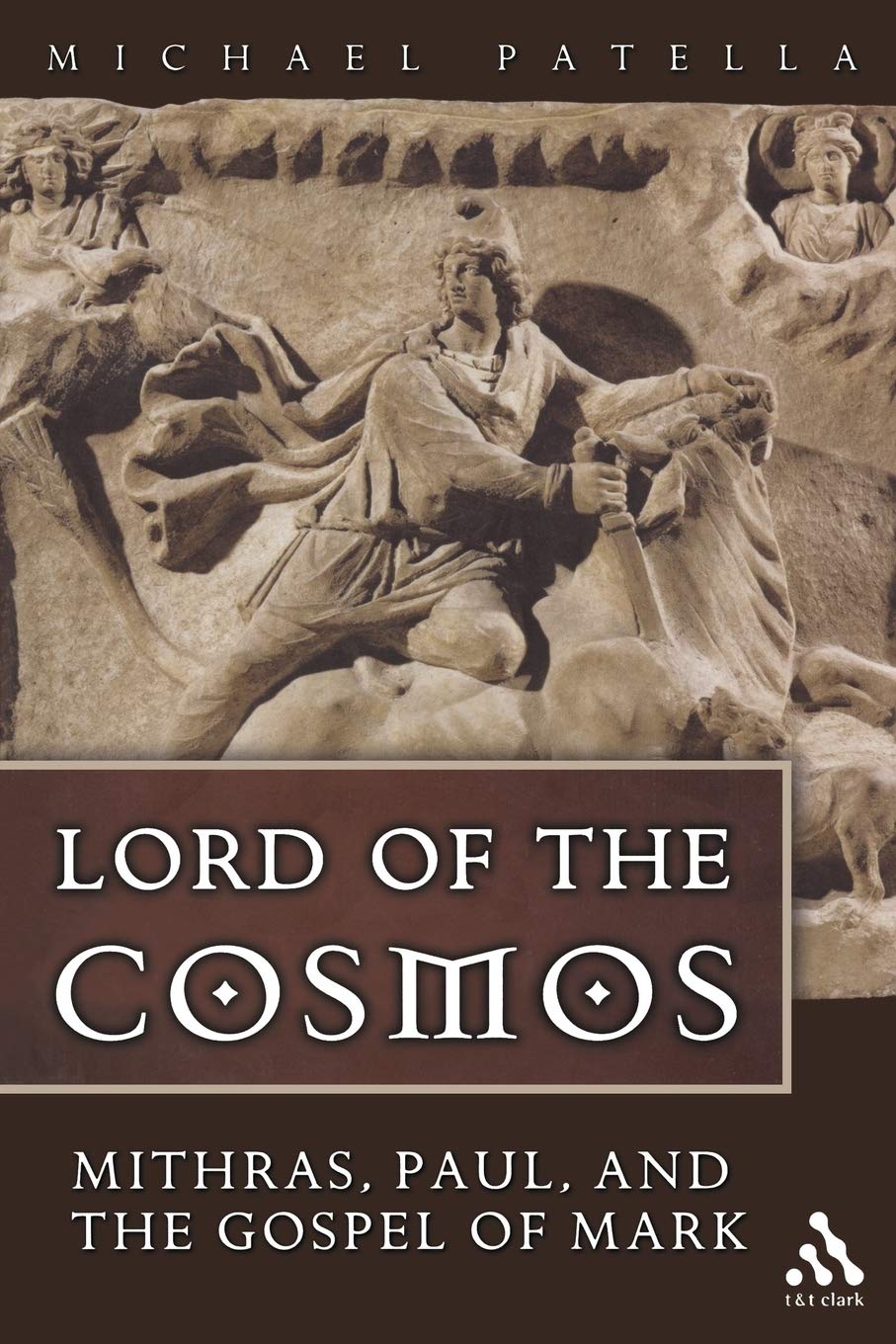
Lord of the Cosmos: Mithras, Paul, and the Gospel of Mark,New
Sold by Ergodebooks, an authorized reseller.
Returns accepted within 30 days | support@ergodebooks.com
Shipping Information
- Free Standard Shipping — United States only
- Processing Time: 3–5 business days
- Estimated Delivery: 6–10 business days after dispatch
- Double-boxed, fully insured & discreetly packaged
- Tracking number sent via email once dispatched
Returns & Refund
Returns accepted within 30 days of delivery.
Damaged or Defective Item
Free return shipping + replacement or full refund
Wrong Item Received
Free return shipping + replacement or full refund
Change of Mind
Return shipping at customer's expense · 25% restocking fee applies
Payment Option

In Lord of the Cosmos, Patella demonstrates the ways in which the Roman Imperial religion imbues Paul's letter and subsequently Mark's Gospel. Mark resonated in the imperial capital and beyond because of its inherent participationist theology, a theology probably augmented by Paul and possibly introduced by him. In his own writings, Paul draws from Mithraic vocabulary and symbolism. Mithraism itself functions within the cosmic framework outlined in Plato's Timaeus. Pauline theology, with its Mithraic overtones, coheres with the Markan theme of Christ's cosmic victory over Satan; Paul and Mark share a similar view of Christ's salvific act. With the Bartimaeus pericope (10:4652), the Markan Gospel demonstrates that believers, by their call to discipleship, participate in that victory. This whole process is signaled by the baptism with its divine communication and actions of descent and ascent, a strong Pauline concept. Patella shows that the Markan presentation of Jesus' death, the climax of the narrative, brings the act of divine communication full circle. At the baptism, God communicates to creation, and with Jesus' cry from the cross, creation replies in despair. Jesus' death is not the end of the story, however. The women at the tomb realize this fact and are awestruck at its significance, which is the reason that they do not tell anyone what they have witnessed. The notice to meet Jesus in Galilee is an affirmation of the resurrection. By moving from the area of the dead, that is the tomb, to the land of the living, Galilee, Mark echoes the cosmic theology in Paul, which moves from life to death, and back to eternal life.
⚠️ WARNING (California Proposition 65):
This product may contain chemicals known to the State of California to cause cancer, birth defects, or other reproductive harm.
For more information, please visit www.P65Warnings.ca.gov.