
Title
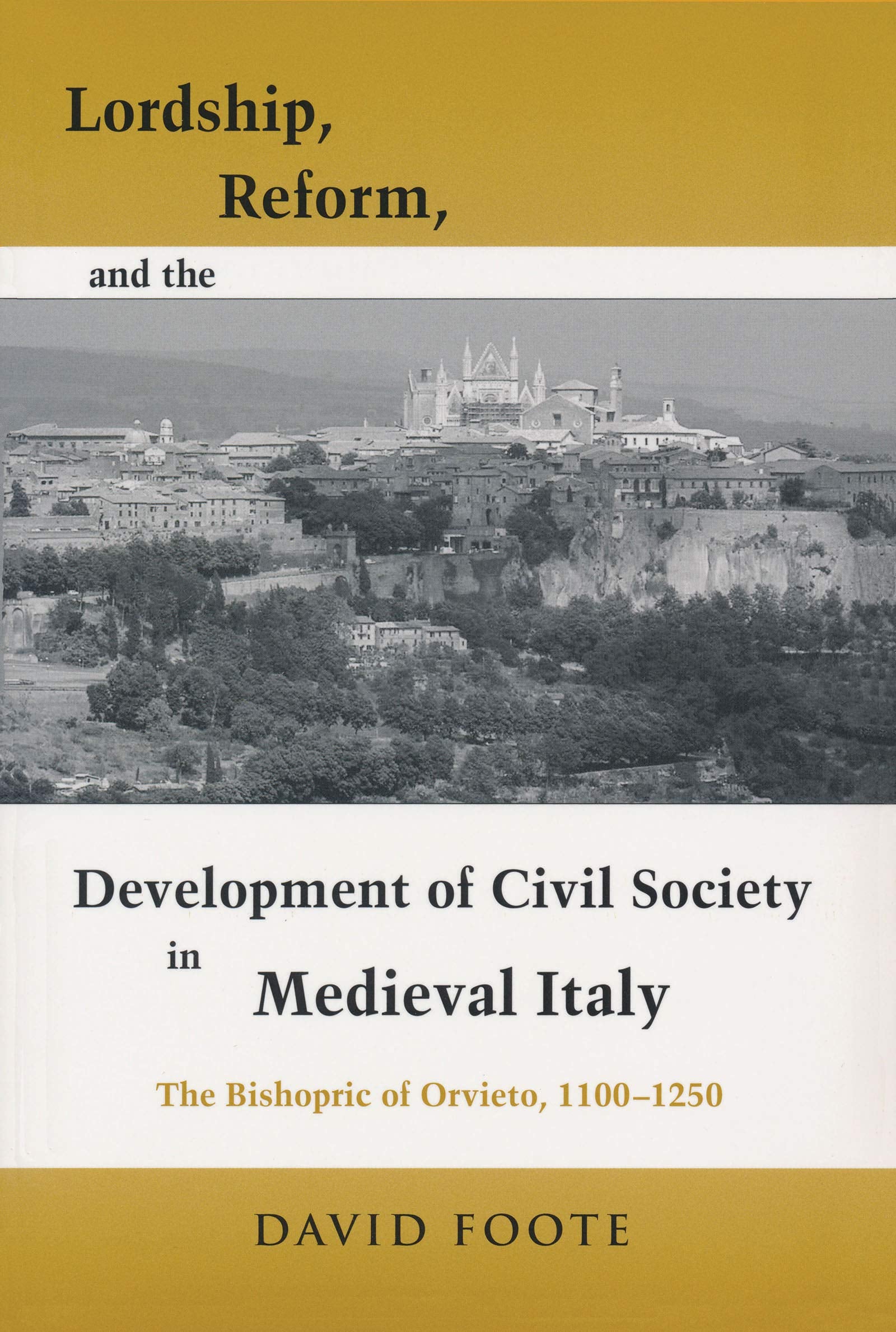
Lordship, Reform, and the Development of Civil Society in Medieval Italy: The Bishopric Of Orvieto, 11001250 (Publications in M,New
Sold by Ergodebooks, an authorized reseller.
Returns accepted within 30 days | support@ergodebooks.com
Shipping Information
- Free Standard Shipping — United States only
- Processing Time: 3–5 business days
- Estimated Delivery: 6–10 business days after dispatch
- Double-boxed, fully insured & discreetly packaged
- Tracking number sent via email once dispatched
Returns & Refund
Returns accepted within 30 days of delivery.
Damaged or Defective Item
Free return shipping + replacement or full refund
Wrong Item Received
Free return shipping + replacement or full refund
Change of Mind
Return shipping at customer's expense · 25% restocking fee applies
Payment Option

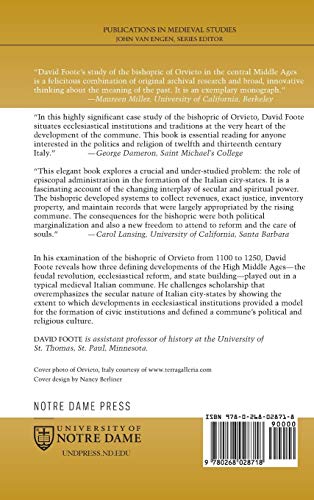
In his examination of the bishopric of Orvieto from 1100 to 1250, David Foote reveals how three defining developments of the High Middle Agesthe feudal revolution, ecclesiastical reform, and state buildingplayed out in a typical medieval Italian commune. He challenges scholarship that overemphasizes the secular nature of Italian citystates by showing the extent to which developments in ecclesiastical institutions provided a model for the formation of civic institutions and defined a communes political and religious culture.Following the collapse of Carolingian authority in the tenth century, Italy experienced a period of political chaos. Rural lords, unrestrained by central authority, fought to dominate the countryside. Bishoprics, by virtue of their temporal and spiritual authority over dioceses, emerged in the midst of this disorder as the most effective institutions for rebuilding political authority at the local level. The Orvietan bishopric formed the center of an urban coalition attempting to conquer and pacify their contado, or surrounding countryside. Orvietos bishopric assisted the early citystate in administering its territory by developing innovative methods of written administration and record keeping.As the center of a wide range of religious interests, the bishopric was often caught between competing political and religious actors who leveraged their interests through ecclesiastical institutions and resources. This interaction had a profound effect on the citys political and religious culture. As Orvietans struggled to define the norms that would govern their society, they had to adapt their quest for political power and autonomy to their religious values.David Footes deeply researched new book illuminates the process of state building in its early stages and the formation of political and religious culture in Europe during the High Middle Ages.
⚠️ WARNING (California Proposition 65):
This product may contain chemicals known to the State of California to cause cancer, birth defects, or other reproductive harm.
For more information, please visit www.P65Warnings.ca.gov.