
Title
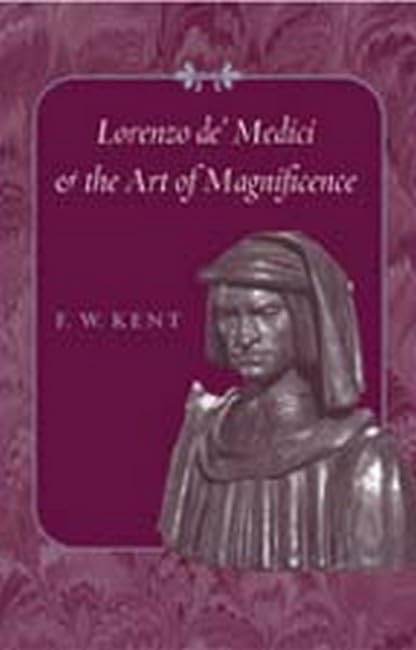
Lorenzo de' Medici and the Art of Magnificence (The Johns Hopkins Symposia in Comparative History, 24),Used
Sold by Ergodebooks, an authorized reseller.
Returns accepted within 30 days | support@ergodebooks.com
Shipping Information
- Free Standard Shipping — United States only
- Processing Time: 3–5 business days
- Estimated Delivery: 6–10 business days after dispatch
- Double-boxed, fully insured & discreetly packaged
- Tracking number sent via email once dispatched
Returns & Refund
Returns accepted within 30 days of delivery.
Damaged or Defective Item
Free return shipping + replacement or full refund
Wrong Item Received
Free return shipping + replacement or full refund
Change of Mind
Return shipping at customer's expense · 25% restocking fee applies
Payment Option

In the past half century scholars have downplayed the significance of Lorenzo de' Medici (14491492), called 'the Magnificent,' as a patron of the arts. Less wealthy than his grandfather Cosimo, the argument goes, Lorenzo was far more interested in collecting ancient objects of art than in commissioning contemporary art or architecture. His earlier reputation as a patron was said to be largely a construct of humanist exaggeration and partisan deference.Although some recent studies have taken issue with this view, no synthesis of Lorenzo as art patron and art lover has yet emerged. In Lorenzo de' Medici and the Art of Magnificence historian F. W. Kent offers a new look at Lorenzo's relationship to the arts, aesthetics, collecting, and buildingespecially in the context of his role as the political boss (maestro della bottega) of republican Florence and a leading player in Renaissance Italian diplomacy. As a result of this approach, which pays careful attention to the events of his short but dramatic life, a radically new chronology of Lorenzo's activities as an art patron emerges, revealing them to have been more extensive and creative than previously thought. Kent's Lorenzo was broadly interested in the arts and supported efforts to beautify Florence and the many Medici lands and palaces. His expertise was well regarded by guildsmen and artists, who often turned to him for advice as well as for patronage. Lorenzo himself was educated in the arts by such men, and Kent explores his aesthetic education and taste, taking into account what is known of Lorenzo's patronage of music and manuscripts, and of his own creative work as a major Quattrocento poet.Richly illustrated with photographs of Medici landmarks by Ralph Lieberman, Lorenzo de' Medici and the Art of Magnificence offers a masterful portrait of Lorenzo as a man whose achievements might have rivaled his grandfather's had he not died so young.
⚠️ WARNING (California Proposition 65):
This product may contain chemicals known to the State of California to cause cancer, birth defects, or other reproductive harm.
For more information, please visit www.P65Warnings.ca.gov.