
Title
Losing Site: Architecture, Memory and Place (Ashgate Studies in Architecture),Used
Sold by Ergodebooks, an authorized reseller.
Returns accepted within 30 days | support@ergodebooks.com
Shipping Information
- Free Standard Shipping — United States only
- Processing Time: 3–5 business days
- Estimated Delivery: 6–10 business days after dispatch
- Double-boxed, fully insured & discreetly packaged
- Tracking number sent via email once dispatched
Returns & Refund
Returns accepted within 30 days of delivery.
Damaged or Defective Item
Free return shipping + replacement or full refund
Wrong Item Received
Free return shipping + replacement or full refund
Change of Mind
Return shipping at customer's expense · 25% restocking fee applies
Payment Option

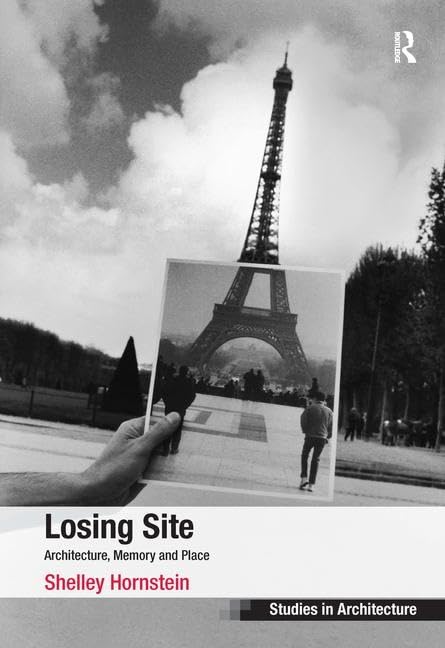
As Ruskin suggests in his Seven Lamps of Architecture: "We may live without [architecture], and worship without her, but we cannot remember without her." We remember best when we experience an event in a place. But what happens when we leave that place, or that place no longer exists? This book addresses the relationship between memory and place and asks how architecture captures and triggers memory. It explores how architecture exists as a material object and how it registers as a place that we come to remember beyond the physical site itself. It questions what architecture is in the broadest sense, assuming that it is not simply buildings. Rather, architecture is considered to be the mapping of physical, mental or emotional space. The idea that we are all architects in some measure as we actively organize and select pathways and markers within space is central to this book's premise. Each chapter provides a different example of the manifold ways in which the physical place of architecture is curated by the architecture in our "mental" space: our imaginary toolbox when we think of a place and look at a photograph, or visit a site and describe it later or send a postcard. By connecting architecture with other disciplines such as geography, visual culture, sociology, and urban studies, as well as the fine and performing arts, this book puts forward the idea that a conversation about architecture is not exclusively about formal, isolated buildings, but instead must be deepened and broadened as spatialized visualizations and experiences of place.
⚠️ WARNING (California Proposition 65):
This product may contain chemicals known to the State of California to cause cancer, birth defects, or other reproductive harm.
For more information, please visit www.P65Warnings.ca.gov.