
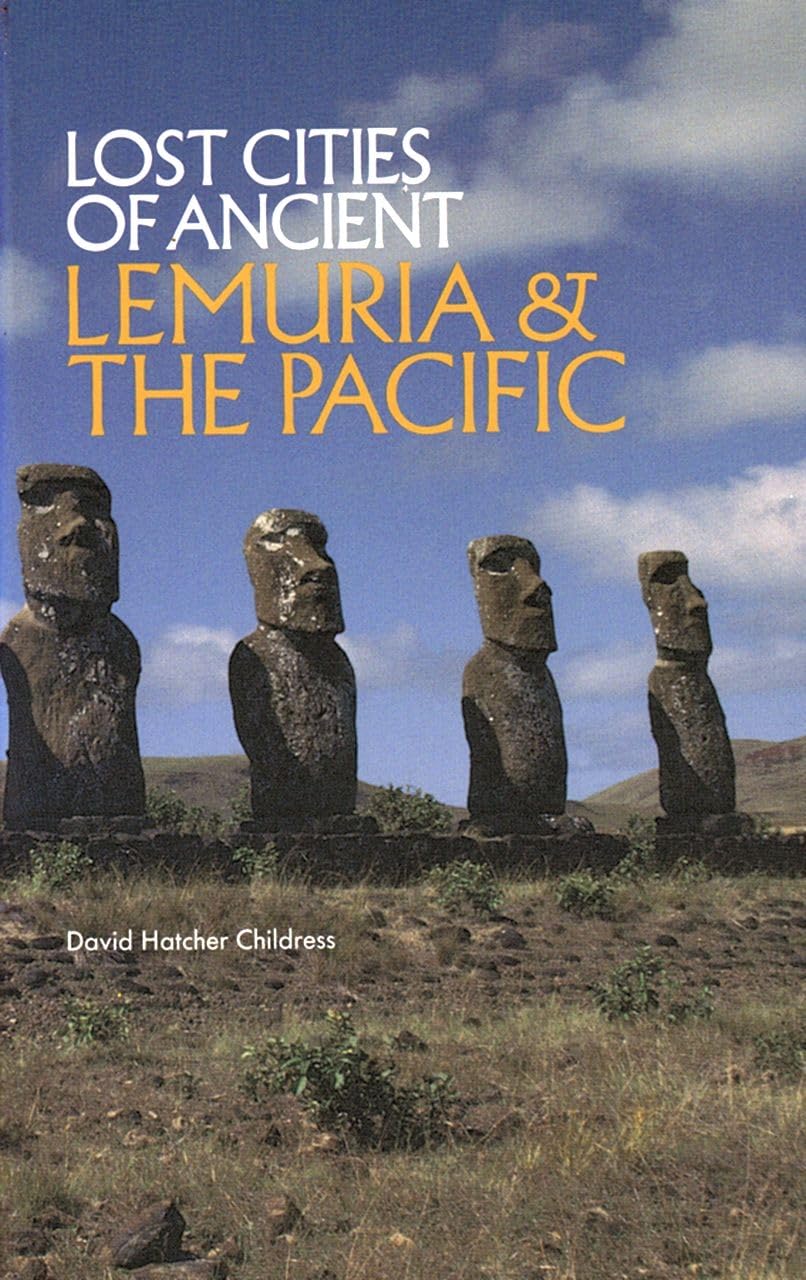
Title
Lost Cities Of Ancient Lemuria And The Pacific (The Lost City Series),New
Sold by Ergodebooks, an authorized reseller.
Returns accepted within 30 days | support@ergodebooks.com
Shipping Information
- Free Standard Shipping — United States only
- Processing Time: 3–5 business days
- Estimated Delivery: 6–10 business days after dispatch
- Double-boxed, fully insured & discreetly packaged
- Tracking number sent via email once dispatched
Returns & Refund
Returns accepted within 30 days of delivery.
Damaged or Defective Item
Free return shipping + replacement or full refund
Wrong Item Received
Free return shipping + replacement or full refund
Change of Mind
Return shipping at customer's expense · 25% restocking fee applies
Payment Option

Was There Once A Continent In The Pacific Called Lemuria Or Pacifica By Ecologists, And Mu Or Pan By The Mystics? There Is Now Ample Mythological, Geological And Archaeological Evidence To 'Prove' That An Advanced And Ancient Civilisation Once Lived In The Central Pacific. Childress Combs The Indian Ocean, Australia And The Pacific In Search Of The Astonishing Truth About Mankind'S Past. Contains Photos Of The Underwater City On Pompeii, Explains How Statues Were Levitated Around Easter Island In A Clockwise Vortex Movement; Disappearing Islands; Egyptians In Australia; And More.
⚠️ WARNING (California Proposition 65):
This product may contain chemicals known to the State of California to cause cancer, birth defects, or other reproductive harm.
For more information, please visit www.P65Warnings.ca.gov.
- Q: How many pages does the book have? A: The book has three hundred sixty-eight pages. This length provides a comprehensive exploration of ancient civilizations and their myths.
- Q: What are the dimensions of the book? A: The book measures five point five one inches by eight point five inches. This size makes it convenient for reading and carrying.
- Q: What type of binding does the book have? A: The book is paperback bound. This type of binding offers flexibility and lightweight portability.
- Q: Who is the author of this book? A: The author is David Hatcher Childress. He is known for his research on ancient civilizations and lost cities.
- Q: What genre does this book belong to? A: The book belongs to the Civilization & Culture genre. It delves into historical and mythological themes.
- Q: Is this book suitable for young readers? A: Yes, the book is appropriate for young readers interested in ancient civilizations. However, parental guidance is recommended due to complex themes.
- Q: How can I best enjoy this book? A: You can enjoy this book by reading it in a quiet space where you can focus. Engaging with the historical context will enhance your understanding.
- Q: Are there any illustrations in the book? A: Yes, the book contains photos and illustrations. These visuals help to illustrate the concepts and findings discussed.
- Q: Can I read this book on a digital device? A: No, this book is only available in paperback format. It does not have a digital or eBook version.
- Q: How should I store this book to keep it in good condition? A: Store the book upright on a shelf away from direct sunlight. This will help preserve its binding and prevent fading.
- Q: What is the best way to clean the book? A: To clean the book, gently wipe the cover with a dry cloth. Avoid using liquids to prevent damage to the pages.
- Q: What if the book arrives damaged? A: If the book arrives damaged, contact the retailer for a return or exchange. Most sellers have customer service policies in place for damaged items.
- Q: Does the book include references or a bibliography? A: Yes, the book includes a bibliography on pages three hundred sixty-five to three hundred sixty-seven. This section provides sources for further reading.
- Q: Is this book part of a series? A: Yes, it is part of The Lost City Series. The series explores various ancient civilizations and their myths.
- Q: What themes are explored in this book? A: The book explores themes of ancient civilizations, mythological evidence, and archaeological findings. It challenges conventional historical narratives.