
Title
Lots Of Fun At Finnegans Wake: Unravelling Universals
Sold by Ergodebooks, an authorized reseller.
Returns accepted within 30 days | support@ergodebooks.com
Shipping Information
- Free Standard Shipping — United States only
- Processing Time: 3–5 business days
- Estimated Delivery: 6–10 business days after dispatch
- Double-boxed, fully insured & discreetly packaged
- Tracking number sent via email once dispatched
Returns & Refund
Returns accepted within 30 days of delivery.
Damaged or Defective Item
Free return shipping + replacement or full refund
Wrong Item Received
Free return shipping + replacement or full refund
Change of Mind
Return shipping at customer's expense · 25% restocking fee applies
Payment Option

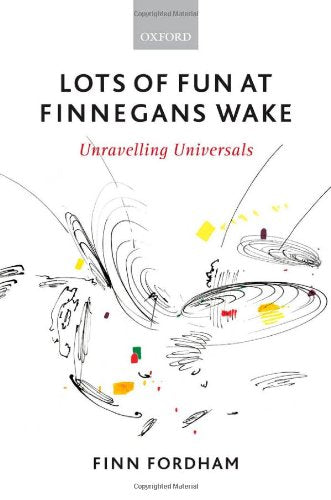
This book is a critical introduction to Finnegans Wake and its genesis. Finn Fordham provides a survey of critical, scholarly, and theoretical approaches to Joyce's iconic masterpiece. He also analyses in detail the compositional development of certain key passages which describe the artist (Shem) and his project; the rivermother (ALP) and her 'first kiss;' the Oedipal shooting of the universal father (HCE) by the priestly son (Shaun); and the bewitching and curious daughter (Issy). His analyses demonstrate 'genetic' ways of reading the text which illustrate its immense range and playfulness and how these qualities were generated in composition.As well as opening up the densely detailed textuality of the Wake in all its multiplicity, Fordham argues for a relation between the way the text was formed and key aspects of its thematic content: an uprising of particularity and detail against universality, absolutes, and generality. He shows that the proliferation of individuated textual details overwhelms any unitary concept to the text. And this reflects an idealized and utopian uprising as it overcomes centralizing singularity: Finnegans do wake up. As part of this argument he proposes a qualified return to a notion of character qualified in that characters can be understood in part as reflecting the character of compositional techniques: selfcriticism and concealment, expansion and growth, flow and reflection, transferral and transformation. The character of the text's composition as a whole can be, paradoxically, summed up in the force of individuated multitudes: in the people, male and female, young and old, combining to overwhelm syntactic uniformity and singular signification.
⚠️ WARNING (California Proposition 65):
This product may contain chemicals known to the State of California to cause cancer, birth defects, or other reproductive harm.
For more information, please visit www.P65Warnings.ca.gov.