
Title
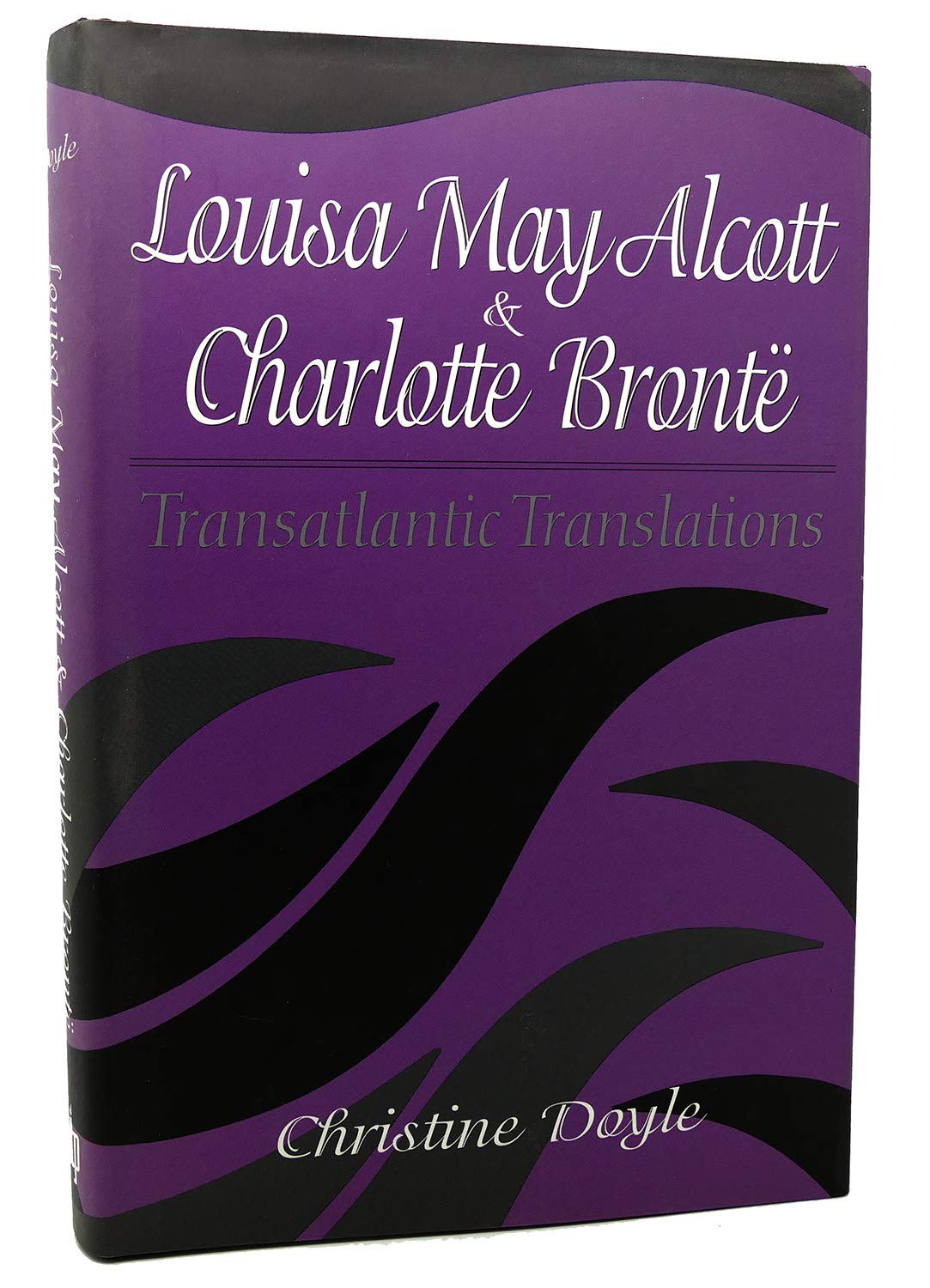
Louisa May Alcott & Charlotte Bronte: Transatlantic Translations,Used
Sold by Ergodebooks, an authorized reseller.
Returns accepted within 30 days | support@ergodebooks.com
Shipping Information
- Free Standard Shipping — United States only
- Processing Time: 3–5 business days
- Estimated Delivery: 6–10 business days after dispatch
- Double-boxed, fully insured & discreetly packaged
- Tracking number sent via email once dispatched
Returns & Refund
Returns accepted within 30 days of delivery.
Damaged or Defective Item
Free return shipping + replacement or full refund
Wrong Item Received
Free return shipping + replacement or full refund
Change of Mind
Return shipping at customer's expense · 25% restocking fee applies
Payment Option

Doyle demonstrates that Alcott kept up a running dialogue with her distinguished British counterpart, both contesting and adapting Bront's treatments of woment's spiritual, social, and vocational lives so as to develop her own distinctively American talent.' Elizabeth Keyser, author of Whispers in the The Fiction of Louisa May Alcott 'Doyle provides an illuminating discussion of the full range of Louise May Alcott's writing. Comparisons with Charlotte Bront spark keen insights into literary traditions and cultural events. General readers will enjoy this book; Alcott and Bront scholars will need it.' Beverly Lyon Clark, author of Regendering the School Sassy Sissies and Tattling Tomboys The work and life of British author Charlotte Bront fascinated America's Louisa May Alcott throughout her own literary career. As a nineteenthcentury writer struggling with many of the same themes and issues as Bront, Alcott was drawn toward her British counterpart, but cultural differences created a literary distance between them sometimes as wide as the Atlantic. In this comparative study, Christine Doyle explores some of the intriguing parallels and differences between the two writers' backgrounds as she traces specific references to Bront and her worknot only in Alcott's children's fiction, but also in her novels for adults and 'sensation fiction.' Doyle compares the treatment of three themes important to both writersspirituality, interpersonal relations, and women's workshowing how Alcott translated Bront's British reserve and gender and classbased repression into her own American optimism and progressivism. In her early career, Alcott was so fascinated by Bront's works that she patterned many of her characters on those of Bront; she later adapted these British elements into a more recognizably American form, producing independent, strong heroines. In observing differences between the writers, Doyle notes that Alcott expresses less antiCatholic sentiment than does Bront. She also discusses the authors' attitudes toward the theater, showing how for Bront drama is associated with falseness and hypocrisy, while for Alcott it is a profession that expresses possibilities of power and revelation. Throughout her insightful analysis, Doyle shows that Alcott responds as a uniquely American writer to the problems of American literature and life while never denying the powerful transatlantic influence exerted by Bront. Doyle's work reflects a wide range of scholarship, solidly grounded in an understanding of the Victorian temperament, nineteenthcentury British and American literature, and recent Alcott criticism and gives fuller voice to the multiple dimensions of Alcott as a nineteenthcentury writer. The Christine Doyle is an associate professor of English at Central Connecticut State University.
⚠️ WARNING (California Proposition 65):
This product may contain chemicals known to the State of California to cause cancer, birth defects, or other reproductive harm.
For more information, please visit www.P65Warnings.ca.gov.