If you have any questions, you are always welcome to contact us. We'll get back to you as soon as possible, withing 24 hours on weekdays.
Customer service
All questions about your order, return and delivery must be sent to our customer service team by e-mail at yourstore@yourdomain.com
Sale & Press
If you are interested in selling our products, need more information about our brand or wish to make a collaboration, please contact us at press@yourdomain.com
Help
If you have any questions, you are always welcome to contact us. We'll get back to you as soon as possible, withing 24 hours on weekdays.
Customer service
All questions about your order, return and delivery must be sent to our customer service team by e-mail at yourstore@yourdomain.com
Sale & Press
If you are interested in selling our products, need more information about our brand or wish to make a collaboration, please contact us at press@yourdomain.com
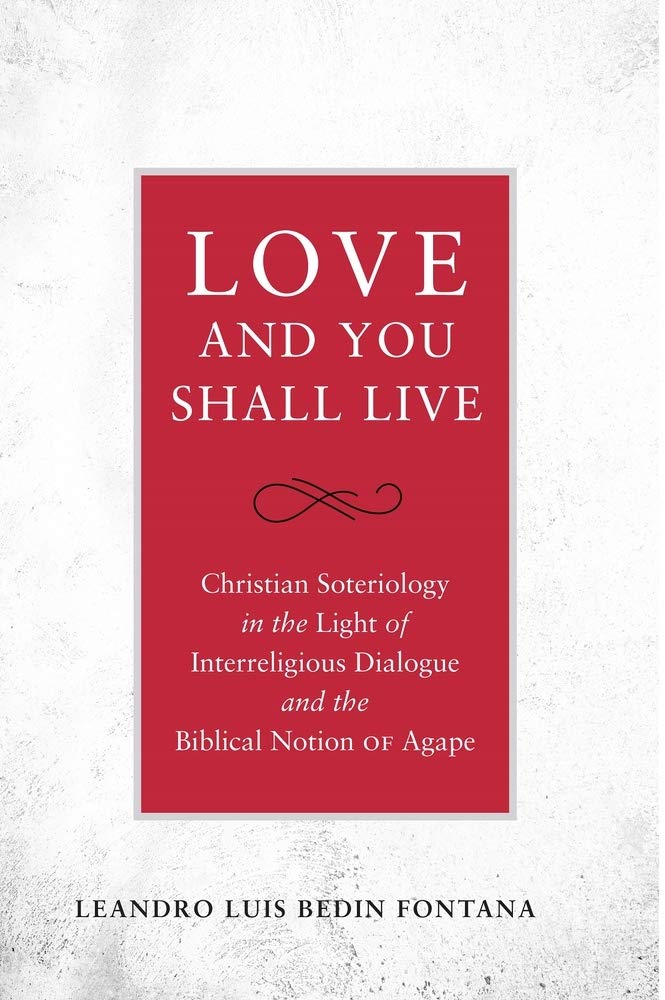
This book rethinks the soteriological premises of the Christian discourse on interreligious dialogue and makes an effort to overcome the conventional typology exclusivisminclusivismpluralism. From a hermeneutic perspective, the author sets out to find the answer to this predicament in Jesus life, message, and practice, given the normative character that these possess for Christianity. Moreover, a number of critical studies of biblical texts, such as the parable of the Good Samaritan, have suggested that interreligious conflicts were a serious challenge to be faced in early Christianity as well. By building a bridge between biblical and systematic theology, and seeking consonance with the testimonies of the New Testament, the answer to the issue of religious pluralism suggested here is the eschatologicalethical principle of agape. For love is the capacity to endure difference while constantly questioning and reformulating ones own identity in the face of the other. Accordingly, the Christian category of neighbor is valued as a decisive mediation for both the definition of ones own identity and the realization of Gods salvific plan. Thus, soteriology regains the central locus it occupied in Early Christianity as a means of combining Gods initiative, human participation, and the growth of His Kingdom.
⚠️ WARNING (California Proposition 65):
This product may contain chemicals known to the State of California to cause cancer,
birth defects, or other reproductive harm.
For MAP (Minimum Advertised Price) violations and Intellectual Property (IP) or Trademark concerns, please contact:
support@ergodebooks.com
⚠️ California Proposition 65 Warning: Some products sold on this website may expose you to chemicals known to the State of California to cause cancer, birth defects, or other reproductive harm. For more information, visit www.P65Warnings.ca.gov.