
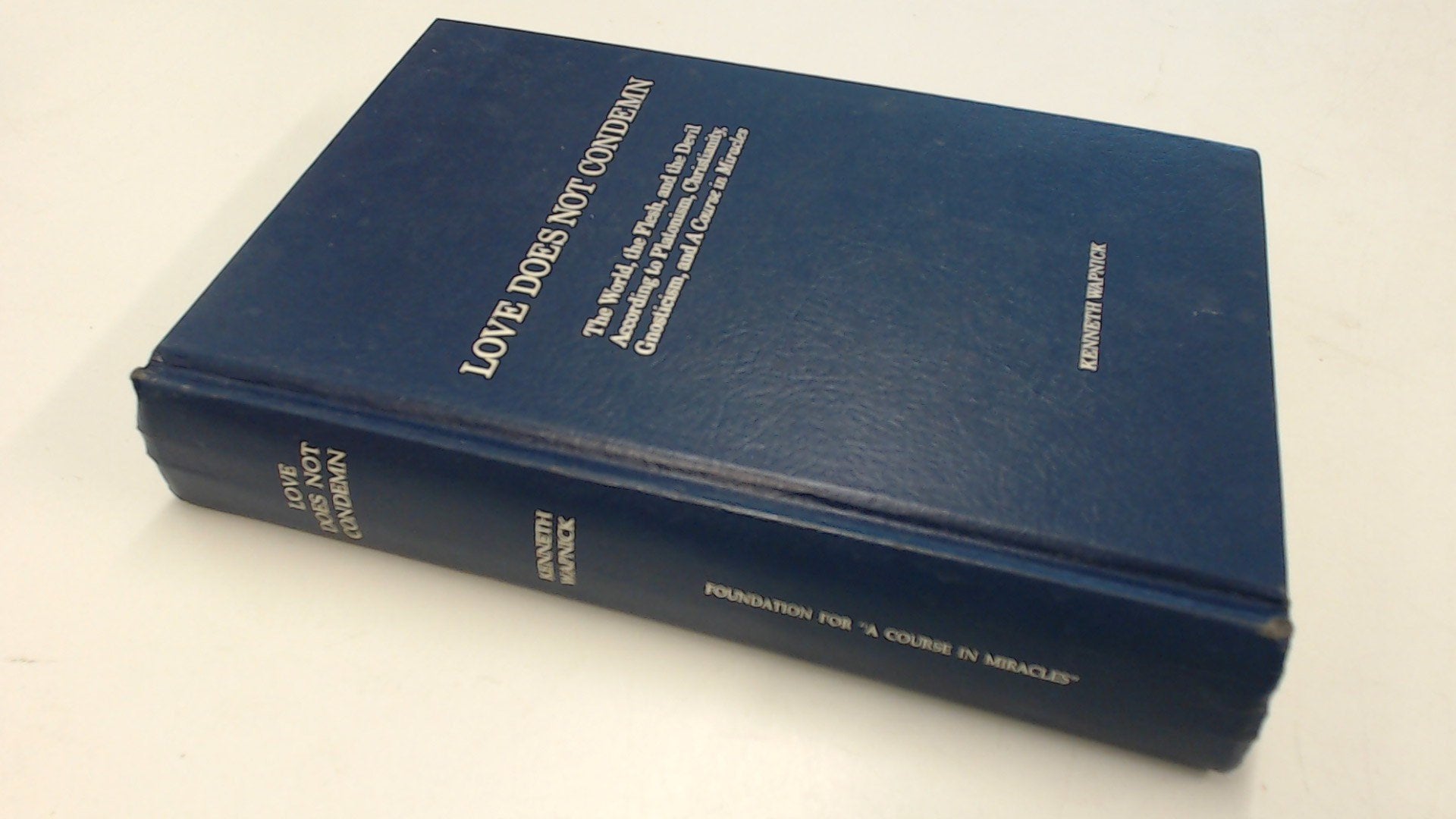
Title
Love Does Not Condemn: The World, The Flesh, And The Devil According To Platonism, Christianity, Gnosticism, And 'A Course In Mi
Sold by Ergodebooks, an authorized reseller.
Returns accepted within 30 days | support@ergodebooks.com
Shipping Information
- Free Standard Shipping — United States only
- Processing Time: 3–5 business days
- Estimated Delivery: 6–10 business days after dispatch
- Double-boxed, fully insured & discreetly packaged
- Tracking number sent via email once dispatched
Returns & Refund
Returns accepted within 30 days of delivery.
Damaged or Defective Item
Free return shipping + replacement or full refund
Wrong Item Received
Free return shipping + replacement or full refund
Change of Mind
Return shipping at customer's expense · 25% restocking fee applies
Payment Option

The Body Was Not Made By Love. Yet Love Does Not Condemn It And Can Use It Lovingly, Respecting What The Son Of God Has Made And Using It To Save Him From Illusions.' (Text, Chapter 18). 'By Declaring The Phenomenal Universe To Be The Work Of The Illusory Ego, Though Not Inherently Evil Or Sinful, The Course Gently Resolves The Great Platonic Paradox Of Living In An Imperfect, Visible, And Material World, Yet Knowing Of A Spiritual World Whose Source Is Perfect And Good.' (From The Preface) This Book Is An Indepth Exploration Of The Nondualistic Metaphysics Of 'A Course In Miracles,' And Its Integration With Living In This Fundamentally Illusory World. It Discusses How The Course Resolves The Godworld Paradox That Has Existed In The Western World Since The Time Of Plato Namely, How An Imperfect Material Universe Could Result From A Perfect Immaterial Creator. Thus, The Context Of This Exploration Is The Platonic And Gnostic Themes That Have Run Through Western Intellectual And Religious History, And The Similarities And Contrasts Between These And The Course. Love Does Not Condemn Is In Three Parts: The First Part Introduces The Gnostics, Platonists, And The Churchgnostic Conflict Of The First Two Centuries A.D.; The Second Discusses A Sevenstage Myth, As Understood By Platonism, Christianity, Gnosticism, And A Course In Miracles; The Third Compares And Contrasts The Four Approaches In Light Of The Godworld Paradox, And Concludes With A Discussion Of The Errors Common To The Gnostics And Many Students Of The Course. The Appendix Includes The Complete Text Of The Important Gnostic Document The Gospel Of Truth, Glossary Of Terms, Table Of Dates, Bibliography, Subject And Name Index, And An Index Of Course References.
⚠️ WARNING (California Proposition 65):
This product may contain chemicals known to the State of California to cause cancer, birth defects, or other reproductive harm.
For more information, please visit www.P65Warnings.ca.gov.
- Q: What is the page count of the book? A: This book contains six hundred ninety-eight pages. It's a comprehensive exploration of metaphysics and spiritual themes.
- Q: What type of binding does the book have? A: The book is hardcover. This makes it durable and suitable for regular reading.
- Q: What are the dimensions of the book? A: The book measures six and a half inches in length, one and a half inches in width, and nine and a half inches in height.
- Q: Is this book suitable for beginners? A: Yes, this book is suitable for beginners. It introduces complex themes in a way that is accessible to all readers.
- Q: Who is the author of the book? A: The author is Kenneth Wapnick. He is well-known for his insights into 'A Course in Miracles'.
- Q: What themes are explored in the book? A: The major themes include non-dualistic metaphysics, Gnosticism, and the God-world paradox. It connects various spiritual traditions.
- Q: How should I care for this book? A: To care for the book, keep it in a dry place away from direct sunlight. This will help maintain its condition.
- Q: Can this book be read by children? A: Yes, this book can be read by older children, especially those interested in philosophy or spirituality. Parental guidance is recommended.
- Q: What if the book arrives damaged? A: If the book arrives damaged, you should contact the seller for a return or exchange. Most sellers have customer support for such issues.
- Q: Is there a glossary included in the book? A: Yes, the book includes a glossary of terms. This helps readers understand the complex vocabulary used.
- Q: Is there an index in the book? A: Yes, the book features an index of subjects and names. This allows for easy navigation through key topics.
- Q: What additional content is included in the appendix? A: The appendix includes the complete text of 'The Gospel of Truth'. It provides further context to the discussions in the book.
- Q: Does this book discuss the Gnostic themes? A: Yes, the book discusses Gnostic themes extensively. It compares these with Platonic and Christian ideas.
- Q: Is this book recommended for spiritual seekers? A: Yes, this book is highly recommended for spiritual seekers. It offers deep insights into various spiritual philosophies.
- Q: What is the target audience for this book? A: The target audience includes scholars, spiritual seekers, and anyone interested in metaphysics. It appeals to a wide range of readers.