
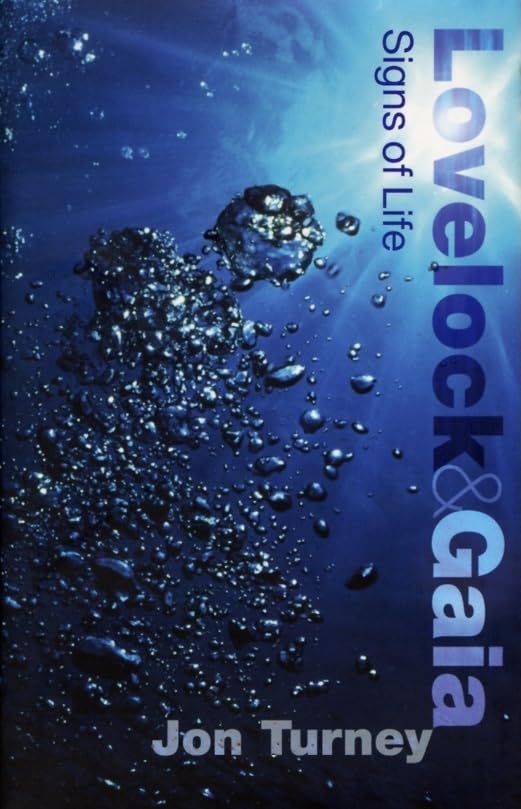
Title
Lovelock And Gaia: Signs Of Life (Revolutions In Science)
Sold by Ergodebooks, an authorized reseller.
Returns accepted within 30 days | support@ergodebooks.com
Shipping Information
- Free Standard Shipping — United States only
- Processing Time: 3–5 business days
- Estimated Delivery: 6–10 business days after dispatch
- Double-boxed, fully insured & discreetly packaged
- Tracking number sent via email once dispatched
Returns & Refund
Returns accepted within 30 days of delivery.
Damaged or Defective Item
Free return shipping + replacement or full refund
Wrong Item Received
Free return shipping + replacement or full refund
Change of Mind
Return shipping at customer's expense · 25% restocking fee applies
Payment Option

How Is It Possible That Earth'S Atmospheric Temperature Has Remained Perfectly Suited To Supporting Life For Billions Of Years? Why Do Oxygen Levels In The Atmosphere Remain Relatively Stable When Only A Minuscule Increase Would Cause Everything On Earth To Spontaneously Combust? Why Are The Oceans Salty, But Not Salty Enough To Make Them Uninhabitable? In The 1960S, An English Scientist Names James Lovelock Formulated A Groundbreaking And Highly Controversial Explanation: Earth Is Alive.Naming His Theory After The Ancient Greek Earth Goddess, Lovelock'S Gaia Hypothesis Argued That Everything On The Planetair, Water, Soil, And Living Organismssomehow Act Together In A Global, Selforganizing System To Maintain Conditions Suitable To Sustaining And Perpetuating Life. Lovelock Speculated That The Geosphere And Biosphere Were Interdependent And That Every Part Of The Earth System Worked In Symbiotic Harmony With Every Other Part. Once Considered More Science Fiction Than Legitimate Science, The Gaia Hypothesis Was Met With Indifference, And Even Hostility, When It Was First Revealed. The Theory Only Started To Gain Widespread Attention When Emerging Issues Such As Environmental Degradation And Global Warming Proved That A Single Specieshumanscould Radically Upset The Ecological And Atmospheric Balance Of The Planet. While Gaia Attracted A Quasireligious Following Among Environmentalists And New Age Spiritualists, It Was Still Largely Viewed With Skepticism By The Scientific Community. But Over The Past Few Decades, Many Of Lovelock'S Ideas Have Led To Significant Breakthroughs. In Fact, The Gaia Hypothesis Has Developed Into A Guiding Principle For A Vast Range Of Discrete Inquiries Into How The Earth Works, Often Referred To As Earth System Science Or Geophysiology. Telling The Story Of This Maverick Pioneer And His Long Struggle To Gain Respectability, Lovelock And Gaia Explains How Lovelock'S Remarkable Hypothesis Is Gradually Ushering In A Scientific Revolution.
⚠️ WARNING (California Proposition 65):
This product may contain chemicals known to the State of California to cause cancer, birth defects, or other reproductive harm.
For more information, please visit www.P65Warnings.ca.gov.
- Q: What is the page count of the book? A: The book contains one hundred sixty-eight pages. This length allows for a concise exploration of the Gaia hypothesis and its implications.
- Q: What type of binding does this book have? A: This book is a hardcover edition. Hardcover books are known for their durability and attractive presentation.
- Q: Who is the author of 'Lovelock and Gaia: Signs of Life'? A: The author is Jon Turney. He delves into James Lovelock's theories and their significance in the scientific community.
- Q: What academic category does this book belong to? A: This book falls under the category of Climatology. It addresses significant environmental theories and their historical context.
- Q: What dimensions does the book have? A: The book measures four point six one inches in length, zero point five six inches in width, and six point six nine inches in height. These dimensions make it portable and easy to handle.
- Q: How do I understand the Gaia hypothesis discussed in the book? A: The Gaia hypothesis posits that Earth functions as a self-regulating system. The book explains how various natural elements interact to sustain life.
- Q: Is this book suitable for beginners in climatology? A: Yes, the book is suitable for beginners. It presents complex ideas in an accessible manner, making it easy for readers new to climatology.
- Q: What themes are explored in 'Lovelock and Gaia'? A: The book explores themes of environmental science, interdependence of ecosystems, and the historical evolution of scientific thought. It connects ecological ideas to modern challenges.
- Q: How should I care for this hardcover book? A: To care for this book, store it upright in a dry place and avoid exposure to direct sunlight. This will help preserve its condition over time.
- Q: Is this book safe to read for all ages? A: Yes, this book is safe for all ages. It discusses scientific concepts that are suitable for general audiences without adult content.
- Q: What if the book arrives damaged? A: If the book arrives damaged, you should contact the seller for a return or exchange. Most sellers provide customer support for such issues.
- Q: Can I find additional resources on the Gaia hypothesis? A: Yes, the book provides references for further reading. It also suggests additional literature on Earth system science and ecological studies.
- Q: Is there a warranty for this book? A: Typically, there is no warranty for books. However, check with the seller for their return policy in case of dissatisfaction.
- Q: How does this book compare to other climatology texts? A: This book offers a unique perspective focused on the Gaia hypothesis, differentiating it from general climatology textbooks that cover broader topics.
- Q: Are there any illustrations in the book? A: No, this book does not include illustrations. It primarily focuses on text to convey its scientific ideas and arguments.
- Q: What are the key takeaways from this book? A: Key takeaways include an understanding of Earth's self-regulating systems and the historical context of the Gaia hypothesis in environmental science.