
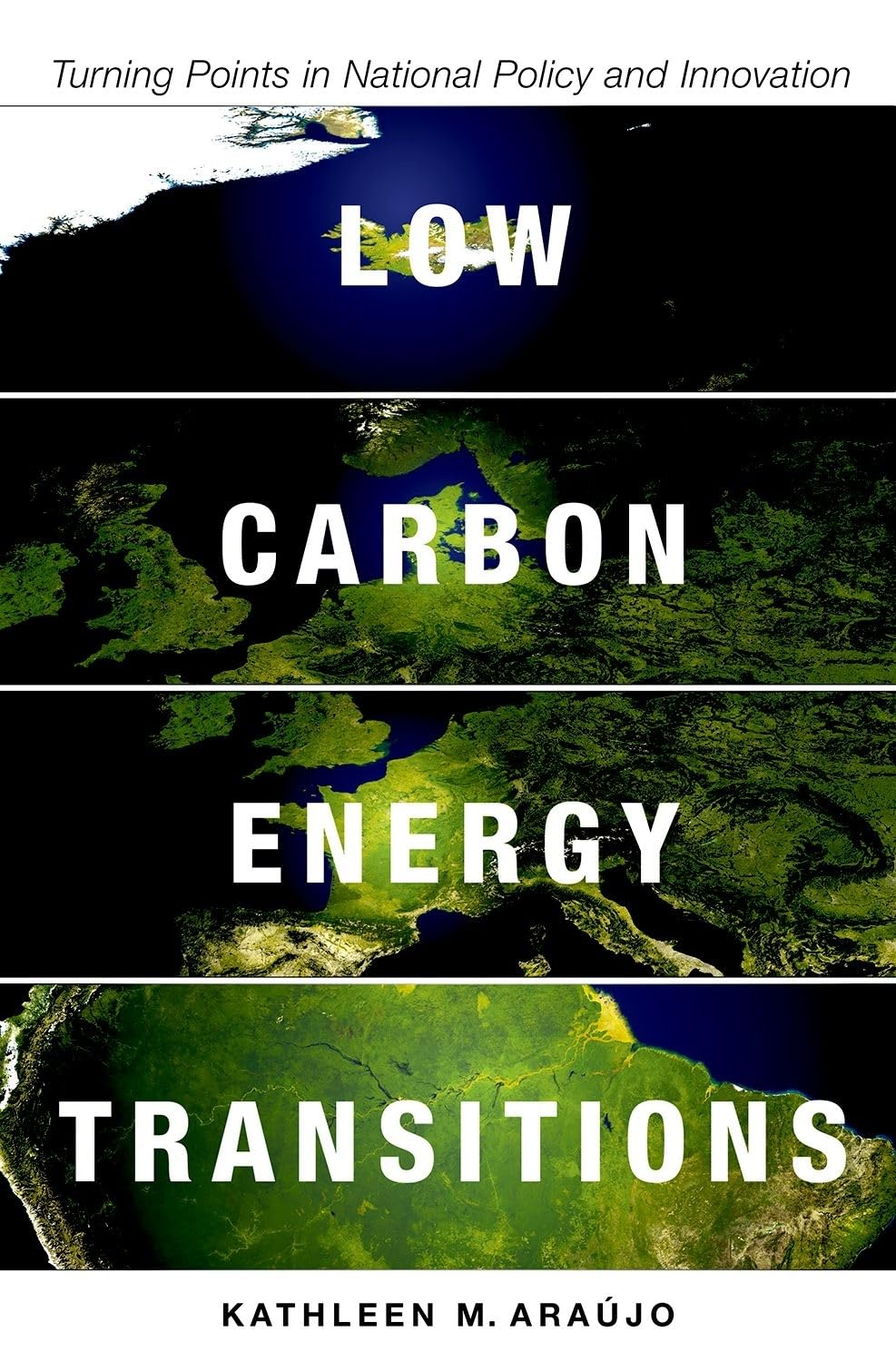
Title
Low Carbon Energy Transitions: Turning Points in National Policy and Innovation,New
Sold by Ergodebooks, an authorized reseller.
Returns accepted within 30 days | support@ergodebooks.com
Shipping Information
- Free Standard Shipping — United States only
- Processing Time: 3–5 business days
- Estimated Delivery: 6–10 business days after dispatch
- Double-boxed, fully insured & discreetly packaged
- Tracking number sent via email once dispatched
Returns & Refund
Returns accepted within 30 days of delivery.
Damaged or Defective Item
Free return shipping + replacement or full refund
Wrong Item Received
Free return shipping + replacement or full refund
Change of Mind
Return shipping at customer's expense · 25% restocking fee applies
Payment Option

The world is at a pivotal crossroad in energy choices. There is a strong sense that our use of energy must be more sustainable. Moreover, many also broadly agree that a way must be found to rely increasingly on lower carbon energy sources. However, no single or clear solution exists on the means to carry out such a shift at either a national or international level. Traditional energy planning (when done) has revolved around limited cost projections that often fail to take longer term evidence and interactions of a wider set of factors into account. The good news is that evidence does exist on such change in case studies of different nations shifting toward lowcarbon energy approaches. In fact, such shifts can occur quite quickly at times, alongside industrial and societal advance, innovation, and policy learning. These types of insights will be important for informing energy debates and decisionmaking going forward.Low Carbon Energy Transitions: Turning Points in National Policy and Innovation takes an indepth look at four energy transitions that have occurred since the global oil crisis of 1973: Brazilian biofuels, Danish wind power, French nuclear power, and Icelandic geothermal energy. With these cases, Dr. Arajo argues that significant nationwide shifts to lowcarbon energy can occur in under fifteen years, and that technological complexity is not necessarily a major impediment to such shifts. Dr. Arajo draws on more than five years of research, and interviews with over 120 different scientists, government workers, academics, and members of civil society in completing this study.Low Carbon Energy Transitions is written for for professionals in energy, the environment and policy as well as for students and citizens who are interested in critical decisions about energy sustainability. Technology briefings are provided for each of the major technologies in this book, so that scientific and nonscientific readers can engage in more even discussions about the choices that are involved.
⚠️ WARNING (California Proposition 65):
This product may contain chemicals known to the State of California to cause cancer, birth defects, or other reproductive harm.
For more information, please visit www.P65Warnings.ca.gov.