
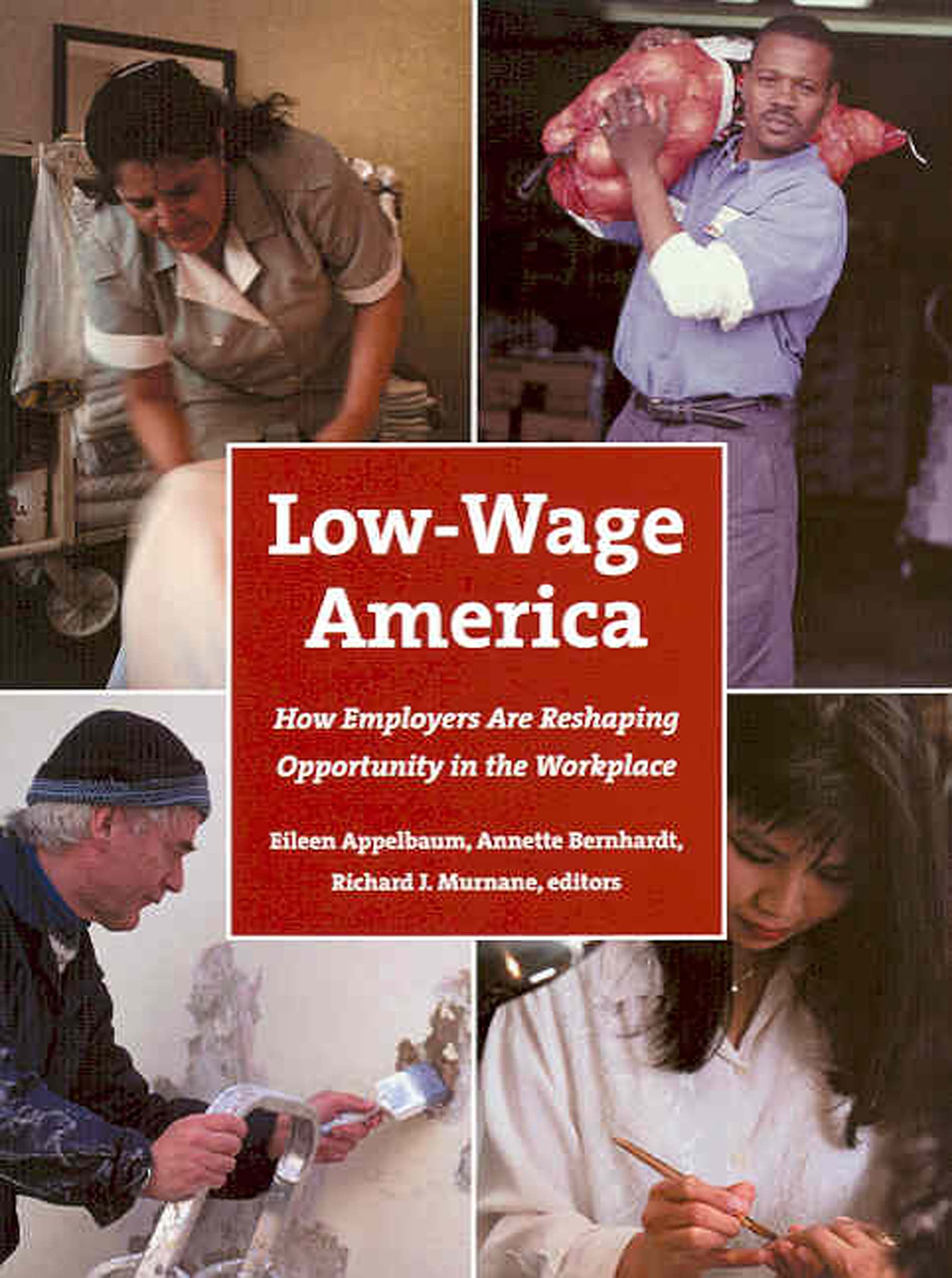
Title
Lowwage America: How Employers Are Reshaping Opportunity In The Workplace (The Russell Sage Foundation Case Studies Of Job Qual,Used
Sold by Ergodebooks, an authorized reseller.
Returns accepted within 30 days | support@ergodebooks.com
Shipping Information
- Free Standard Shipping — United States only
- Processing Time: 3–5 business days
- Estimated Delivery: 6–10 business days after dispatch
- Double-boxed, fully insured & discreetly packaged
- Tracking number sent via email once dispatched
Returns & Refund
Returns accepted within 30 days of delivery.
Damaged or Defective Item
Free return shipping + replacement or full refund
Wrong Item Received
Free return shipping + replacement or full refund
Change of Mind
Return shipping at customer's expense · 25% restocking fee applies
Payment Option

About 27.5 million Americansnearly 24 percent of the labor forceearn less than $8.70 an hour, not enough to keep a family of four out of poverty, even working fulltime yearround. Job ladders for these workers have been dismantled, limiting their ability to get ahead in today's labor market. LowWage America is the most extensive study to date of how the choices employers make in response to economic globalization, industry deregulation, and advances in information technology affect the lives of tens of millions of workers at the bottom of the wage distribution. Based on data from hundreds of establishments in twentyfive industriesincluding manufacturing, telecommunications, hospitality, and health carethe case studies document how firms' responses to economic restructuring often results in harsh working conditions, reduced benefits, and fewer opportunities for advancement. For instance, increased pressure for profits in newly consolidated hotel chains has led to costcutting strategies such as requiring maids to increase the number of rooms they clean by 50 percent. Technological changes in the organization of call centersthe ultimate 'disposable workplace'have led to monitoring of operators' work performance, and eroded job ladders. Other chapters show how the temporary staffing industry has provided paths to better work for some, but to dead end jobs for many others; how new technology has reorganized work in the back offices of banks, raising skill requirements for workers; and how increased competition from abroad has forced U.S. manufacturers to cut costs by reducing wages and speeding production. Although employers' responses to economic pressures have had a generally negative effect on frontline workers, some employers manage to resist this trend and still compete successfully. The benefits to workers of multiemployer training consortia and the continuing relevance of unions offer important clues about what public policy can do to support the job prospects of this vast, but largely overlooked segment of the American workforce. LowWage America challenges us to a national selfexamination about the nature of lowwage work in this country and asks whether we are willing to tolerate the profound social and economic consequences entailed by these jobs. A Volume in the Russell Sage Foundation Case Studies of Job Quality in Advanced Economies
⚠️ WARNING (California Proposition 65):
This product may contain chemicals known to the State of California to cause cancer, birth defects, or other reproductive harm.
For more information, please visit www.P65Warnings.ca.gov.