
Title
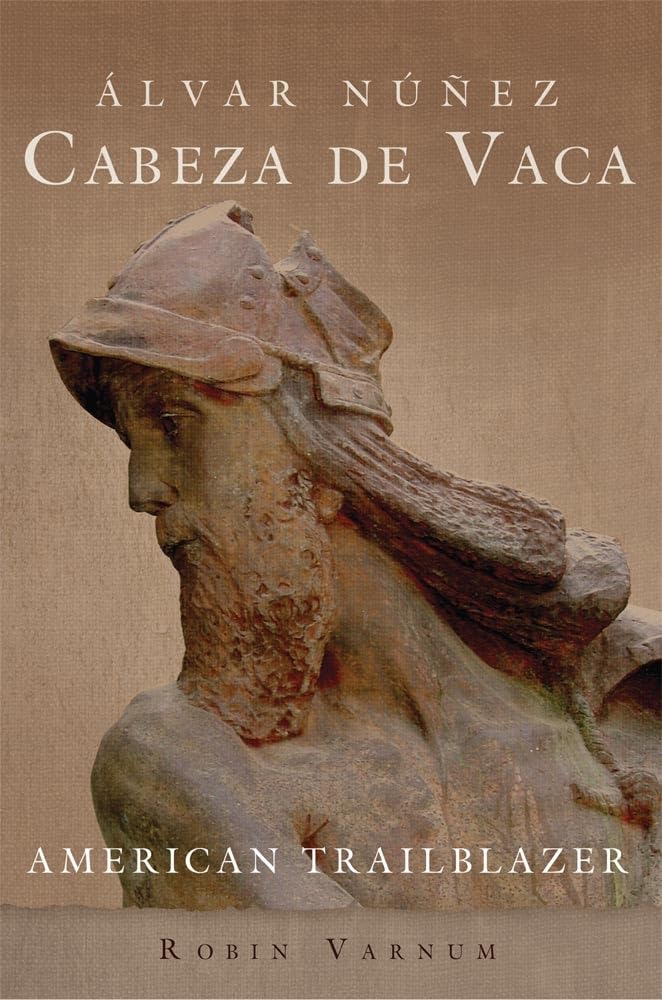
Lvar Nez Cabeza De Vaca: American Trailblazer,Used
Sold by Ergodebooks, an authorized reseller.
Returns accepted within 30 days | support@ergodebooks.com
Shipping Information
- Free Standard Shipping — United States only
- Processing Time: 3–5 business days
- Estimated Delivery: 6–10 business days after dispatch
- Double-boxed, fully insured & discreetly packaged
- Tracking number sent via email once dispatched
Returns & Refund
Returns accepted within 30 days of delivery.
Damaged or Defective Item
Free return shipping + replacement or full refund
Wrong Item Received
Free return shipping + replacement or full refund
Change of Mind
Return shipping at customer's expense · 25% restocking fee applies
Payment Option

In November 1528, almost a century before the Pilgrims landed at Plymouth Rock, the remnants of a Spanish expedition reached the Gulf Coast of Texas. By July 1536, eight years later, lvar Nez Cabeza de Vaca (c. 14901559) and three other survivors had walked 2,500 miles from Texas, across northern Mexico, to Sonora and ultimately to Mexico City. Cabeza de Vacas account of this astonishing journey is now recognized as one of the great travel stories of all time and a touchstone of New World literature. But his career did not begin and end with his North American ordeal. Robin Varnums biography, the first singlevolume cradletograve account of the explorers life in eighty years, tells the rest of the story.During Cabeza de Vacas peregrinations through the American Southwest, he lived among and interacted with various Indian groups. When he and his nonIndian companions finally reconnected with Spaniards in northern Mexico, he was horrified to learn that his compatriots were enslaving Indians there. His Relacin (1542) advocated using kindness and fairness rather than force in dealing with the native people of the New World. Cabeza de Vaca went on to serve as governor of Spains province of Ro de La Plata in South America (roughly modern Paraguay). As a loyal subject of the king of Spain, he supported the colonialist enterprise and believed in Christianizing the Indians, but he always championed the rights of native peoples. In Ro de La Plata he tried to keep his men from robbing the Indians, enslaving them, or exploiting them sexuallypolicies that caused grumbling among the troops. When Cabeza de Vacas men mutinied, he was sent back to Spain in chains to stand trial before the Royal Council of the Indies.Drawing on the conquistadors own reports and on other sixteenthcentury documents, both in English translation and the original Spanish, Varnums lively narrative braids eyewitness testimony of events with historical interpretation benefiting from recent scholarship and archaeological investigation. As one of the few Spaniards of his era to explore the coasts and interiors of two continents, Cabeza de Vaca is recognized today above all for his more humane attitude toward and interactions with the Indian peoples of North America, Mexico, and South America.
⚠️ WARNING (California Proposition 65):
This product may contain chemicals known to the State of California to cause cancer, birth defects, or other reproductive harm.
For more information, please visit www.P65Warnings.ca.gov.