
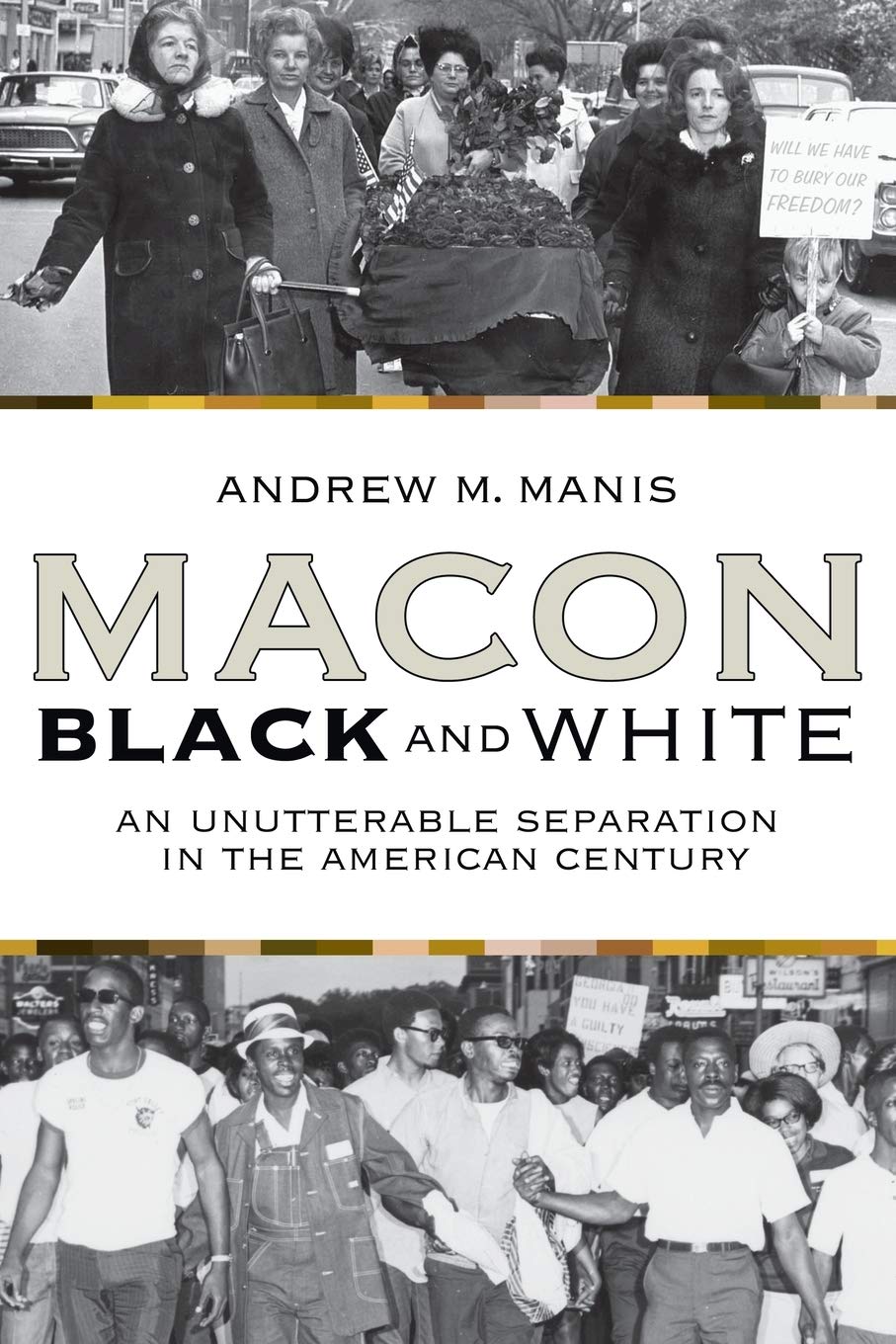
Title


Macon Black and White: An Unutterable Separation in the American Century,Used
Sold by Ergodebooks, an authorized reseller.
Returns accepted within 30 days | support@ergodebooks.com
Shipping Information
- Free Standard Shipping — United States only
- Processing Time: 3–5 business days
- Estimated Delivery: 6–10 business days after dispatch
- Double-boxed, fully insured & discreetly packaged
- Tracking number sent via email once dispatched
Returns & Refund
Returns accepted within 30 days of delivery.
Damaged or Defective Item
Free return shipping + replacement or full refund
Wrong Item Received
Free return shipping + replacement or full refund
Change of Mind
Return shipping at customer's expense · 25% restocking fee applies
Payment Option

A longitudinal study of race relations in a major southern city, Macon Black and White examines the ways white and black Maconites interacted over the course of the entire twentieth century. Beginning in the 1890s, in what has been called the nadir of race relations in America, Andrew M. Manis traces the arduous journey toward racial equality in the heart of Central Georgia. The book describes how, despite incremental progress toward that goal, segregationist pressures sought to silence voices for change on both sides of the color line. Providing a snapshot of blackwhite relations for every decade of the twentieth century, this compellingly written story highlights the ways indigenous development in Macon combined with other statewide, regional, and national factors to shape the struggle for and against racial equality. Manis shows how both AfricanAmericans and a cadre of white moderates, separately and at times together, gradually increased pressure for change in a conservative Georgia city. Showcasing how disfranchisement, lynching, interracial efforts toward the humanization of segregation, the world wars, and the Civil Rights Movement affected the pace of change, Manis describes the eventual rise of a black political class and the election of Macon's first AfricanAmerican mayor. The book uses demographic realities as well as the perspectives of black and white Maconites to paint a portrait of contemporary blackwhite relations in the city. Manis concludes with suggestions on how the city might continue the struggle for racial justice and overcome the unutterable separation that still plagues Macon in the early years of a new century. Macon Black and White is a powerful storythat no one interested in racial change over time can afford to miss.
⚠️ WARNING (California Proposition 65):
This product may contain chemicals known to the State of California to cause cancer, birth defects, or other reproductive harm.
For more information, please visit www.P65Warnings.ca.gov.
- Q: What is the main topic of 'Macon Black and White'? A: 'Macon Black and White' is a longitudinal study of race relations in Macon, Georgia, examining the interactions between white and black residents throughout the twentieth century.
- Q: Who is the author of 'Macon Black and White'? A: The book is authored by Andrew M. Manis.
- Q: What is the publication date of this book? A: 'Macon Black and White' was published on March 1, 2005.
- Q: How many pages are in 'Macon Black and White'? A: The book contains 448 pages.
- Q: What type of binding does this book have? A: 'Macon Black and White' is available in paperback binding.
- Q: What condition is the used book in? A: The used book is listed in 'Good' condition.
- Q: What is the edition of the book? A: 'Macon Black and White' is a First Edition.
- Q: What themes are explored in the book? A: The book explores themes of racial equality, segregation, disfranchisement, and the Civil Rights Movement in the context of Macon, Georgia.
- Q: Is this book suitable for academic research? A: 'Macon Black and White' can be a valuable resource for academic research on race relations and history, particularly regarding the American South.
- Q: Does the book provide suggestions for future racial justice efforts? A: Yes, the author concludes with suggestions on how Macon might continue to address the challenges of racial justice.