
Title
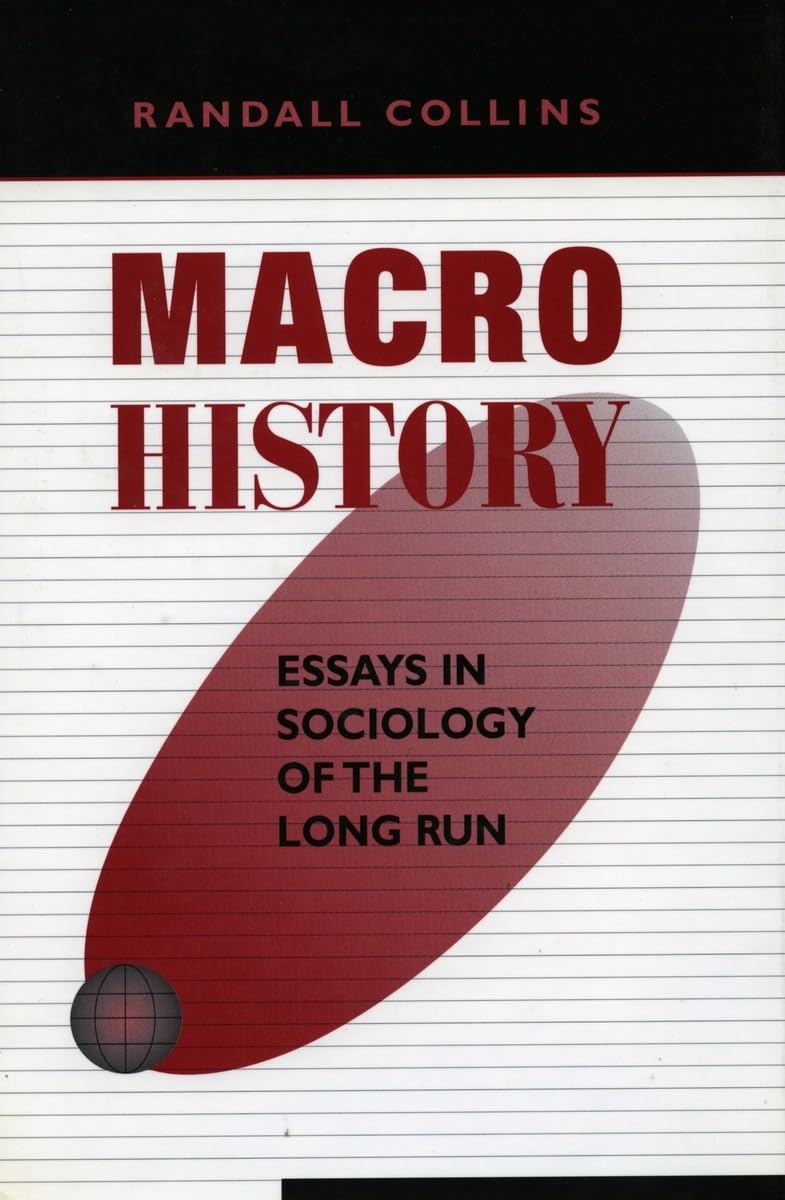
Macrohistory: Essays In Sociology Of The Long Run,Used
Sold by Ergodebooks, an authorized reseller.
Returns accepted within 30 days | support@ergodebooks.com
Shipping Information
- Free Standard Shipping — United States only
- Processing Time: 3–5 business days
- Estimated Delivery: 6–10 business days after dispatch
- Double-boxed, fully insured & discreetly packaged
- Tracking number sent via email once dispatched
Returns & Refund
Returns accepted within 30 days of delivery.
Damaged or Defective Item
Free return shipping + replacement or full refund
Wrong Item Received
Free return shipping + replacement or full refund
Change of Mind
Return shipping at customer's expense · 25% restocking fee applies
Payment Option

This book explores the accomplishments of the golden age of macrohistory, the sociologically informed analysis of longterm patterns of political, economic, and social change that has reached new heights of sophistication in the last decades of the twentieth century.It describes the scholarly revolution that has taken place in the Marxianinspired theory of revolutions, the shift to a statebreakdown model in which revolutions, rather than bubbling up from discontent below, start at the top in the fiscal strains of the state. The author links revolutions to militarycentered transformations of the state, and reviews how he used this theory in the early 1980s to predict the breakdown of the Soviet empire.He goes on to show the implications of viewing states and societies from the outside in, including the geopolitical patterns that affect the legitimacy of dominant ethnic groups and thus determine the direction of ethnic assimilation or fragmentation. Another application is the authors new theory of democratization, which asserts that democracy depends not merely on a widening of the franchise but on a geopolitical pattern favoring federated structures of collegially shared power.Using this new theoretical tool, the author argues that Anglophone scholars have polemically misinterpreted German history, and that the roots of the Holocaust cannot be determined by Germanbashing but must be attributed to processes that affect all of us. Other essays generalize about the historical dynamics and transformations of markets. Going beyond Webers Eurocentric model, the author proposes a more general theory that explains the origins of capitalism in Japan on an independent but parallel path.
⚠️ WARNING (California Proposition 65):
This product may contain chemicals known to the State of California to cause cancer, birth defects, or other reproductive harm.
For more information, please visit www.P65Warnings.ca.gov.