If you have any questions, you are always welcome to contact us. We'll get back to you as soon as possible, withing 24 hours on weekdays.
Customer service
All questions about your order, return and delivery must be sent to our customer service team by e-mail at yourstore@yourdomain.com
Sale & Press
If you are interested in selling our products, need more information about our brand or wish to make a collaboration, please contact us at press@yourdomain.com
Help
If you have any questions, you are always welcome to contact us. We'll get back to you as soon as possible, withing 24 hours on weekdays.
Customer service
All questions about your order, return and delivery must be sent to our customer service team by e-mail at yourstore@yourdomain.com
Sale & Press
If you are interested in selling our products, need more information about our brand or wish to make a collaboration, please contact us at press@yourdomain.com
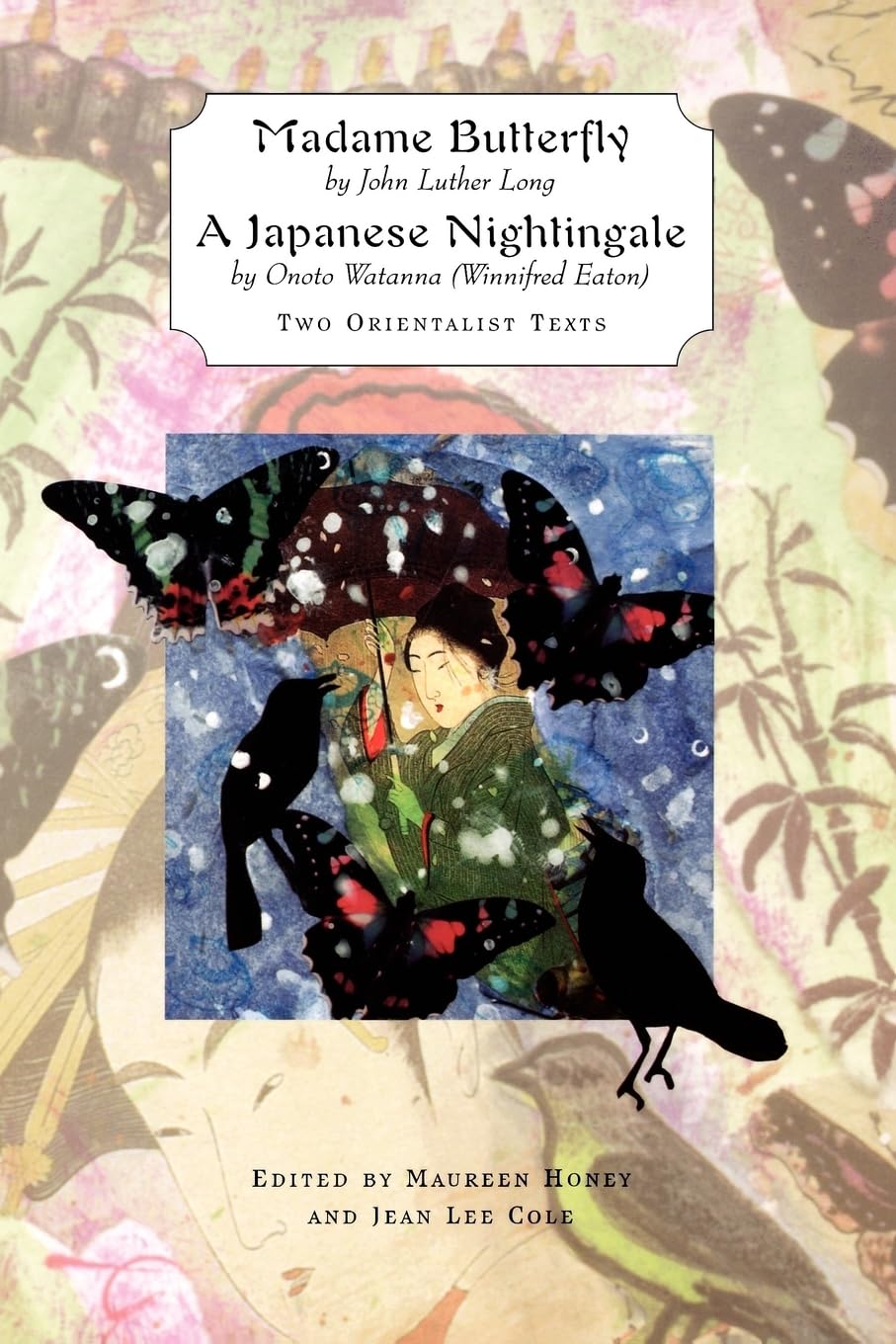
Madame Butterfly (1898) and A Japanese Nightingale (1901) both appeared at the height of American fascination with Japanese culture. These two novellas are paired here together for the first time to show how they defined and redefined contemporary misconceptions of the 'Orient.' This is the first reprinting of A Japanese Nightingale since its 1901 appearance, when it propelled Winnifred Eaton (using the pseudonym Onoto Watanna) to fame. John Luther Long's Madame Butterfly introduced American readers to the figure of the tragic geisha who falls in love with, and is then rejected by, a dashing American man; the opera Puccini based upon this work continues to enthrall audiences worldwide. Although Long emphasized the insensitivity of Westerners in their dealings with Asian people, the everfaithful ChoChoSan typified Asian subservience and Western dominance. A Japanese Nightingale takes Long's revision several steps further. Eaton's heroine is powerful in her own right and is loved on her own terms. A Japanese Nightingale is also significant for its hidden personal nature. Although Eaton's pen name implied she was Japanese, she was, in fact, of Chinese descent. Living in a society that was virulently antiChinese, she used a Japanese screen for her own problematic identity, and A Japanese Nightingale tells us as much about the author's struggle to embrace her Asian heritage as it does about the stereotypes she contests.
⚠️ WARNING (California Proposition 65):
This product may contain chemicals known to the State of California to cause cancer,
birth defects, or other reproductive harm.
For MAP (Minimum Advertised Price) violations and Intellectual Property (IP) or Trademark concerns, please contact:
support@ergodebooks.com
⚠️ California Proposition 65 Warning: Some products sold on this website may expose you to chemicals known to the State of California to cause cancer, birth defects, or other reproductive harm. For more information, visit www.P65Warnings.ca.gov.