If you have any questions, you are always welcome to contact us. We'll get back to you as soon as possible, withing 24 hours on weekdays.
Customer service
All questions about your order, return and delivery must be sent to our customer service team by e-mail at yourstore@yourdomain.com
Sale & Press
If you are interested in selling our products, need more information about our brand or wish to make a collaboration, please contact us at press@yourdomain.com
Help
If you have any questions, you are always welcome to contact us. We'll get back to you as soon as possible, withing 24 hours on weekdays.
Customer service
All questions about your order, return and delivery must be sent to our customer service team by e-mail at yourstore@yourdomain.com
Sale & Press
If you are interested in selling our products, need more information about our brand or wish to make a collaboration, please contact us at press@yourdomain.com
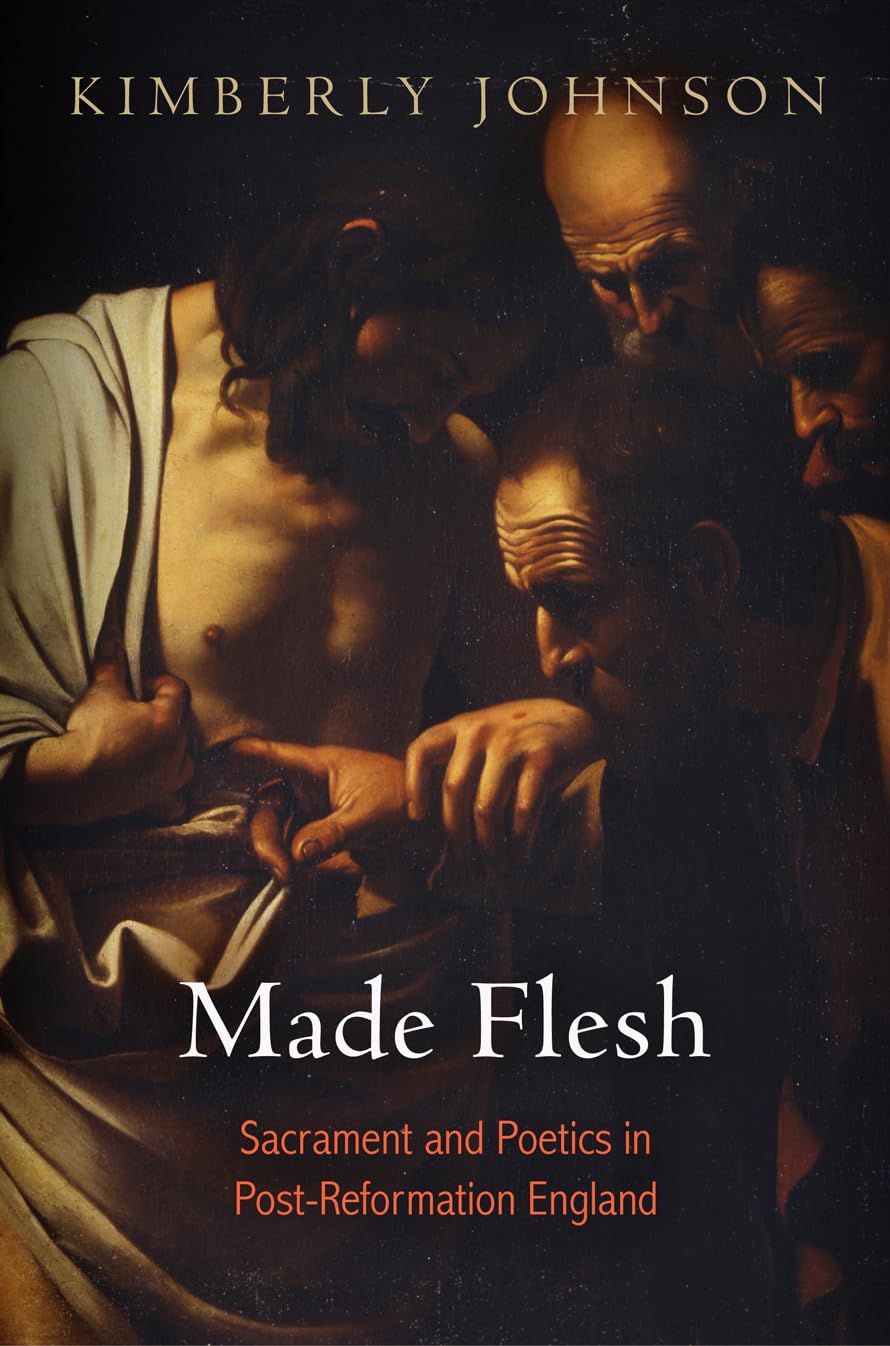
During the Reformation, the mystery of the Eucharist was the subject of contentious debate and a nexus of concerns over how the material might embody the sublime and how the absent might be made present. For Kimberly Johnson, the question of how exactly Christ can be present in bread and wine is fundamentally an issue of representation, and one that bears directly upon the mechanics of poetry. In Made Flesh, she explores the sacramental conjunction of text with materiality and word with flesh through the peculiar poetic strategies of the seventeenthcentury English lyric.Made Flesh examines the ways in which the works of John Donne, George Herbert, Richard Crashaw, Edward Taylor, and other devotional poets explicitly engaged in issues of signification, sacrament, worship, and the ontological value of the material world. Johnson reads the turn toward interpretively obstructive and difficult forms in the seventeenthcentury English lyric as a strategy to accomplish what the Eucharist itself cannot: the transubstantiation of absence into perceptual presence by emphasizing the material artifact of the poem. At its core, Johnson demonstrates, the Reformation debate about the Eucharist was an issue of semiotics, a reimagining of the relationship between language and materiality. The selfasserting flourishes of technique that developed in response to sixteenthcentury sacramental controversy have farreaching effects, persisting from the postReformation period into literary postmodernity.
⚠️ WARNING (California Proposition 65):
This product may contain chemicals known to the State of California to cause cancer,
birth defects, or other reproductive harm.
For MAP (Minimum Advertised Price) violations and Intellectual Property (IP) or Trademark concerns, please contact:
support@ergodebooks.com
⚠️ California Proposition 65 Warning: Some products sold on this website may expose you to chemicals known to the State of California to cause cancer, birth defects, or other reproductive harm. For more information, visit www.P65Warnings.ca.gov.