
Title
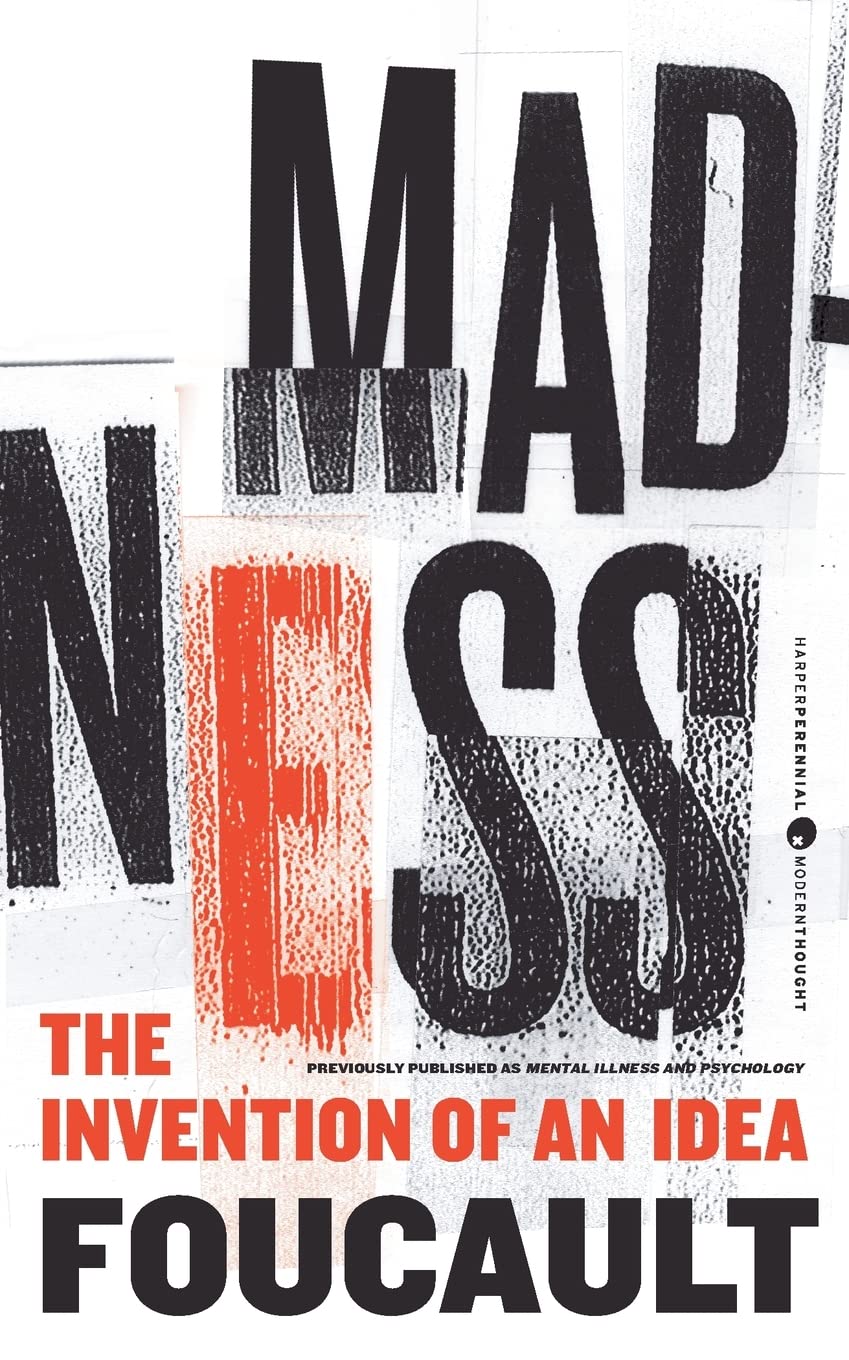
Madness: The Invention of an Idea (Harper Perennial Modern Thought),Used
Sold by Ergodebooks, an authorized reseller.
Returns accepted within 30 days | support@ergodebooks.com
Shipping Information
- Free Standard Shipping — United States only
- Processing Time: 3–5 business days
- Estimated Delivery: 6–10 business days after dispatch
- Double-boxed, fully insured & discreetly packaged
- Tracking number sent via email once dispatched
Returns & Refund
Returns accepted within 30 days of delivery.
Damaged or Defective Item
Free return shipping + replacement or full refund
Wrong Item Received
Free return shipping + replacement or full refund
Change of Mind
Return shipping at customer's expense · 25% restocking fee applies
Payment Option

Michel Foucaults first exploration of insanity as a social constructand his debut work of criticism, published nearly a decade before Madness and CivilizationMadness offers an invaluable lens through which to observe the seminal social critics philosophical evolution. Previously published as Mental Illness and Psychology, this exciting and accessible new edition offers unique insight into both Foucaults early engagement with the psychoanalytic tradition and his critical break from Freud, giving readers a crucial look at the thinking that prefigured The History of Sexuality, The Archeology of Knowledge, and more.
⚠️ WARNING (California Proposition 65):
This product may contain chemicals known to the State of California to cause cancer, birth defects, or other reproductive harm.
For more information, please visit www.P65Warnings.ca.gov.
- Q: How many pages does this book have? A: This book has one hundred sixty pages. It is a concise exploration of Michel Foucault's ideas on insanity.
- Q: What is the size of the book? A: The book measures four point five inches in length, zero point four four inches in width, and seven point thirteen inches in height. This makes it a portable paperback edition.
- Q: What type of binding does this book have? A: This book has a paperback binding. It provides a flexible and lightweight option for readers.
- Q: How do I read this book effectively? A: To read this book effectively, consider taking notes on key concepts and themes. Engaging with the text through reflection will enhance your understanding of Foucault's arguments.
- Q: Is this book suitable for beginners in philosophy? A: Yes, this book is suitable for beginners in philosophy. It presents Foucault's ideas in an accessible manner, making it easier for new readers to grasp complex concepts.
- Q: What age group is this book appropriate for? A: This book is appropriate for adults and older teens interested in sociology and psychology. It discusses mature themes related to mental health and societal norms.
- Q: How should I store this book? A: Store this book in a cool, dry place away from direct sunlight to avoid damage. Keeping it on a bookshelf will help maintain its condition.
- Q: Can I clean the book if it gets dirty? A: Yes, you can clean the book gently with a dry cloth. Avoid using water or cleaning solutions as they can damage the pages.
- Q: Is this book safe for sensitive readers? A: Yes, while it addresses challenging subjects, the book is written with a clinical approach. Readers should be prepared for discussions on mental health.
- Q: What if the book arrives damaged? A: If the book arrives damaged, you should contact the seller for a return or exchange. Most sellers offer customer support for such issues.
- Q: Does this book come with a warranty? A: No, this book does not typically come with a warranty. However, check with the seller for any return policies.
- Q: What should I do if I have issues with my order? A: If you have issues with your order, contact the customer service of the retailer. They can assist you with returns or exchanges.
- Q: How does this book compare to Foucault's later works? A: This book focuses on Foucault's early thoughts on insanity, contrasting with his later works like 'The History of Sexuality' which delve deeper into societal power structures.
- Q: Is this book recommended for academic study? A: Yes, this book is recommended for academic study in fields like psychology and philosophy. It provides foundational insights into Foucault's theories.
- Q: What themes does this book cover? A: This book covers themes of insanity as a social construct and critiques of psychoanalysis. It offers a lens into Foucault's philosophical evolution.
- Q: Are there any notable quotes from the book? A: Yes, the book contains several notable quotes that reflect Foucault's views on mental illness and society. They are pivotal for understanding his arguments.