
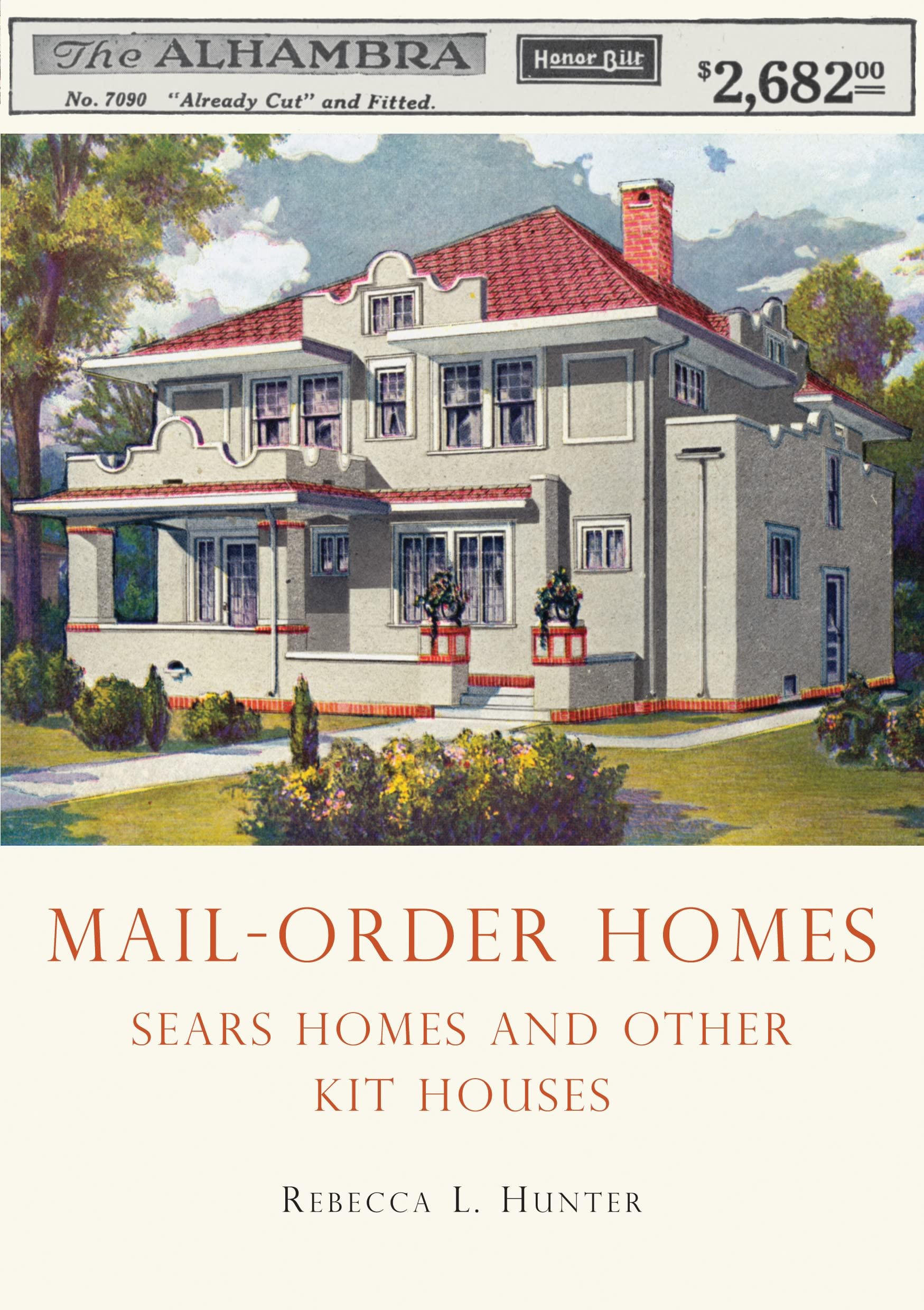
Title
Mailorder Homes: Sears Homes And Other Kit Houses (Shire Usa)
Sold by Ergodebooks, an authorized reseller.
Returns accepted within 30 days | support@ergodebooks.com
Shipping Information
- Free Standard Shipping — United States only
- Processing Time: 3–5 business days
- Estimated Delivery: 6–10 business days after dispatch
- Double-boxed, fully insured & discreetly packaged
- Tracking number sent via email once dispatched
Returns & Refund
Returns accepted within 30 days of delivery.
Damaged or Defective Item
Free return shipping + replacement or full refund
Wrong Item Received
Free return shipping + replacement or full refund
Change of Mind
Return shipping at customer's expense · 25% restocking fee applies
Payment Option

At The Turn Of The Last Century, The American Middle Class Was Expanding Rapidly As Homesteaders Moved West And As Trains Took Travellers Across The Country, Where They Established Themselves In The Depot Towns That Erupted Along Train Lines. With That Growth Came The Demand For New Homes, And From That Demand Grew A New Industry: Mailorder Homes. Sold By Such Makers As Sears, Roebuck & Co., Aladdin, And Montgomery Wards, These Kit Homes Were Shipped By Train, Arriving In Two Boxcars, Which Then Were Offloaded By The Purchasers, Usually With A Team Of Horse And Wagon. In The Boxcars Was Absolutely Everything Needed To Assemble A House, Whether It Be A Vacation Cottage, Modest Bungalow, Or Twoandahalf Storey Home. Literally Tens Of Thousands Of These Affordable Homes Were Sold In The Early 1900S, With Most Built Between 191040. In Mailorder Homes, Historical Architectural Researcher Rebecca Hunter Brings To Life The History Of These Charming Homes, Many Of Which Still Stand In Communities Across The Country. From The Manufacturers Of Mailorder Homes To The Customers Who Bought And Built Them, And From The Styles And Designs To The Boom And Bust Of The Industry, Hunter Explains The History Of These Forgotten Homes. Filled With Illustrations From Mailorder Home Catalogs And Contemporary Photos, This Book Tells The Story Of A Bygone Era Of Residential Architecture.
⚠️ WARNING (California Proposition 65):
This product may contain chemicals known to the State of California to cause cancer, birth defects, or other reproductive harm.
For more information, please visit www.P65Warnings.ca.gov.
- Q: What is the page count of 'Mail-Order Homes: Sears Homes and Other Kit Houses'? A: This book has sixty-four pages. It provides a concise yet informative look into the history of mail-order homes.
- Q: What are the dimensions of this book? A: The book measures five point eight seven inches in length, zero point two inches in width, and eight point two seven inches in height. These dimensions make it a portable and easy-to-handle read.
- Q: What type of binding does this book have? A: The book is bound in paperback. This binding choice offers flexibility and makes it lightweight for readers.
- Q: Who is the author of 'Mail-Order Homes'? A: The author is Rebecca Hunter. She is a historical architectural researcher who explores the fascinating history of mail-order homes.
- Q: What genre does this book belong to? A: This book falls under the residential architecture genre. It focuses on the historical significance and stories of mail-order homes.
- Q: How do you read 'Mail-Order Homes'? A: You can read this book in any comfortable setting, as it is designed for anyone interested in architecture or history. It is suitable for casual readers and architecture enthusiasts alike.
- Q: Is 'Mail-Order Homes' suitable for children? A: Yes, this book is suitable for older children with an interest in history or architecture. It provides educational content without inappropriate material.
- Q: Can this book be used as a reference for architectural studies? A: Yes, it can serve as a reference for architectural studies. The book includes historical context and illustrations that highlight the significance of mail-order homes.
- Q: What is the main theme of 'Mail-Order Homes'? A: The main theme is the history and evolution of mail-order homes in America. It covers their manufacturing, design, and impact on communities.
- Q: How should I store this book to keep it in good condition? A: Store the book in a cool, dry place away from direct sunlight. Keeping it upright on a shelf can help maintain its shape.
- Q: Is there any special care required for this book? A: No special care is required for this book. However, handling it with clean hands can help prevent smudges and damage.
- Q: What should I do if the book arrives damaged? A: If the book arrives damaged, contact the seller for a return or replacement. Most retailers have customer service policies to address such issues.
- Q: Can I return 'Mail-Order Homes' if I'm not satisfied? A: Yes, you can return the book if you are not satisfied, provided you follow the retailer's return policy. Check the terms for specific conditions.
- Q: Are there illustrations in 'Mail-Order Homes'? A: Yes, the book is filled with illustrations from mail-order home catalogs and contemporary photos. These visuals enhance the historical narrative.
- Q: Does this book cover the designs of specific mail-order homes? A: Yes, it discusses various styles and designs of mail-order homes. The author provides insights into the architectural features of these homes.
- Q: What audience is 'Mail-Order Homes' intended for? A: The book is intended for a general audience, including history buffs, architecture enthusiasts, and anyone interested in American residential design.