
Title
Mainstreaming Building Energy Efficiency Codes In Developing Countries: Global Experiences And Lessons From Early Adopters (Worl,New
Sold by Ergodebooks, an authorized reseller.
Returns accepted within 30 days | support@ergodebooks.com
Shipping Information
- Free Standard Shipping — United States only
- Processing Time: 3–5 business days
- Estimated Delivery: 6–10 business days after dispatch
- Double-boxed, fully insured & discreetly packaged
- Tracking number sent via email once dispatched
Returns & Refund
Returns accepted within 30 days of delivery.
Damaged or Defective Item
Free return shipping + replacement or full refund
Wrong Item Received
Free return shipping + replacement or full refund
Change of Mind
Return shipping at customer's expense · 25% restocking fee applies
Payment Option

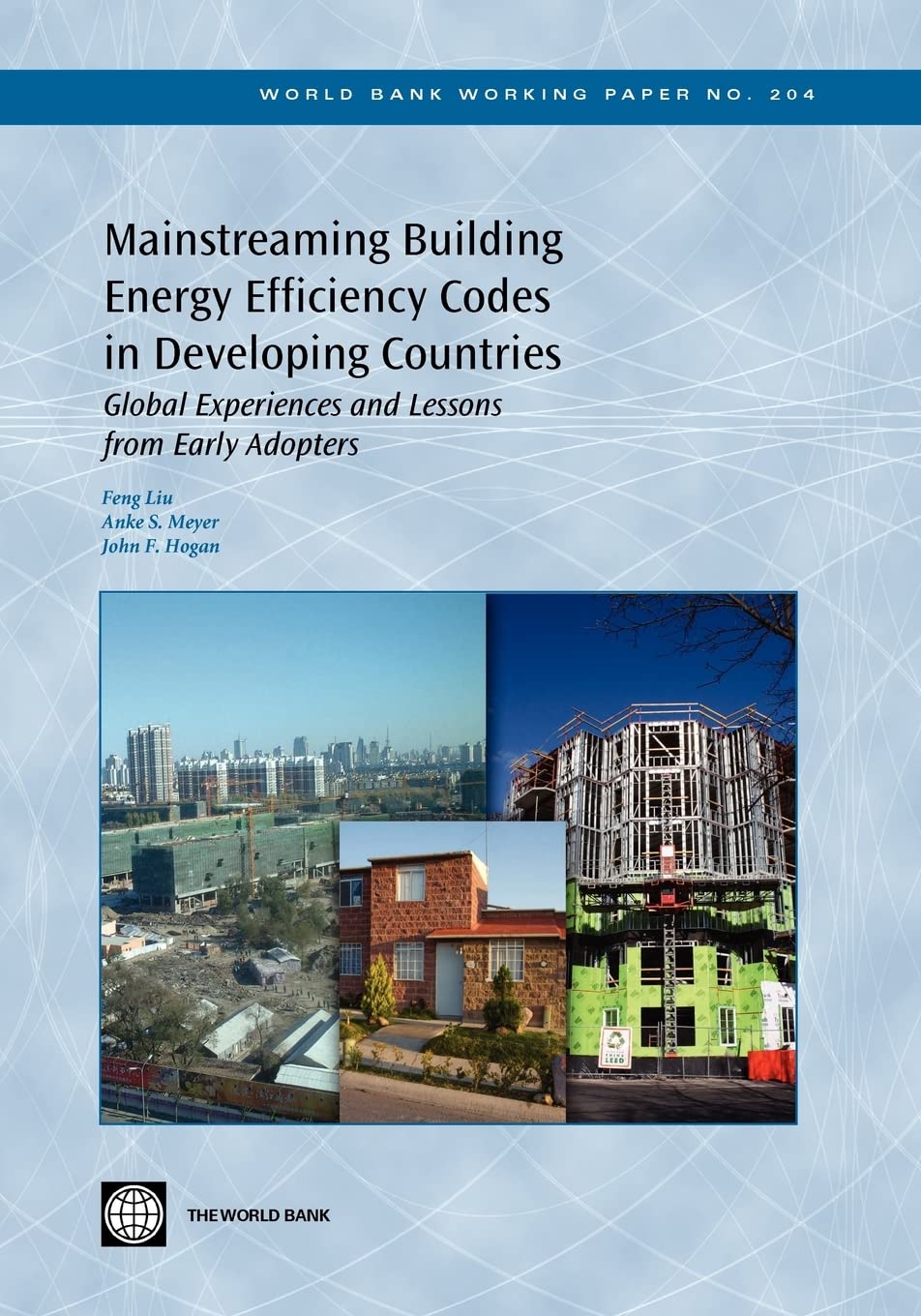
Urbanization and growing wealth in developing countries portend a large increase of demand for modern energy services in residential, commercial and publicservice buildings in the coming decades. Pursuing energy efficiency in buildings is vital to energy security in developing countries and is identified by the Intergovernment Panel on Climate Change as having the greatest potential for costeffective reduction of CO2 emissions by 2030 among all energyconsuming sectors. Building energy efficiency codes (BEECs), along with energy efficiency standards for major appliances and equipment, are broadly recognized as a necessary government intervention to overcome persistent market barriers to capturing the economic potential of energy efficiency gains in the residential, commercial and publicservice sectors. Implementation of BEECs help prevent costly energy wastes over the lifecycles of buildings in space heating, air conditioning, lighting, and other energy service requirements. Nonetheless, achieving the full potential of energy savings afforded by more energyefficient buildings requires holding people who live or work in buildings accountable for the cost of energy services. Compliance enforcement has been the biggest challenge to implementing BEECs. This report summarizes the findings of an extensive literature survey of the experiences of implementing BEECs in developed countries, as well as those from case studies of China, Egypt, India, and Mexico. It also serves as a primer on the basic features and contents of BEECs and the commonly adopted compliance and enforcement approaches. This report highlights the key challenges to improving compliance enforcement in developing countries, including government commitment to energy efficiency, the effectiveness of government oversight of the construction sector, the compliance capacity of building supply chain, and financing constraints. The report notes that the process of transforming a country s building supply chain toward delivering increasingly more energyefficient buildings takes time and requires persistent government intervention through uniformly enforced and regularly updated BEECs. The report recommends increased international support in strengthening the enforcement infrastructure for BEECs in middleincome developing countries. For low and lowermiddleincome countries, there is an urgent need to assist in improving the effectiveness of government oversight system for building construction, laying the foundation for the system to also cover BEECs.
⚠️ WARNING (California Proposition 65):
This product may contain chemicals known to the State of California to cause cancer, birth defects, or other reproductive harm.
For more information, please visit www.P65Warnings.ca.gov.