If you have any questions, you are always welcome to contact us. We'll get back to you as soon as possible, withing 24 hours on weekdays.
Customer service
All questions about your order, return and delivery must be sent to our customer service team by e-mail at yourstore@yourdomain.com
Sale & Press
If you are interested in selling our products, need more information about our brand or wish to make a collaboration, please contact us at press@yourdomain.com
Help
If you have any questions, you are always welcome to contact us. We'll get back to you as soon as possible, withing 24 hours on weekdays.
Customer service
All questions about your order, return and delivery must be sent to our customer service team by e-mail at yourstore@yourdomain.com
Sale & Press
If you are interested in selling our products, need more information about our brand or wish to make a collaboration, please contact us at press@yourdomain.com
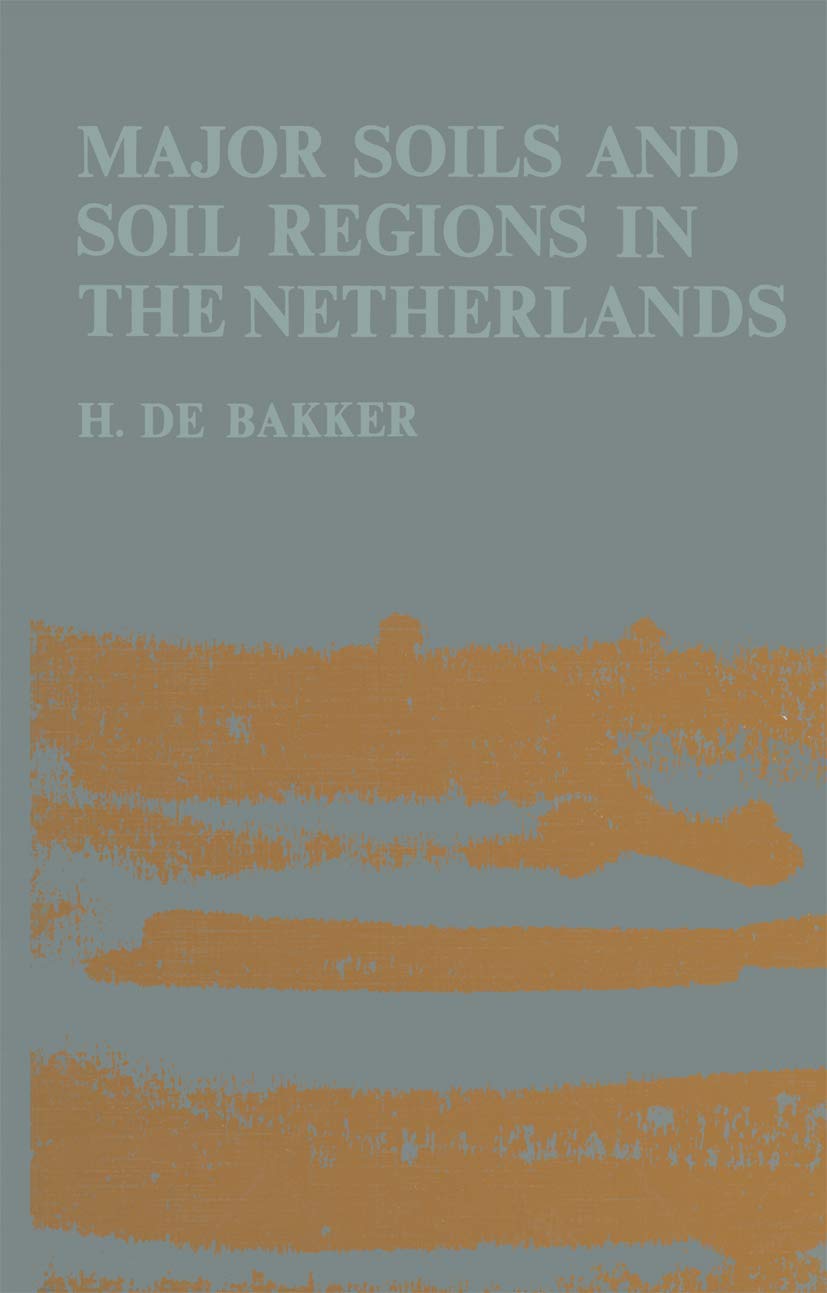
Soil science in the Netherlands puts strong emphasis on the relationship between parent material and soil formation, and between physiographic conditions and land use. This approach, developed by the late Professor Dr C. H. Edelman ( 19031964), is quite understandable in a country where soils have to a great extent developed from alluvial and aeolian materials of recent geological origin. Dutch soil scientists have paid much attention to pedogenesis in fresh sediments, known as 'initial soil formation' or 'ripening', and to groundwater as a soil forming factor. Furthermore, human influence on soil genesis, in this land of manmade soils, has been tho roughly investigated. 'Major soils and soil regions in the Netherlands' clearly reflects these specific features of soils work in this country. In his book, Mr H. de Bakker, Head of the Soil Classification Section of the Netherlands Soil Survey Institute (Stichting voor Bodemkartering) addresses the special interests of foreign soil scientists and of students of earth sciences. The author examines representative soil profiles not only with respect to the Netherlands' system of soil classification of which he is the coauthorbut also in terms of some of the major classification systems used in other countries. It appears that a well characterized soil profile may find a very different place in various classifications and that even for a trained specialist it is often difficult to arrive at a specific determination within a given system.
⚠️ WARNING (California Proposition 65):
This product may contain chemicals known to the State of California to cause cancer,
birth defects, or other reproductive harm.
For MAP (Minimum Advertised Price) violations and Intellectual Property (IP) or Trademark concerns, please contact:
support@ergodebooks.com
⚠️ California Proposition 65 Warning: Some products sold on this website may expose you to chemicals known to the State of California to cause cancer, birth defects, or other reproductive harm. For more information, visit www.P65Warnings.ca.gov.