
Title
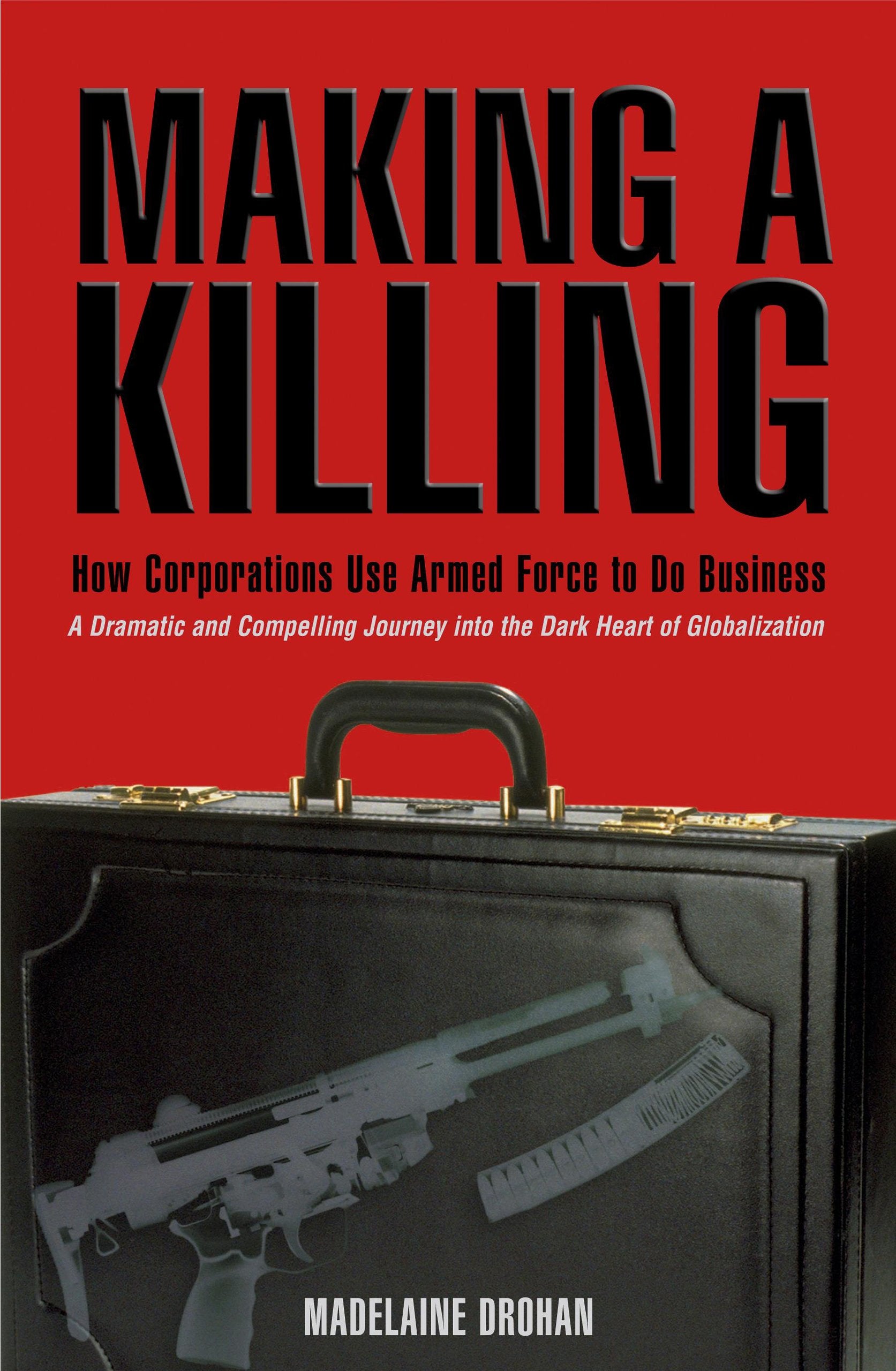
Making A Killing: How And Why Corporations Use Armed Force To Do Business
Sold by Ergodebooks, an authorized reseller.
Returns accepted within 30 days | support@ergodebooks.com
Shipping Information
- Free Standard Shipping — United States only
- Processing Time: 3–5 business days
- Estimated Delivery: 6–10 business days after dispatch
- Double-boxed, fully insured & discreetly packaged
- Tracking number sent via email once dispatched
Returns & Refund
Returns accepted within 30 days of delivery.
Damaged or Defective Item
Free return shipping + replacement or full refund
Wrong Item Received
Free return shipping + replacement or full refund
Change of Mind
Return shipping at customer's expense · 25% restocking fee applies
Payment Option

What Happens When Multinational Corporations Decide That The Use Of Armed Force Is Just Business By Another Means? In Making A Killing, Madelaine Drohan Looks At The Shocking Number Of Companies That Have Linked Up With Mercenaries, Warlords, Armies, And Private Militias In Order To Make A Profit. In A World Where Multinationals Often Rival National Governments In Size And Clout, The Implications Of Such Partnerships Are Ominous. What Leads Respectable Corporations Down The Path To Violence? Drohan Answers This Question By Examining The Actions Of Several Companies Operating In Africa, Such As Ranger Oil West Africa, Which Used The Mercenary Group Executive Outcomes To Take On Rebels In Angola'S Longrunning Civil War; And Talisman Energy, Whose Security Was Provided By Sudanese Army Units Conducting A Scorchedearth Policy In The Oil Fields.Drohan Traces The Modern Roots Of Corporate Armed Force, Beginning With Cecil Rhodes'S British South Africa Company, Which At The Turn Of The Twentieth Century Built Its Own Army. Also Included Is The Strangerthanfiction Tale Of Ex Mi5 Spymaster Sir Percy Sillitoe, Who Was Hired By The De Beers Diamond King To Prevent The Soviet Union From Acquiring Smuggled Diamonds In Order To Develop The Hydrogen Bomb. These Accounts Read Like Adventure Stories In The Tradition Of Rudyard Kipling And Ian Fleming, But They Are Essential Reading For Anyone Interested In The Effects Of Unfettered Multinational Influence. Making A Killing Provides A Road Map For Corporations, Policy Makers, And Investors Struggling To Come To Terms With Their Roles In Today'S Increasingly Globalized World.
⚠️ WARNING (California Proposition 65):
This product may contain chemicals known to the State of California to cause cancer, birth defects, or other reproductive harm.
For more information, please visit www.P65Warnings.ca.gov.
- Q: What is the page count of this book? A: The book has three hundred seventy-six pages. This provides ample content for readers interested in corporate practices and armed force.
- Q: What are the dimensions of this hardcover book? A: The dimensions are six and a half inches in length, one inch in width, and nine and a half inches in height. This size makes it easy to hold and read.
- Q: Who is the author of 'Making a Killing'? A: The author is Madelaine Drohan. She explores the complex relationship between corporations and armed force in this compelling narrative.
- Q: What genre does 'Making a Killing' belong to? A: The book falls under the category of Company Profiles. It examines multinational corporations' use of armed force.
- Q: What is the binding type of this book? A: The book is bound in hardcover. This durable binding enhances its longevity and protects the pages.
- Q: How do I read 'Making a Killing' effectively? A: To read it effectively, find a quiet space for focus. The book's themes may require reflection on the implications of corporate actions.
- Q: Is this book suitable for young readers? A: No, this book is not recommended for young readers. It deals with complex themes of violence and corporate ethics.
- Q: What themes are explored in 'Making a Killing'? A: The book explores themes of corporate ethics, violence, and the influence of multinationals. It provides insights into how companies use armed force.
- Q: Can I use this book for academic purposes? A: Yes, the book can be used for academic purposes. It offers valuable insights into business practices and international relations.
- Q: How should I store this hardcover book? A: Store the book in a cool, dry place away from direct sunlight. This will help preserve its condition and prevent fading.
- Q: Is there any special care needed for this book? A: No special care is needed, but avoid exposing it to moisture. Keep it on a shelf or in a bookcase to prevent damage.
- Q: What if my copy of the book arrives damaged? A: If the book arrives damaged, you should contact customer service for return or exchange options. Ensure to keep the packaging for your claim.
- Q: Is there a return policy for this book? A: Yes, there is a return policy. Typically, you can return the book within a specified period if it is in its original condition.
- Q: How do I report an issue with my order? A: To report an issue, contact customer support via email or phone. Provide details about your order and the issue encountered.
- Q: Can I find similar books by the same author? A: Yes, you can find other works by Madelaine Drohan. She has written on topics related to business and ethics.
- Q: How does this book compare to other corporate critique literature? A: This book offers a unique perspective on corporate use of force, making it distinct from other critiques that may focus solely on economic impacts.