If you have any questions, you are always welcome to contact us. We'll get back to you as soon as possible, withing 24 hours on weekdays.
Customer service
All questions about your order, return and delivery must be sent to our customer service team by e-mail at yourstore@yourdomain.com
Sale & Press
If you are interested in selling our products, need more information about our brand or wish to make a collaboration, please contact us at press@yourdomain.com
Help
If you have any questions, you are always welcome to contact us. We'll get back to you as soon as possible, withing 24 hours on weekdays.
Customer service
All questions about your order, return and delivery must be sent to our customer service team by e-mail at yourstore@yourdomain.com
Sale & Press
If you are interested in selling our products, need more information about our brand or wish to make a collaboration, please contact us at press@yourdomain.com
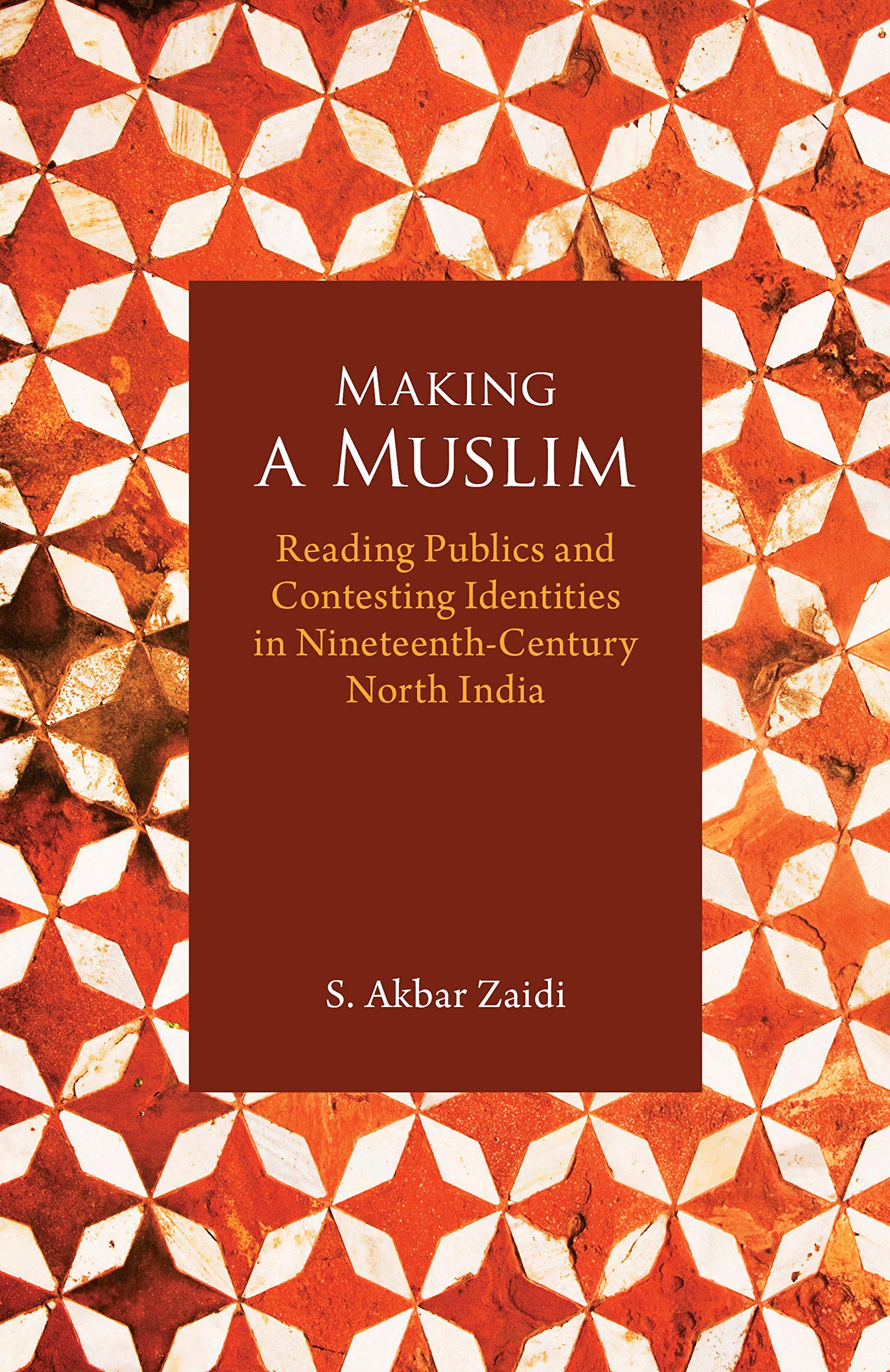
Using primarily Urdu sources from the nineteenth century, this book allows us to rethink notions of 'the Muslim', in its numerous, complex and often contradictory forms, which emerged in colonial North India after 1857. Allowing the selfrepresentation of Muslimness and its manifestations to emerge, it contrasts how the colonial British 'made Muslims' very differently compared to how the community envisaged themselves. A key argument made here contests the general sense of the narrative of lamentation, decay, decline, and a sense of selfpity and ruination, by proposing a different condition, that of zillat, a condition which gave rise to much selfreflection resulting in action, even if it was in the form of writing and expression. By questioning how and when a Muslim community emerged in colonial India, the book unsettles the teleological explanation of the Partition of India and the making of Pakistan.
⚠️ WARNING (California Proposition 65):
This product may contain chemicals known to the State of California to cause cancer,
birth defects, or other reproductive harm.
For MAP (Minimum Advertised Price) violations and Intellectual Property (IP) or Trademark concerns, please contact:
support@ergodebooks.com
⚠️ California Proposition 65 Warning: Some products sold on this website may expose you to chemicals known to the State of California to cause cancer, birth defects, or other reproductive harm. For more information, visit www.P65Warnings.ca.gov.