
Title
Making Catfish Bait Out Of Government Boys: The Fight Against Cattle Ticks And The Transformation Of The Yeoman South (Environme,Used
Sold by Ergodebooks, an authorized reseller.
Returns accepted within 30 days | support@ergodebooks.com
Shipping Information
- Free Standard Shipping — United States only
- Processing Time: 3–5 business days
- Estimated Delivery: 6–10 business days after dispatch
- Double-boxed, fully insured & discreetly packaged
- Tracking number sent via email once dispatched
Returns & Refund
Returns accepted within 30 days of delivery.
Damaged or Defective Item
Free return shipping + replacement or full refund
Wrong Item Received
Free return shipping + replacement or full refund
Change of Mind
Return shipping at customer's expense · 25% restocking fee applies
Payment Option

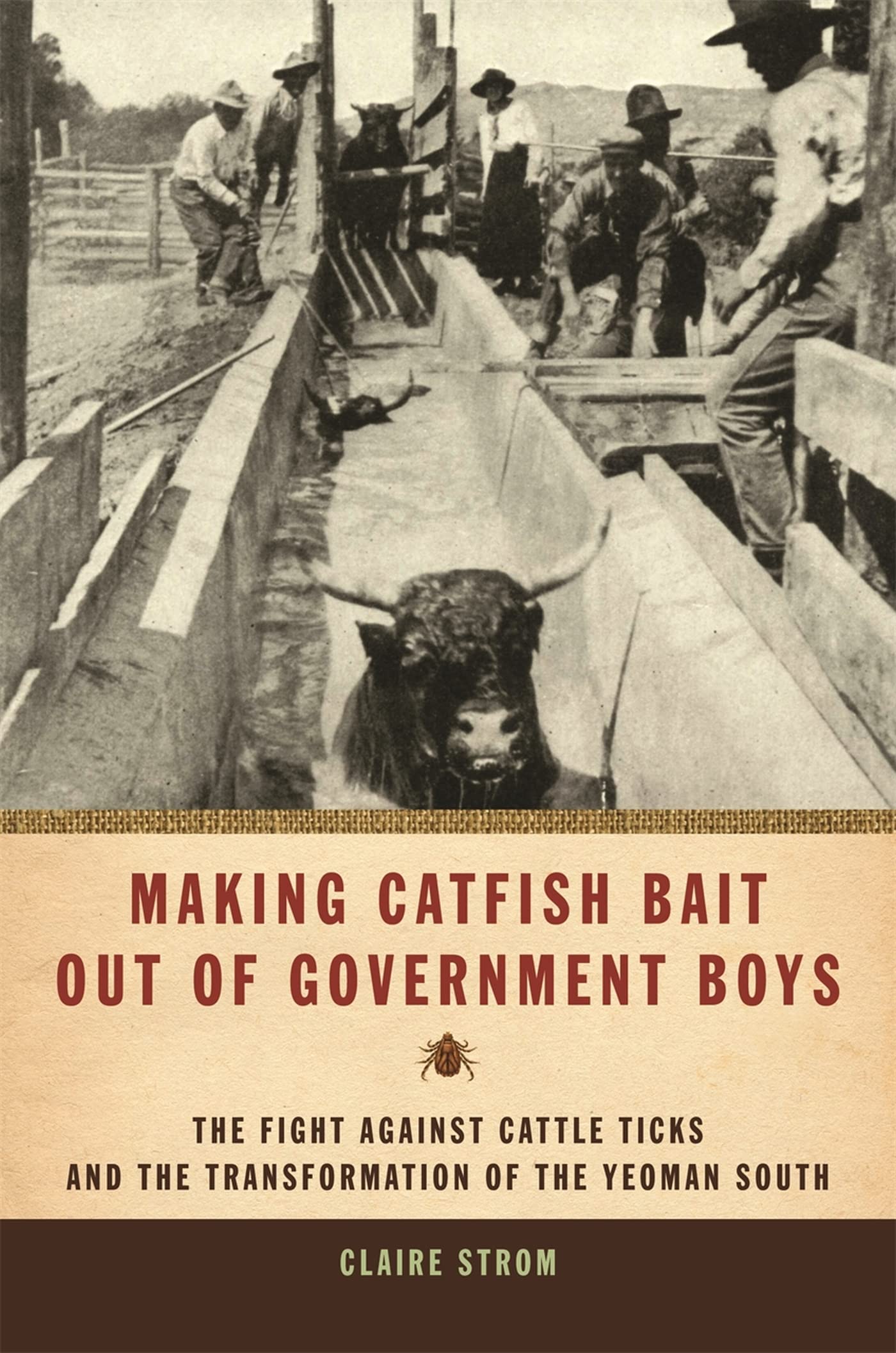
This first fulllength study of the cattle tick eradication program in the United States offers a new perspective on the fate of the yeomanry in the twentiethcentury South during a period when state and federal governments were both increasing and centralizing their authority. As Claire Strom relates the power struggles that complicated efforts to wipe out the Boophilus tick, she explains the motivations and concerns of each group involved, including large and smallscale cattle farmers, scientists, and officials at all levels of government.In the remote rural Southsuch as the piney woods of south Georgia and north Floridaresistance to mandatory treatment of cattle was unusually strong and sometimes violent. Cattle often ranged free, and their owners raised them mostly for local use rather than faraway markets. Cattle farmers in such areas, shows Strom, perceived a double threat in tick eradication mandates. In addition to their added costs, eradication schemes, with their topdown imposition of government expertise, were anathema to the yeomanrys notions of liberty.Strom contextualizes her southern focus within the national scale of the cattle industry, discussing, for instance, the contentious place of cattle drives in American agricultural history. Because Mexico was the primary source of potential tick reinfestation, Strom examines the political and environmental history of the Rio Grande, giving the book a transnational perspective. Debates about the political and economic culture of small farmers have tended to focus on earlier periods in American history. Here Strom shows that pockets of yeoman culture survived into the twentieth century and that these communities had the power to block (if only temporarily) the expansion of the American state.
⚠️ WARNING (California Proposition 65):
This product may contain chemicals known to the State of California to cause cancer, birth defects, or other reproductive harm.
For more information, please visit www.P65Warnings.ca.gov.