
Title
Making Cities Global: The Transnational Turn In Urban History,Used
Sold by Ergodebooks, an authorized reseller.
Returns accepted within 30 days | support@ergodebooks.com
Shipping Information
- Free Standard Shipping — United States only
- Processing Time: 3–5 business days
- Estimated Delivery: 6–10 business days after dispatch
- Double-boxed, fully insured & discreetly packaged
- Tracking number sent via email once dispatched
Returns & Refund
Returns accepted within 30 days of delivery.
Damaged or Defective Item
Free return shipping + replacement or full refund
Wrong Item Received
Free return shipping + replacement or full refund
Change of Mind
Return shipping at customer's expense · 25% restocking fee applies
Payment Option

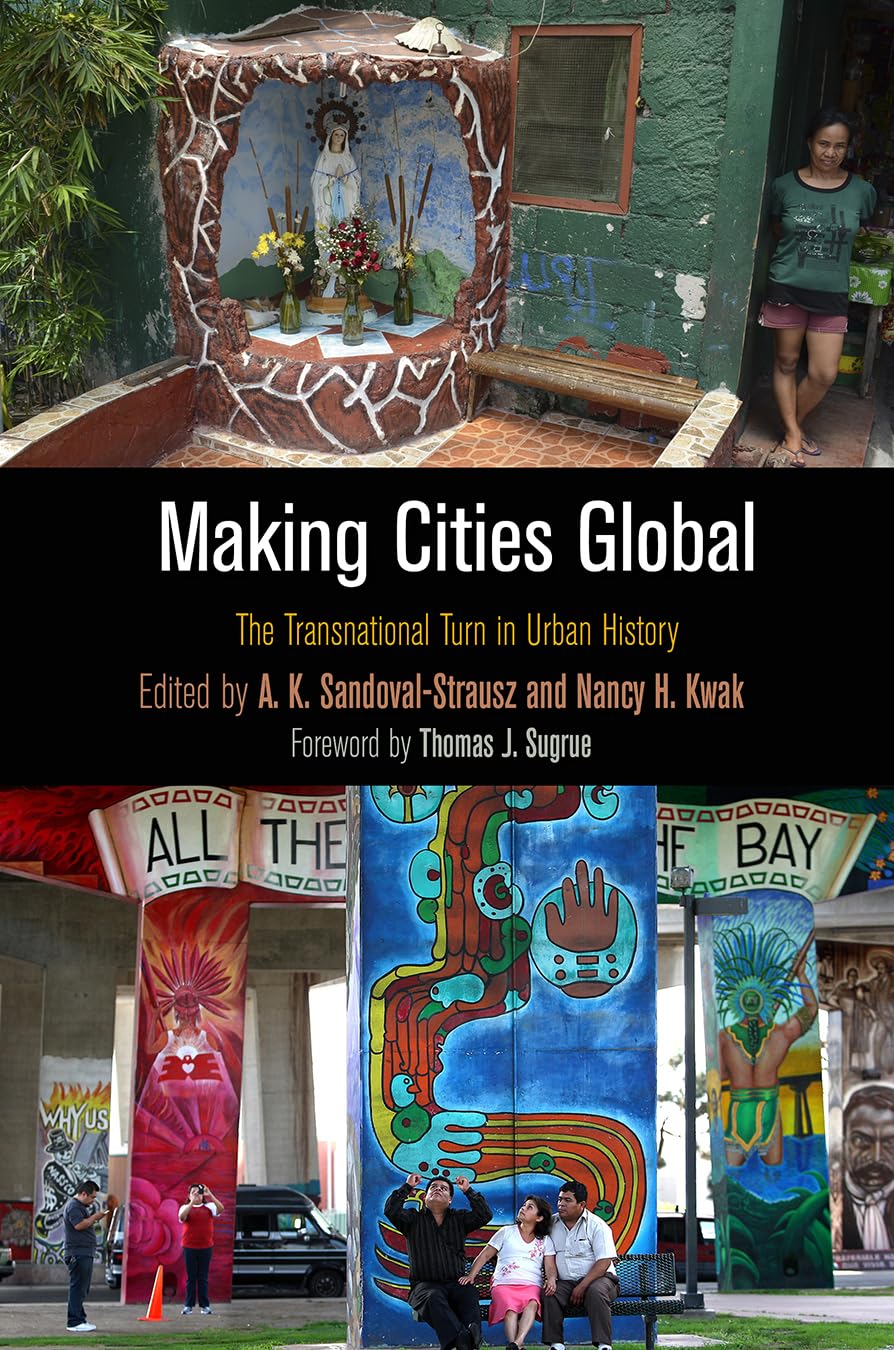
In recent decades, hundreds of millions of people across the world have moved from rural areas to metropolitan regions, some of them crossing national borders on the way. While urbanization and globalization are proceeding with an intensity that seems unprecedented, these are only the most recent iterations of longterm transformationscities have for centuries served as vital points of contact between different peoples, economies, and cultures. Making Cities Global explores the intertwined development of urbanization and globalization using a historical approach that demonstrates the many forms transnationalism has taken, each shaped by the circumstances of a particular time and place. It also emphasizes that globalization has not been persistent or automaticmany people have been as likely to resist or reject outside connections as to establish or embrace them.The essays in the collection revolve around three foundational themes. The first is an emphasis on connections among the United States, East and Southeast Asia, Latin America, and South Asia. Second, contributors ground their studies of globalization in the built environments and everyday interactions of the city, because even worldspanning practices must be understood as people experience them in their neighborhoods, workplaces, stores, and streets. Last is a fundamental concern with the role powerful empires and nationstates play in the emergence of globalizing and urbanizing processes.Making Cities Global argues that combining urban history with a transnational approach leads to a richer understanding of our increasingly interconnected world. In order to achieve prosperity, peace, and sustainability in metropolitan areas in the present and into the future, we must understand their historical origins and development.Contributors: Erica AllenKim, Leandro Benmergui, Matt Garcia, Richard Harris, Carola Hein, Nancy Kwak, Carl Nightingale, Amy C. Offner, Margaret O'Mara, Nikhil Rao, A. K. SandovalStrausz, Arijit Sen, Thomas J. Sugrue.
⚠️ WARNING (California Proposition 65):
This product may contain chemicals known to the State of California to cause cancer, birth defects, or other reproductive harm.
For more information, please visit www.P65Warnings.ca.gov.