
Title
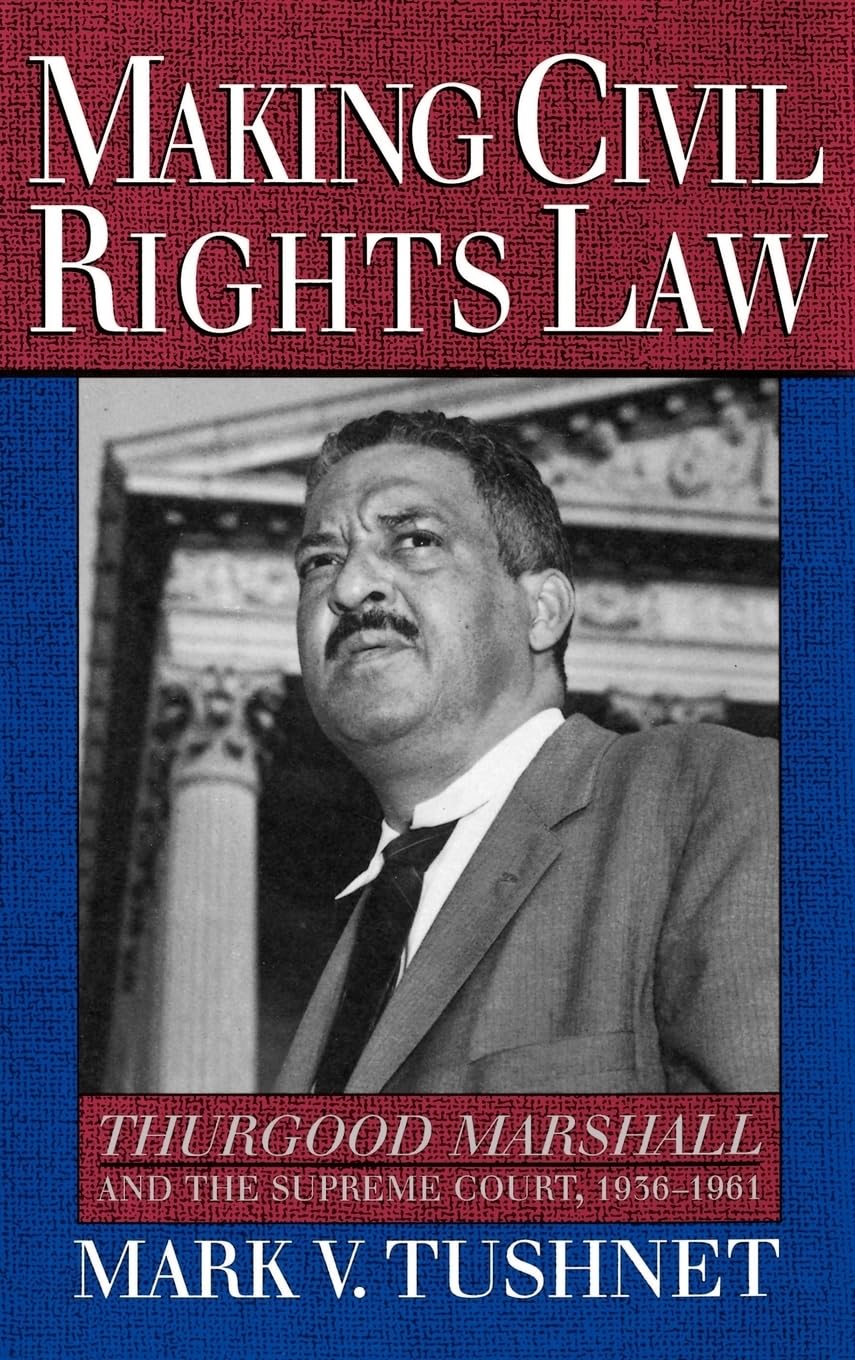
Making Civil Rights Law: Thurgood Marshall and the Supreme Court, 19361961,Used
Sold by Ergodebooks, an authorized reseller.
Returns accepted within 30 days | support@ergodebooks.com
Shipping Information
- Free Standard Shipping — United States only
- Processing Time: 3–5 business days
- Estimated Delivery: 6–10 business days after dispatch
- Double-boxed, fully insured & discreetly packaged
- Tracking number sent via email once dispatched
Returns & Refund
Returns accepted within 30 days of delivery.
Damaged or Defective Item
Free return shipping + replacement or full refund
Wrong Item Received
Free return shipping + replacement or full refund
Change of Mind
Return shipping at customer's expense · 25% restocking fee applies
Payment Option

From the 1930s to the early 1960s civil rights law was made primarily through constitutional litigation. Before Rosa Parks could ignite a Montgomery Bus Boycott, the Supreme Court had to strike down the Alabama law which made segregated bus service required by law; before Martin Luther King could march on Selma to register voters, the Supreme Court had to find unconstitutional the Southern Democratic Party's exclusion of AfricanAmericans; and before the March on Washington and the Civil Rights Act of 1964, the Supreme Court had to strike down the laws allowing for the segregation of public graduate schools, colleges, high schools, and grade schools.Making Civil Rights Law provides a chronological narrative history of the legal struggle, led by Thurgood Marshall and the NAACP Legal Defense Fund, that preceded the political battles for civil rights. Drawing on interviews with Thurgood Marshall and other NAACP lawyers, as well as new information about the private deliberations of the Supreme Court, Tushnet tells the dramatic story of how the NAACP Legal Defense Fund led the Court to use the Constitution as an instrument of liberty and justice for all AfricanAmericans. He also offers new insights into how the justices argued among themselves about the historic changes they were to make in American society.Making Civil Rights Law provides an overall picture of the forces involved in civil rights litigation, bringing clarity to the legal reasoning that animated this 'Constitutional revolution', and showing how the slow development of doctrine and precedent reflected the overall legal strategy of Thurgood Marshall and the NAACP.
⚠️ WARNING (California Proposition 65):
This product may contain chemicals known to the State of California to cause cancer, birth defects, or other reproductive harm.
For more information, please visit www.P65Warnings.ca.gov.