
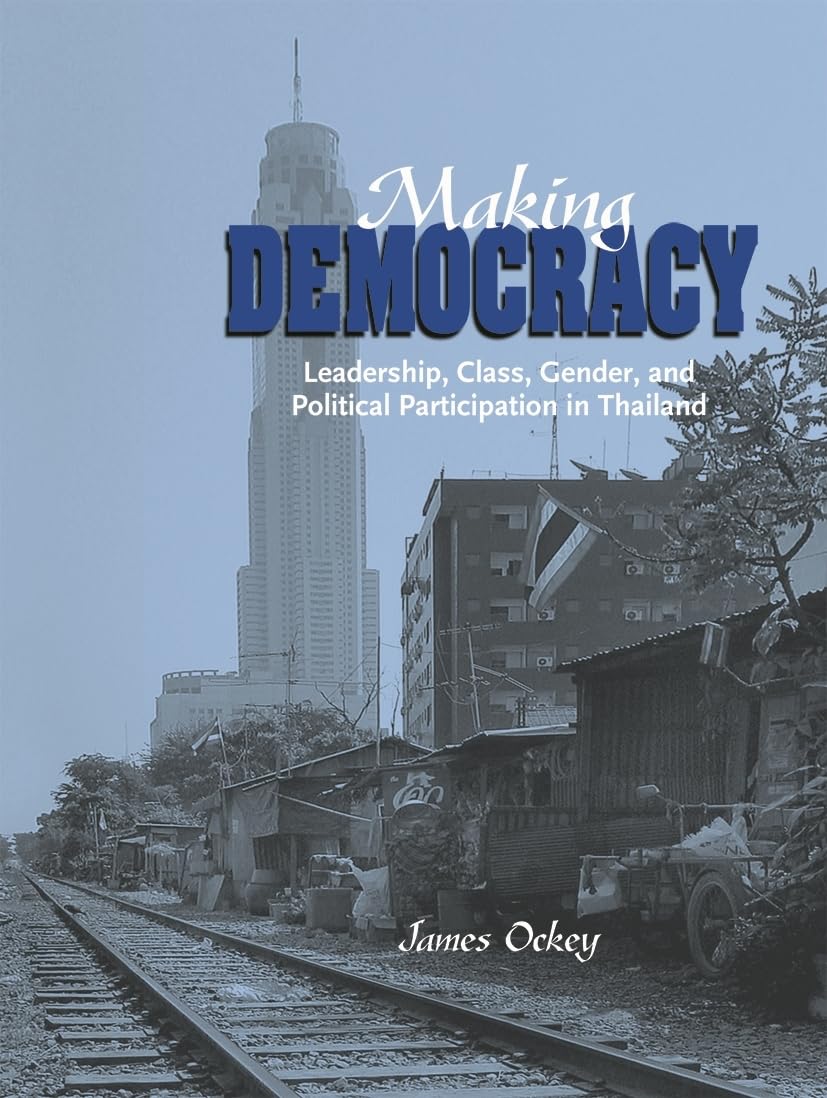
Title
Making Democracy: Leadership, Class, Gender, And Political Participation In Thailand,Used
Sold by Ergodebooks, an authorized reseller.
Returns accepted within 30 days | support@ergodebooks.com
Shipping Information
- Free Standard Shipping — United States only
- Processing Time: 3–5 business days
- Estimated Delivery: 6–10 business days after dispatch
- Double-boxed, fully insured & discreetly packaged
- Tracking number sent via email once dispatched
Returns & Refund
Returns accepted within 30 days of delivery.
Damaged or Defective Item
Free return shipping + replacement or full refund
Wrong Item Received
Free return shipping + replacement or full refund
Change of Mind
Return shipping at customer's expense · 25% restocking fee applies
Payment Option

Democracy in Thailand is the result of a complex interplay of traditional and foreign attitudes. Although democratic institutions have been imported, participation in politics is deeply rooted in Thai village society. A contrasting strand of authoritarianism is present not only in the traditional culture of the royal court but also in the centralized bureaucracies and powerful armed services borrowed from the West. Both attitudes have helped to shape Thai democracy's specific character.This topical volume explores the importance of culture and the roles played by leadership, class, and gender in the making of Thai democracy. James Ockey describes changing patterns of leadership at all levels of society, from the cabinet to the urban middle class to the countryside, and suggests that such changes are appropriate to democratic governmentdespite the continuing manipulation of authoritarian patterns. He examines the institutions of democratic government, especially the political parties that link voters to the parliament. Political factions and the provincial notables that lead them are given careful attention. The failure to fully integrate the lower classes into the democratic system, Ockey argues, has been the underlying cause of many of the flaws of Thai democracy. Female political leadership, another imported notion, is better represented in urban rather than rural areas. Yet gender relations in villages were more equitable than at court, Ockey suggests, and these attitudes have persisted to this day. Successful women politicians from a variety of backgrounds have begun to overcome stereotypes associated with female leadership although barriers remain.With its wideranging analysis of Thai politics over the last three decades, Making Democracy is an important resource for both students and specialists.
⚠️ WARNING (California Proposition 65):
This product may contain chemicals known to the State of California to cause cancer, birth defects, or other reproductive harm.
For more information, please visit www.P65Warnings.ca.gov.