
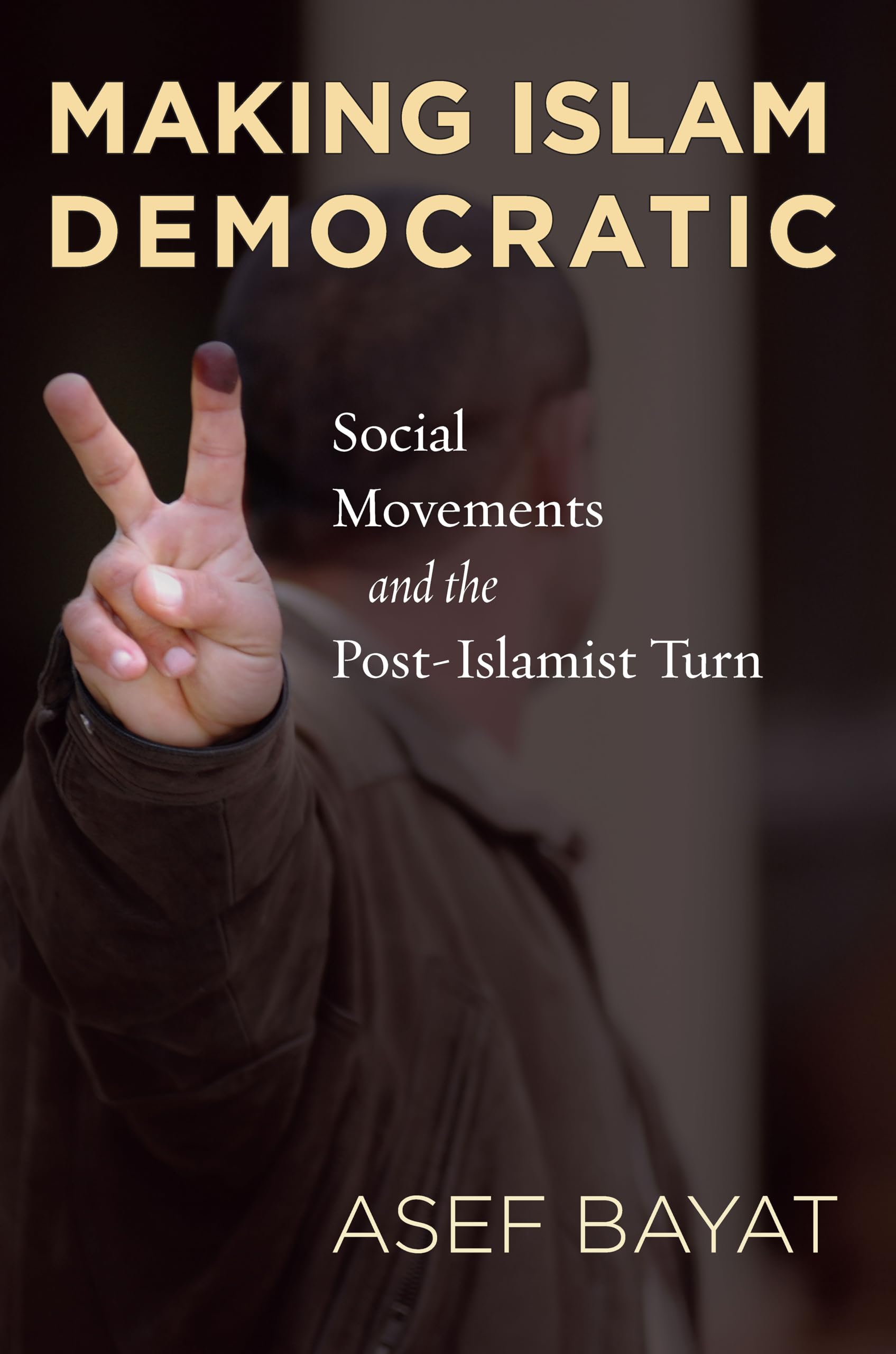
Title
Making Islam Democratic: Social Movements and the PostIslamist Turn (Stanford Studies in Middle Eastern and Islamic Societies a,Used
Sold by Ergodebooks, an authorized reseller.
Returns accepted within 30 days | support@ergodebooks.com
Shipping Information
- Free Standard Shipping — United States only
- Processing Time: 3–5 business days
- Estimated Delivery: 6–10 business days after dispatch
- Double-boxed, fully insured & discreetly packaged
- Tracking number sent via email once dispatched
Returns & Refund
Returns accepted within 30 days of delivery.
Damaged or Defective Item
Free return shipping + replacement or full refund
Wrong Item Received
Free return shipping + replacement or full refund
Change of Mind
Return shipping at customer's expense · 25% restocking fee applies
Payment Option

Whether Islam is compatible with democracy is an increasingly asked question, but ultimately a misguided one. In this book, Asef Bayat proposes that democratic ideals have less to do with the essence of any religion than with how it is practiced. He offers a new approach to Islam and democracy, outlining how the social struggles of student organizations, youth and women's groups, the intelligentsia, and other social movements can make Islam democratic. Making Islam Democratic examines in detail those social movements that have used religion to unleash social and political change, either to legitimize authoritarian rule or, in contrast, to construct an inclusive faith that embraces a democratic polity. It provides a fresh analysis of Iran's 1979 Islamic revolutionhow it has evolved into the pervasive, postIslamist reform movement of the early twentyfirst century, and how it differed from Egypt's religious 'passive revolution.' Focusing on events from the Iranian Revolution to the current day, with a comparative focus on Islamism, postIslamism, and active religious expression across the region, Bayat explores the highly contested relationship between religion, politics, and the quotidian in the Middle East. His book provides an important understanding of the great anxiety of our timethe global march of 'Muslim rage'and offers a hopeful picture of a democratic Middle East.
⚠️ WARNING (California Proposition 65):
This product may contain chemicals known to the State of California to cause cancer, birth defects, or other reproductive harm.
For more information, please visit www.P65Warnings.ca.gov.
- Q: What is the main theme of 'Making Islam Democratic'? A: The main theme of 'Making Islam Democratic' is the exploration of how democratic ideals relate to Islam, emphasizing that these ideals depend more on practice rather than the essence of religion itself.
- Q: Who is the author of this book? A: The author of 'Making Islam Democratic' is Asef Bayat.
- Q: What type of social movements does the book discuss? A: The book discusses various social movements including student organizations, youth and women's groups, and the intelligentsia that have utilized religion to influence social and political change.
- Q: How does the book analyze the Iranian Revolution? A: The book provides a detailed analysis of Iran's 1979 Islamic Revolution, examining its evolution into the post-Islamist reform movement and contrasting it with Egypt's religious 'passive revolution'.
- Q: What is the publication date of this book? A: The book was published on May 16, 2007.
- Q: How many pages does 'Making Islam Democratic' have? A: The book contains 320 pages.
- Q: What is the binding type of this book? A: The binding type of 'Making Islam Democratic' is paperback.
- Q: Is this book suitable for academic study? A: Yes, 'Making Islam Democratic' is part of the Stanford Studies in Middle Eastern and Islamic Societies and Cultures series, making it suitable for academic study.
- Q: What key issues does the book address regarding the relationship between religion and politics? A: The book addresses the contested relationship between religion, politics, and daily life in the Middle East, particularly how these dynamics shape contemporary social movements.
- Q: What edition of the book is available? A: The available edition of 'Making Islam Democratic' is the First Edition.