
Title
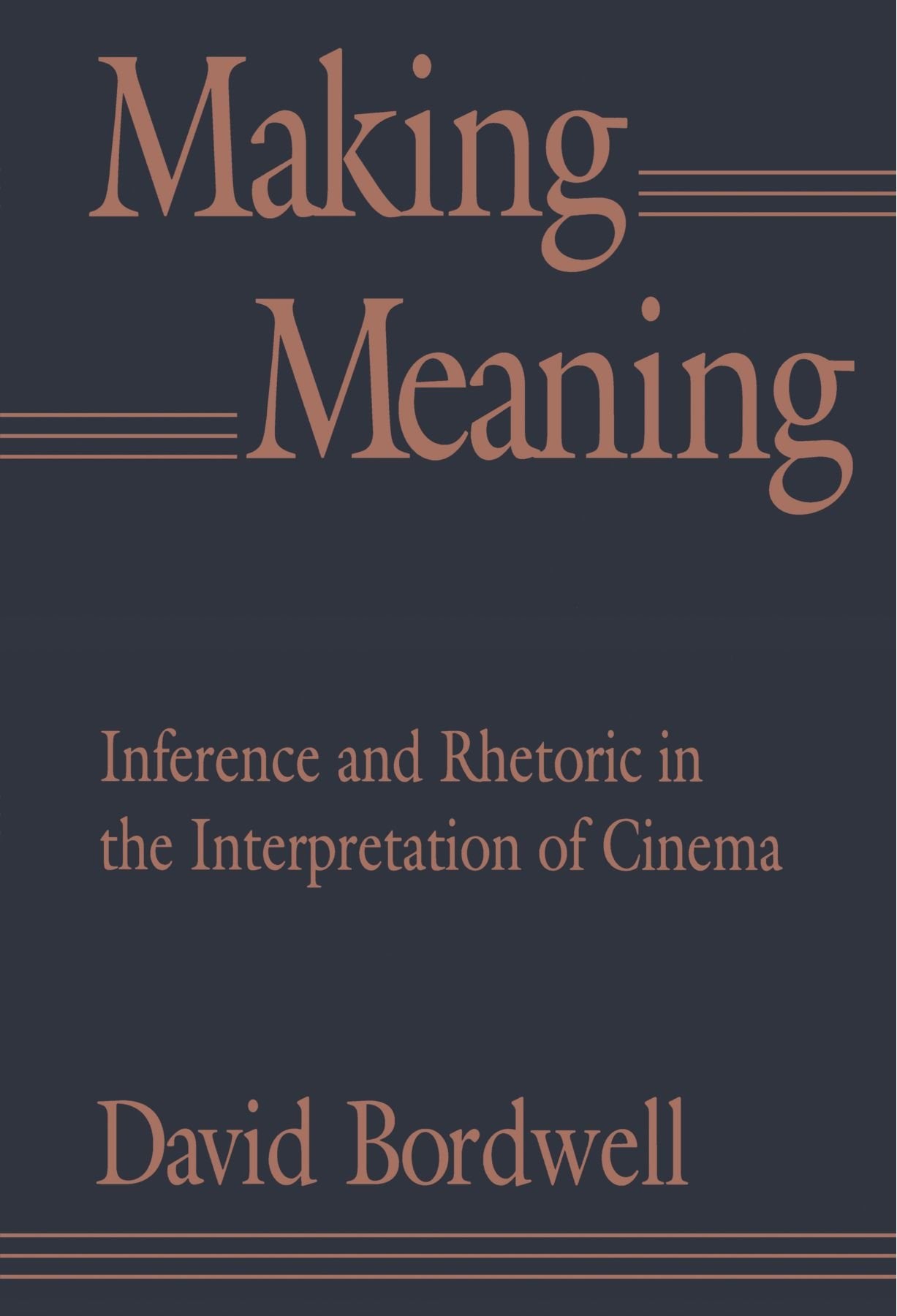
Making Meaning: Inference and Rhetoric in the Interpretation of Cinema (Harvard Film Studies),Used
Sold by Ergodebooks, an authorized reseller.
Returns accepted within 30 days | support@ergodebooks.com
Shipping Information
- Free Standard Shipping — United States only
- Processing Time: 3–5 business days
- Estimated Delivery: 6–10 business days after dispatch
- Double-boxed, fully insured & discreetly packaged
- Tracking number sent via email once dispatched
Returns & Refund
Returns accepted within 30 days of delivery.
Damaged or Defective Item
Free return shipping + replacement or full refund
Wrong Item Received
Free return shipping + replacement or full refund
Change of Mind
Return shipping at customer's expense · 25% restocking fee applies
Payment Option

David Bordwells new book is at once a history of film criticism, an analysis of how critics interpret film, and a proposal for an alternative program for film studies. It is an anatomy of film criticism meant to reset the agenda for film scholarship. As such Making Meaning should be a landmark book, a focus for debate from which future film study will evolve.Bordwell systematically maps different strategies for interpreting films and making meaning, illustrating his points with a vast array of examples from Western film criticism. Following an introductory chapter that sets out the terms and scope of the argument, Bordwell goes on to show how critical institutions constrain and contain the very practices they promote, and how the interpretation of texts has become a central preoccupation of the humanities. He gives lucid accounts of the development of film criticism in France, Britain, and the United States since World War II; analyzes this development through two important types of criticism, thematicexplicatory and symptomatic; and shows that both types, usually seen as antithetical, in fact have much in common. These diverse and even warring schools of criticism share conventional, rhetorical, and problemsolving techniquesa point that has broadranging implications for the way critics practice their art. The book concludes with a survey of the alternatives to criticism based on interpretation and, finally, with the proposal that a historical poetics of cinema offers the most fruitful framework for film analysis.
⚠️ WARNING (California Proposition 65):
This product may contain chemicals known to the State of California to cause cancer, birth defects, or other reproductive harm.
For more information, please visit www.P65Warnings.ca.gov.