
Title
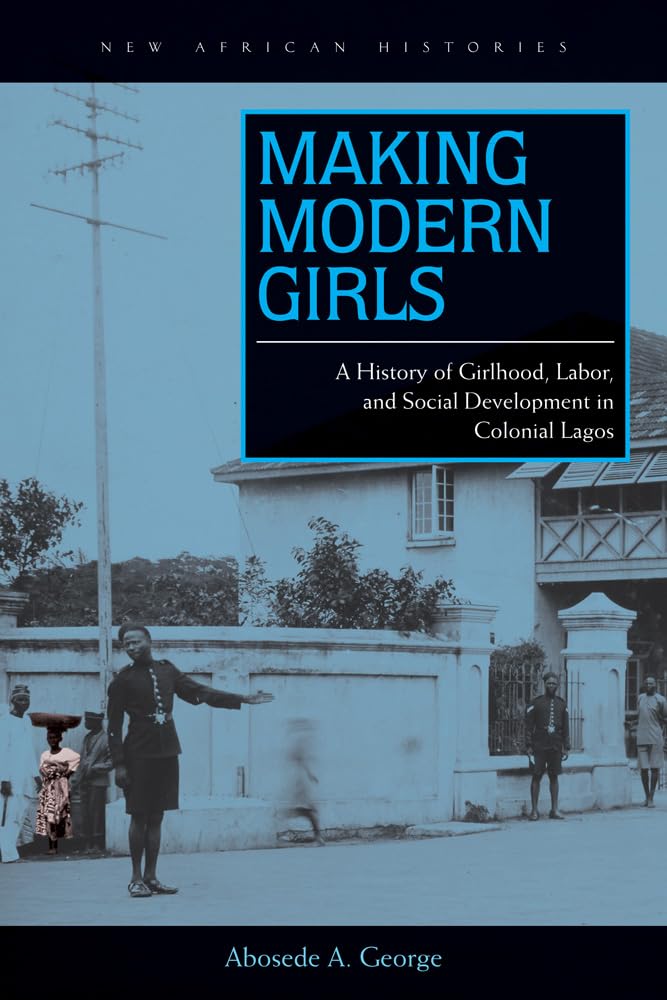
Making Modern Girls: A History Of Girlhood, Labor, And Social Development In Colonial Lagos (New African Histories),Used
Sold by Ergodebooks, an authorized reseller.
Returns accepted within 30 days | support@ergodebooks.com
Shipping Information
- Free Standard Shipping — United States only
- Processing Time: 3–5 business days
- Estimated Delivery: 6–10 business days after dispatch
- Double-boxed, fully insured & discreetly packaged
- Tracking number sent via email once dispatched
Returns & Refund
Returns accepted within 30 days of delivery.
Damaged or Defective Item
Free return shipping + replacement or full refund
Wrong Item Received
Free return shipping + replacement or full refund
Change of Mind
Return shipping at customer's expense · 25% restocking fee applies
Payment Option

Winner of the 2015 AidooSnyder Book Prize for outstanding book on African women's experiences. (African Studies Association)Honorable Mention, New York African Studies Association Book PrizeIn Making Modern Girls, Abosede A. George examines the influence of African social reformers and the developmentalist colonial state on the practice and ideology of girlhood as well as its intersection with child labor in Lagos, Nigeria. It draws from gender studies, generational studies, labor history, and urban history to shed new light on the complex workings of African cities from the turn of the twentieth century through the nationalist era of the 1950s.The two major schemes at the center of this study were the modernization project of elite Lagosian women and the salvationist project of British social workers. By approaching children and youth, specifically girl hawkers, as social actors and examining the ways in which local and colonial reformers worked upon young people, the book offers a critical new perspective on the uses of African children for the production and legitimization of national and international social development initiatives.Making Modern Girls demonstrates how oral sources can be used to uncover the social history of informal or undocumented urban workers and to track transformations in practices of childhood over the course of decades. George revises conventional accounts of the history of development work in Africa by drawing close attention to the social welfare initiatives of late colonialism and by highlighting the roles that African women reformers played in promoting sociocultural changes within their own societies.
⚠️ WARNING (California Proposition 65):
This product may contain chemicals known to the State of California to cause cancer, birth defects, or other reproductive harm.
For more information, please visit www.P65Warnings.ca.gov.
- Q: What is the page count of 'Making Modern Girls'? A: The book has three hundred twelve pages. This length allows for an in-depth exploration of its themes and historical context.
- Q: What is the binding type of 'Making Modern Girls'? A: This book is available in paperback binding. Paperback editions are typically more flexible and lighter than hardcover versions.
- Q: Who is the author of 'Making Modern Girls'? A: The author is Abosede A. George. She is recognized for her contributions to African studies and gender studies.
- Q: How do I read 'Making Modern Girls'? A: You can read this book by purchasing a copy or borrowing it from a library. It's suitable for readers interested in historical and social studies.
- Q: Is 'Making Modern Girls' suitable for young adults? A: Yes, this book is suitable for young adults. It presents themes related to girlhood and social development, making it relevant for educational discussions.
- Q: What themes are explored in 'Making Modern Girls'? A: The book explores themes such as girlhood, labor, and social development. It examines the intersection of colonialism and African social reform.
- Q: How should I care for my copy of 'Making Modern Girls'? A: To care for your copy, store it in a cool, dry place and avoid direct sunlight. This will help preserve the book's condition over time.
- Q: Can I lend 'Making Modern Girls' to others? A: Yes, you can lend your copy to others. Just ensure it’s returned to maintain your collection.
- Q: Is 'Making Modern Girls' available in other formats? A: Currently, 'Making Modern Girls' is available only in paperback. There may be future digital formats, but check with the publisher for updates.
- Q: What should I do if my copy of 'Making Modern Girls' arrives damaged? A: If your copy arrives damaged, contact the seller for a return or replacement. Most sellers have policies for damaged books.
- Q: How does 'Making Modern Girls' compare to similar historical books? A: This book offers a unique perspective on gender and labor in colonial Africa, differing from other historical analyses by focusing on girlhood.
- Q: Is 'Making Modern Girls' a good choice for research? A: Yes, it is an excellent resource for research. The book draws on various academic disciplines, making it valuable for scholars.
- Q: What is the main focus of 'Making Modern Girls'? A: The main focus is on the experiences of girlhood and labor in colonial Lagos. It discusses how these aspects influenced social development.
- Q: Are there any notable awards for 'Making Modern Girls'? A: Yes, it won the 2015 Aidoo-Snyder Book Prize and received an honorable mention from the New York African Studies Association.
- Q: What kind of audience is 'Making Modern Girls' intended for? A: The book is intended for scholars, students, and anyone interested in African studies, gender studies, and history.