
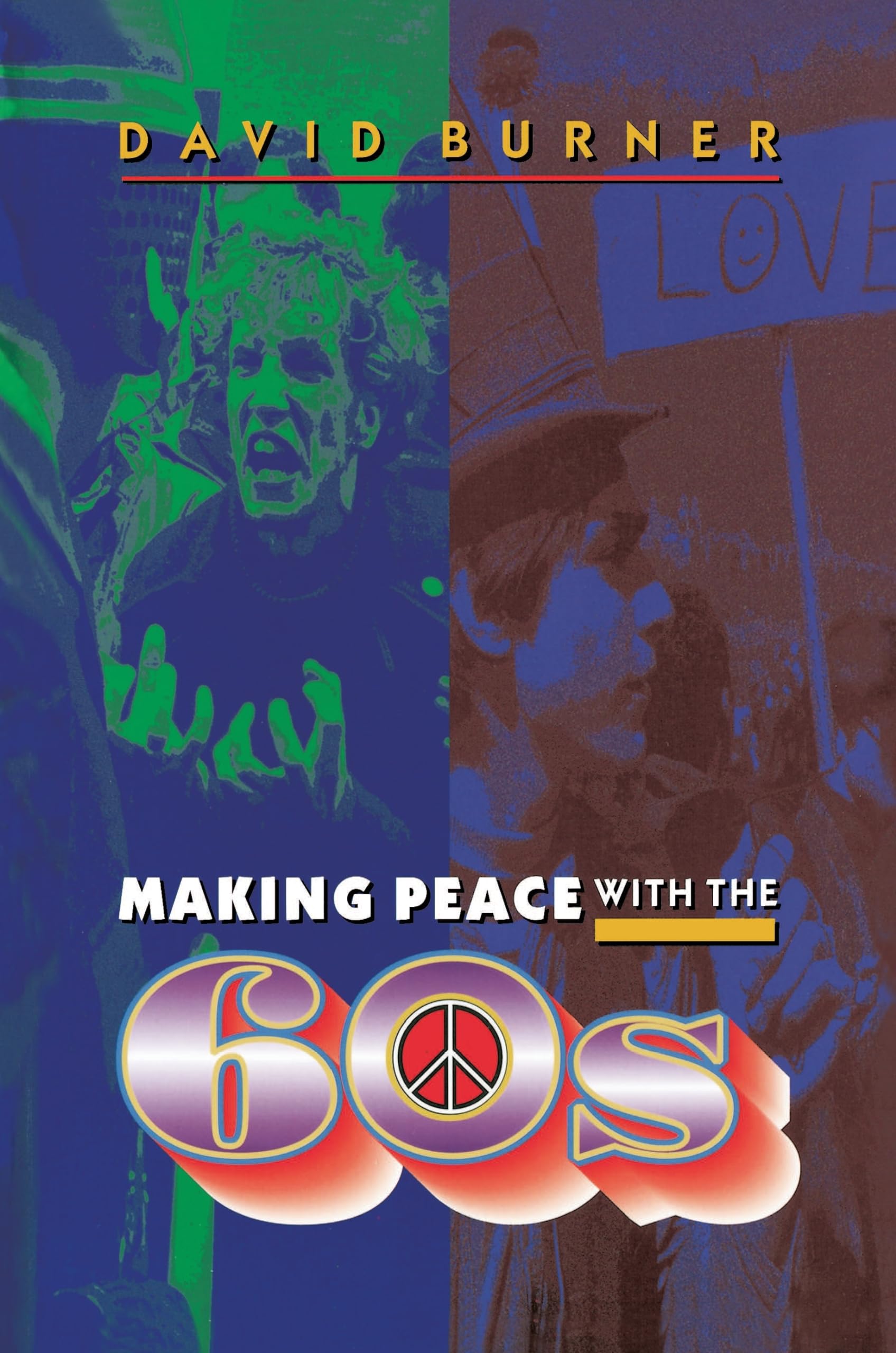
Title
Making Peace With The 60S,Used
Sold by Ergodebooks, an authorized reseller.
Returns accepted within 30 days | support@ergodebooks.com
Shipping Information
- Free Standard Shipping — United States only
- Processing Time: 3–5 business days
- Estimated Delivery: 6–10 business days after dispatch
- Double-boxed, fully insured & discreetly packaged
- Tracking number sent via email once dispatched
Returns & Refund
Returns accepted within 30 days of delivery.
Damaged or Defective Item
Free return shipping + replacement or full refund
Wrong Item Received
Free return shipping + replacement or full refund
Change of Mind
Return shipping at customer's expense · 25% restocking fee applies
Payment Option

David Burner'S Panoramic History Of The 1960S Conveys The Ferocity Of Debate And The Testing Of Visionary Hopes That Still Require Us To Make Sense Of The Decade. He Begins With The Civil Rights And Black Power Movements And Then Turns To Nuanced Descriptions Of Kennedy And The Cold War, The Counterculture And Its Antecedents In The Beat Generation, The Student Rebellion, The Poverty Wars, And The Liberals' War In Vietnam. As He Considers Each Topic, Burner Advances A Provocative Argument About How Liberalism Selfdestructed In The 1960S. In His View, The Civil Rights Movement Took A Wrong Turn As It Gradually Came To Emphasize The Identity Politics Of Race And Ethnicity At The Expense Of The Vastly More Important Politics Of Class And Distribution Of Wealth. The Expansion Of The Vietnam War Did Force Radicals To Confront The Most Terrible Mistake Of American Liberalism, But That They Also Turned Against The Social Goals Of The New Deal Was Destructive To All Concerned.Liberals Seemed To Rule In Politics And In The Media, Burner Points Out, Yet They Failed To Make Adequate Use Of Their Power To Advance The Purposes That Both Liberalism And The Left Endorsed. And Forces For Social Amelioration Splintered Into Pairs Of Enemies, Such As Integrationists And Black Separatists, The Social Left And Mainline Liberalism, And Advocates Of Peace And Supporters Of A Totalitarian Hanoi.Making Peace With The 60S Will Fascinate Baby Boomers And Their Elders, Who Either Joined, Denounced, Or Tried To Ignore The Counterculture. It Will Also Inform A Broad Audience Of Younger People About The Famous Political And Literary Figures Of The Time, The Salient Moments, And, Above All, The Powerful Ideas That Spawned Events From The Civil Rights Era To The Vietnam War. Finally, It Will Help To Explain Why Americans Failed To Make Full Use Of The Energies Unleashed By One Of The Most Remarkable Decades Of Our History.
⚠️ WARNING (California Proposition 65):
This product may contain chemicals known to the State of California to cause cancer, birth defects, or other reproductive harm.
For more information, please visit www.P65Warnings.ca.gov.
- Q: What is the page count of 'Making Peace with the 60s'? A: The book has three hundred two pages. This extensive length allows for an in-depth exploration of the 1960s, covering various critical topics.
- Q: What binding type is used for 'Making Peace with the 60s'? A: This book features a paperback binding. Paperback books are lightweight and flexible, making them easy to handle and read.
- Q: Who is the author of 'Making Peace with the 60s'? A: The author is David Burner. He is known for his historical perspectives and analyses, particularly of the 1960s.
- Q: What is the genre of 'Making Peace with the 60s'? A: The book falls under the genre of history. It provides a detailed narrative of the political and social climate of the 1960s in the United States.
- Q: What dimensions does 'Making Peace with the 60s' have? A: The book measures six inches in length, zero point eight one inches in width, and nine inches in height. These dimensions make it a standard-sized paperback book.
- Q: How should I read 'Making Peace with the 60s'? A: You can read it like any traditional book. It is suitable for anyone interested in the history and politics of the 1960s.
- Q: Is 'Making Peace with the 60s' suitable for younger audiences? A: Yes, it can be suitable for older teens and adults. The themes may resonate more with those who have a historical interest or background.
- Q: What themes are explored in 'Making Peace with the 60s'? A: The book explores themes such as civil rights, counterculture, and the Vietnam War. These topics provide a comprehensive look at the decade's complexities.
- Q: Are there any specific discussions on the civil rights movement in the book? A: Yes, the book discusses the civil rights movement extensively. It examines how it evolved and the implications of its focus on identity politics.
- Q: How can I keep 'Making Peace with the 60s' in good condition? A: Store it in a cool, dry place to avoid moisture damage. Keep it away from direct sunlight to prevent fading of the cover and pages.
- Q: What should I avoid to maintain 'Making Peace with the 60s'? A: Avoid stacking heavy items on top of it. This can cause creasing or damage to the spine and pages.
- Q: Is there a warranty or return policy for 'Making Peace with the 60s'? A: Return policies may vary by seller. It's advisable to check with the retailer for their specific return and warranty terms.
- Q: What if 'Making Peace with the 60s' arrives damaged? A: If it arrives damaged, contact the retailer immediately for a replacement or refund. Most retailers have customer service options for such issues.
- Q: What audience would benefit most from reading 'Making Peace with the 60s'? A: Readers interested in American history, especially the 1960s, will find it beneficial. It provides insights into the political and social dynamics of that era.
- Q: Does 'Making Peace with the 60s' include any contemporary relevance? A: Yes, it draws parallels between the past and present socio-political issues. Readers can reflect on how the events of the 1960s influence current discourse.