
Title
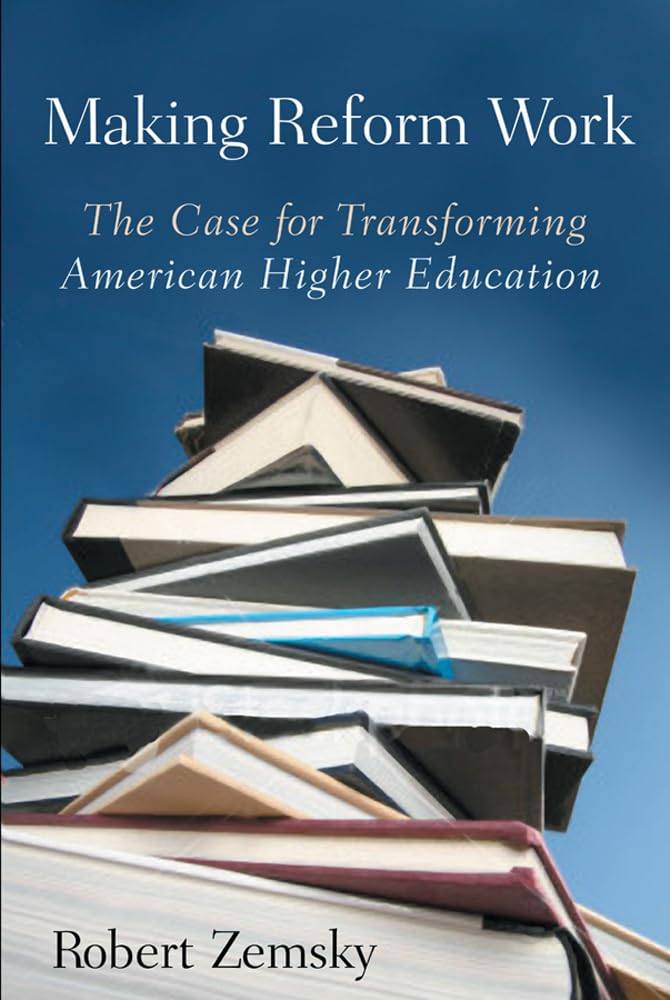
Making Reform Work: The Case For Transforming American Higher Education,Used
Sold by Ergodebooks, an authorized reseller.
Returns accepted within 30 days | support@ergodebooks.com
Shipping Information
- Free Standard Shipping — United States only
- Processing Time: 3–5 business days
- Estimated Delivery: 6–10 business days after dispatch
- Double-boxed, fully insured & discreetly packaged
- Tracking number sent via email once dispatched
Returns & Refund
Returns accepted within 30 days of delivery.
Damaged or Defective Item
Free return shipping + replacement or full refund
Wrong Item Received
Free return shipping + replacement or full refund
Change of Mind
Return shipping at customer's expense · 25% restocking fee applies
Payment Option

Making Reform Work is a practical narrative of ideas that begins by describing who is saying what about American higher education, who's angry, who's disappointed, and why. Most of the pleas for changing American colleges and universities that originate outside the academy are lamentations on a small number of too often repeated themes. The critique from within the academy focuses on issues principally involving money and the power of the market to change colleges and universities. Sandwiched between these perspectives is a public that still has faith in an enterprise that it really doesn't understand.Robert Zemsky, one of a select group of scholars who participated in Secretary of Education Margaret Spellings' 2005 Commission on the Future of Higher Education, signed off on the commission's report with reluctance. In Making Reform Work he presents the ideas he believes should have come from that group to forge a practical agenda for change. Zemsky argues that improving higher education will require enlisting faculty leadership, on the one hand, and, on the other, a strategy for changing the higher education system writ large.Directing his attention from what can't be done to what can be done, Zemsky provides numerous suggestions. These include a renewed effort to help students' performance in high schools and a stronger focus on the science of active learning, not just teaching methods. He concludes by suggesting a series of dislodging events, for example, making a threeyear baccalaureate the standard undergraduate degree, congressional rethinking of student aid in the wake of the loan scandal, and a change in the rules governing endowments that could break the gridlock that today holds higher education reform captive.Making Reform Work offers three rules for successful college and university transformation: don't vilify, don't play games, and come to the table with a wellthoughtout strategy rather than a sharply worded lamentation.
⚠️ WARNING (California Proposition 65):
This product may contain chemicals known to the State of California to cause cancer, birth defects, or other reproductive harm.
For more information, please visit www.P65Warnings.ca.gov.