
Title
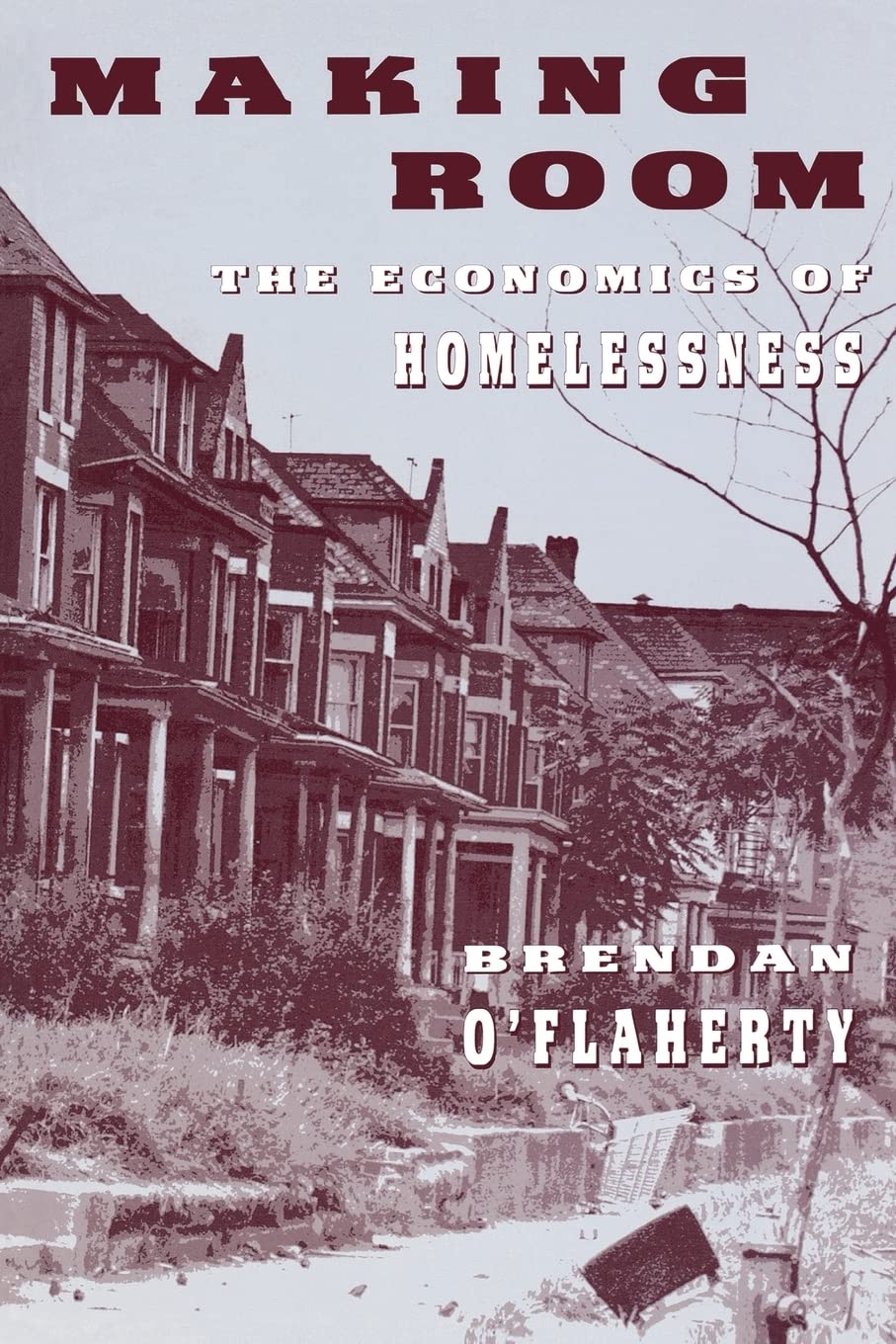
Making Room: The Economics Of Homelessness,Used
Sold by Ergodebooks, an authorized reseller.
Returns accepted within 30 days | support@ergodebooks.com
Shipping Information
- Free Standard Shipping — United States only
- Processing Time: 3–5 business days
- Estimated Delivery: 6–10 business days after dispatch
- Double-boxed, fully insured & discreetly packaged
- Tracking number sent via email once dispatched
Returns & Refund
Returns accepted within 30 days of delivery.
Damaged or Defective Item
Free return shipping + replacement or full refund
Wrong Item Received
Free return shipping + replacement or full refund
Change of Mind
Return shipping at customer's expense · 25% restocking fee applies
Payment Option

Mentally ill people turned out of institutions, crackcocaine use on the rise, more poverty, public housing a shambles: as attempts to explain homelessness multiply so do the homelessand we still don't know why. The first fullscale economic analysis of homelessness, Making Room provides answers quite unlike those offered so far by sociologists and pundits. It is a story about markets, not about the bad habits or pathology of individuals. One perplexing fact is that, though homelessness in the past occurred during economic depressions, the current wave started in the 1980s, a time of relative prosperity. As Brendan O'Flaherty points out, this trend has been accompanied by others just as unexpected: rising rents for poor people and continued housing abandonment. These are among the many disconcerting facts that O'Flaherty collected and analyzed in order to account for the new homelessness. Focused on six cities (New York, Newark, Chicago, Toronto, London, and Hamburg), his studies also document the differing rates of homelessness in North America and Europe, and from one city to the next, as well as interesting changes in the composition of homeless populations. For the first time, too, a scholarly observer makes a useful distinction between the homeless people we encounter on the streets every day and those 'officially' counted as homeless. O'Flaherty shows that the conflicting observations begin to make sense when we see the new homelessness as a response to changes in the housing market, linked to a widening gap in the incomes of rich and poor. The resulting shrinkage in the size of the middle class has meant fewer handmedowns for the poor and higher rents for the lowquality housing that is available.
⚠️ WARNING (California Proposition 65):
This product may contain chemicals known to the State of California to cause cancer, birth defects, or other reproductive harm.
For more information, please visit www.P65Warnings.ca.gov.