
Title
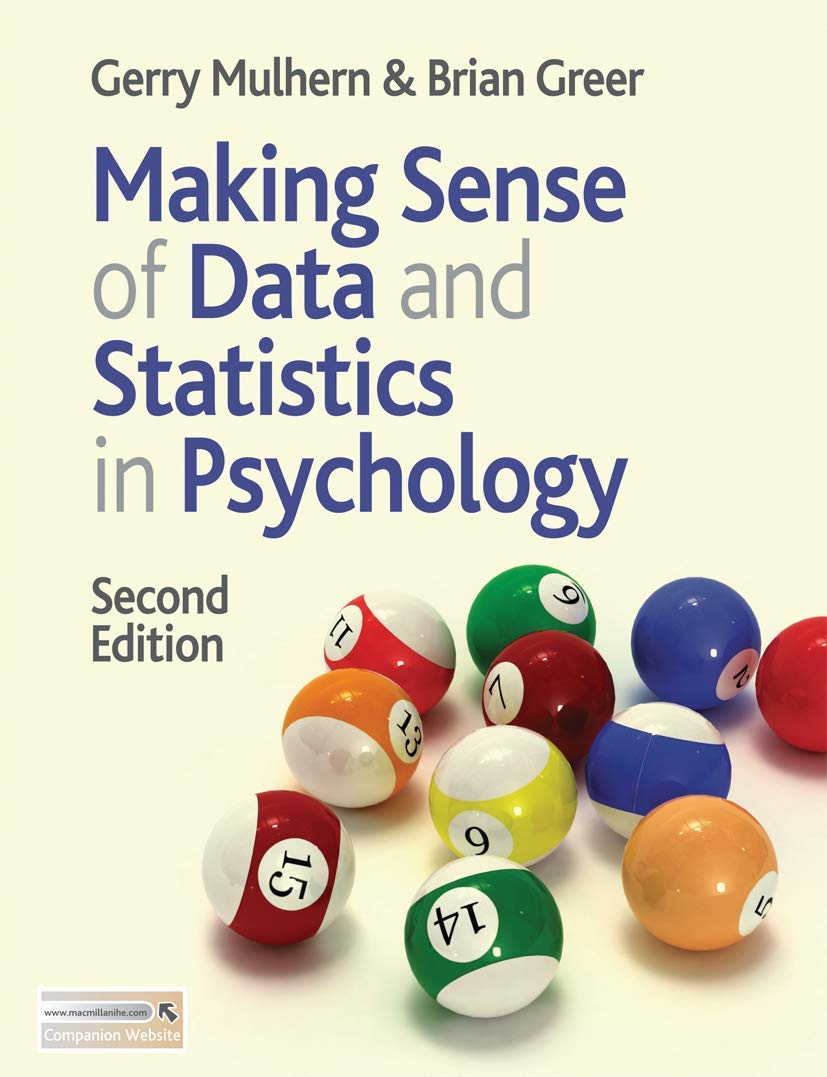
Making Sense of Data and Statistics in Psychology,Used
Sold by Ergodebooks, an authorized reseller.
Returns accepted within 30 days | support@ergodebooks.com
Shipping Information
- Free Standard Shipping — United States only
- Processing Time: 3–5 business days
- Estimated Delivery: 6–10 business days after dispatch
- Double-boxed, fully insured & discreetly packaged
- Tracking number sent via email once dispatched
Returns & Refund
Returns accepted within 30 days of delivery.
Damaged or Defective Item
Free return shipping + replacement or full refund
Wrong Item Received
Free return shipping + replacement or full refund
Change of Mind
Return shipping at customer's expense · 25% restocking fee applies
Payment Option

Statistics is one of the most useful elements of any psychology degree. This popular textbook will equip you with the tools needed not only to make sense of your own data and research, but also to think critically about the research and statistics you will encounter in everyday life.Features include: Logical, intuitive organization of key statistical concepts and tests with an emphasis on understanding which test to use and why Innovative graphic illustrations and insightful dialogues that help you to get to grips with statistics Concise, easytofollow guidelines for making sense of SPSS COverage of more complex tests and concepts for when you need to dig deeperMaking Sense of Data and Statistics in Psychology will help you design experiments, analyse data with confidence and establish a solid grounding in statistics; it will become a valuable resource throughout your studies.Companion Site:www.palgrave.com/psychology/mulhern2eAn innovative and easytoread introduction to understanding statistical concepts and data in Psychology, written with even the most mathsaverse Psychology student in mind. Authored by the current president of the BPS (British Psychological Society), this second edition includes guidance for SPSS and extended statistical coverage to bridge the gap between conceptual understanding of data and how to run statistical tests.Confronts the challenge of teaching statisticsThe material is structured so that the reader revisits ideas at increasing levels of sophistication, building on their existing knowledge in order to develop their understanding of statistics.This book, grounded in the authors' research into the way students learn maths and statistics, provides a 'way in' to statistics for all Psychology undergraduates, from those who have studied Maths to A Level to those who find their statistics courses to be the most daunting of their university years.The authors emphasise the importance of developing a 'feel' for data, particularly through visual representation, before statistical tests are discussed in detail.Making extensive use of exploratory data analysis, the text emphasises conceptual understanding. Concepts are introduced and clearly explained, enabling the student to understand the foundations of data analysis in interpreting psychological research.There is an abundant use of examples from psychological research throughout, helping students to get to grips with different forms of data.Flexible approachCan easily be integrated into 'standard courses', but also used to support more mathematicallyorientated courses.Reinforces understandingAvoids the jargon that makes statistics so inaccessible to many Psychology students.Pedagogical features include Socratic dialogues between statisticsaverse students and their lecturers; 'Making Links' boxes to help students see the connections between basic and more complex tests; and innovative comprehension check boxes which encourage students to stop and think before reading on.A new feature, 'Making sense of SPSS', links this conceptual comprehension to the way students mostly carry out their statistical tests.Making Sense of Data and Statistics in Psychology ensures that students have a firm basis in the use of statistics that will serve them for life, not just for the duration of their statistics course.
⚠️ WARNING (California Proposition 65):
This product may contain chemicals known to the State of California to cause cancer, birth defects, or other reproductive harm.
For more information, please visit www.P65Warnings.ca.gov.