
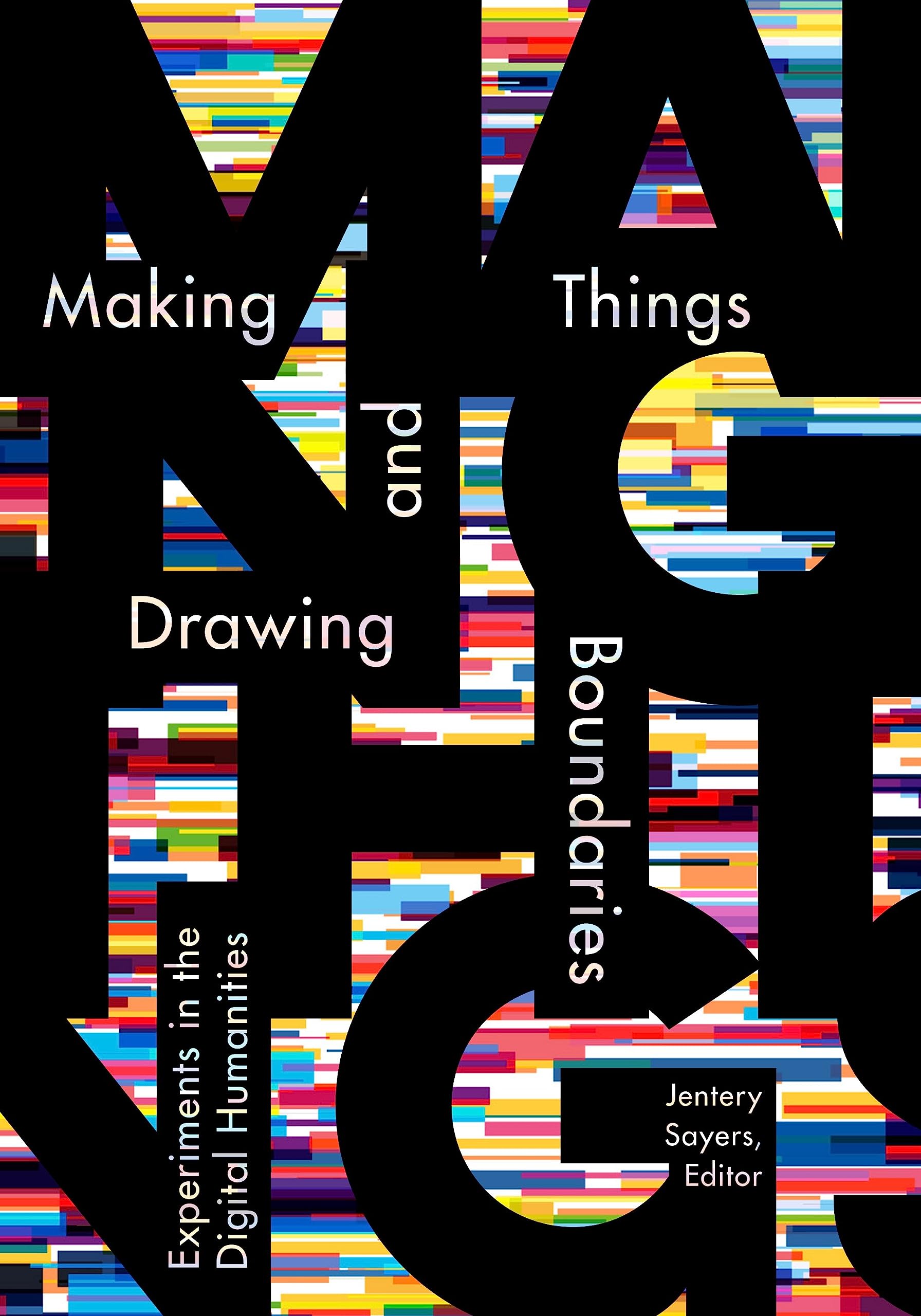
Title
Making Things and Drawing Boundaries: Experiments in the Digital Humanities (Debates in the Digital Humanities),Used
Sold by Ergodebooks, an authorized reseller.
Returns accepted within 30 days | support@ergodebooks.com
Shipping Information
- Free Standard Shipping — United States only
- Processing Time: 3–5 business days
- Estimated Delivery: 6–10 business days after dispatch
- Double-boxed, fully insured & discreetly packaged
- Tracking number sent via email once dispatched
Returns & Refund
Returns accepted within 30 days of delivery.
Damaged or Defective Item
Free return shipping + replacement or full refund
Wrong Item Received
Free return shipping + replacement or full refund
Change of Mind
Return shipping at customer's expense · 25% restocking fee applies
Payment Option

In Making Things and Drawing Boundaries, critical theory and cultural practice meet creativity, collaboration, and experimentation with physical materials as never before. Foregrounding the interdisciplinary character of experimental methods and handson research, this collection asks what it means to make things in the humanities. How is humanities research manifested in hand and on screen alongside the essay and monograph? And, importantly, how does experimentation with physical materials correspond with social justice and responsibility? Comprising almost forty chapters from ninety practitioners across twenty disciplines, Making Things and Drawing Boundaries speaks directly and extensively to how humanities research engages a growing interest in maker culture, however making may be defined.Contributors: Erin R. Anderson; Joanne Bernardi; Yana Boeva; Jeremy Boggs; Duncan A. Buell; Amy Burek; Trisha N. Campbell; Debbie Chachra; Beth Compton; Heidi Rae Cooley; Nora Dimmock; Devon Elliott; Bill Endres; Katherine Faull; Alexander Flamenco; Emily Alden Foster; Sarah Fox; Chelsea A. M. Gardner; Susan Garfinkel; Lee Hannigan; Sara Hendren; Ryan Hunt; John Hunter; Diane Jakacki; Janelle Jenstad; Edward JonesImhotep; Julie Thompson Klein; Aaron D. Knochel; J. K. Purdom Lindblad; Kim Martin; Gwynaeth McIntyre; Aurelio Meza; Shezan Muhammedi; Angel David Nieves; Marcel OGorman; Amy Papaelias; Matt Ratto; Isaac Record; Jennifer Reed; Gabby Resch; Jennifer RobertsSmith; Melissa Rogers; Daniela K. Rosner; Stan Ruecker; Roxanne Shirazi; James Smithies; P. P. Sneha; Lisa M. Snyder; Kaitlyn Solberg; Dan Southwick; David Staley; Elaine Sullivan; Joseph Takeda; Ezra Teboul; William J. Turkel; Lisa Tweten.
⚠️ WARNING (California Proposition 65):
This product may contain chemicals known to the State of California to cause cancer, birth defects, or other reproductive harm.
For more information, please visit www.P65Warnings.ca.gov.
- Q: What is the main focus of 'Making Things and Drawing Boundaries'? A: The book explores the intersection of critical theory, cultural practice, and creativity within the context of the digital humanities, emphasizing hands-on research and experimentation with physical materials.
- Q: Who is the author of this book? A: The author of 'Making Things and Drawing Boundaries' is Jentery Sayers.
- Q: How many chapters are included in this book? A: The book comprises almost forty chapters contributed by ninety practitioners from various disciplines.
- Q: What is the publication date of this book? A: The book was published on January 15, 2018.
- Q: What is the binding type of this book? A: The book is available in paperback binding.
- Q: Is this book suitable for professionals in the humanities? A: Yes, the book is designed for practitioners and scholars in the humanities, particularly those interested in maker culture and experimental methods.
- Q: How many pages does 'Making Things and Drawing Boundaries' have? A: The book contains 448 pages.
- Q: What themes does the book address regarding social justice? A: The book discusses how experimentation with physical materials in the humanities is connected to social justice and responsibility.
- Q: Are there specific disciplines represented in the book? A: Yes, the book features contributions from practitioners across twenty different disciplines.
- Q: Is the book considered new or used? A: The book is in new condition.