If you have any questions, you are always welcome to contact us. We'll get back to you as soon as possible, withing 24 hours on weekdays.
Customer service
All questions about your order, return and delivery must be sent to our customer service team by e-mail at yourstore@yourdomain.com
Sale & Press
If you are interested in selling our products, need more information about our brand or wish to make a collaboration, please contact us at press@yourdomain.com
Help
If you have any questions, you are always welcome to contact us. We'll get back to you as soon as possible, withing 24 hours on weekdays.
Customer service
All questions about your order, return and delivery must be sent to our customer service team by e-mail at yourstore@yourdomain.com
Sale & Press
If you are interested in selling our products, need more information about our brand or wish to make a collaboration, please contact us at press@yourdomain.com
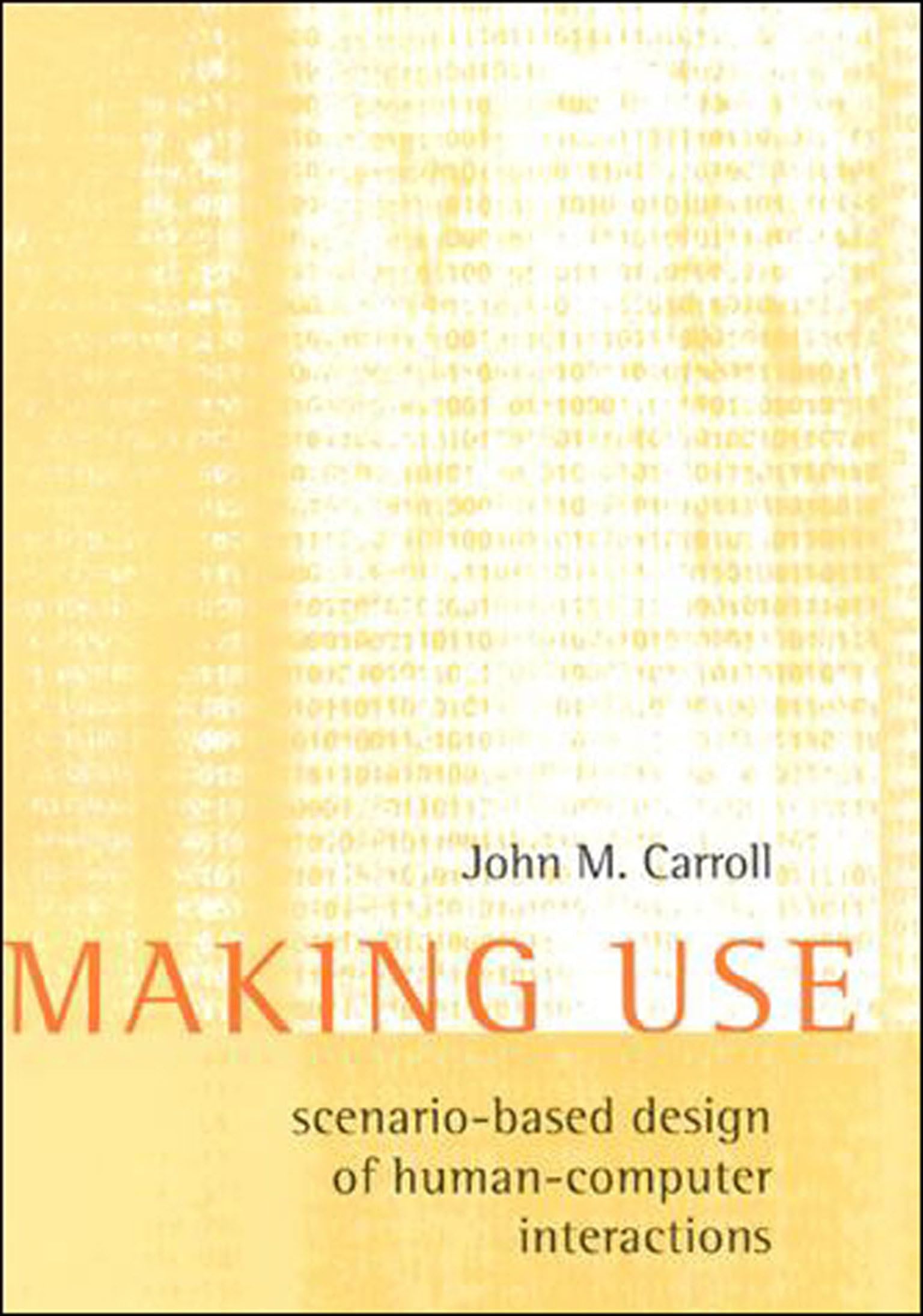
John Carroll shows how a pervasive but underused element of design practice, the scenario, can transform information systems design.Difficult to learn and awkward to use, today's information systems often change our activities in ways that we do not need or want. The problem lies in the software development process. In this book John Carroll shows how a pervasive but underused element of design practice, the scenario, can transform information systems design. Traditional textbook approaches manage the complexity of the design process via abstraction, treating design problems as if they were composites of puzzles. Scenariobased design uses concretization. A scenario is a concrete story about use. For example: "A person turned on a computer; the screen displayed a button labeled Start; the person used the mouse to select the button." Scenarios are a vocabulary for coordinating the central tasks of system developmentunderstanding people's needs, envisioning new activities and technologies, designing effective systems and software, and drawing general lessons from systems as they are developed and used. Instead of designing software by listing requirements, functions, and code modules, the designer focuses first on the activities that need to be supported and then allows descriptions of those activities to drive everything else. In addition to a comprehensive discussion of the principles of scenariobased design, the book includes indepth examples of its application.
⚠️ WARNING (California Proposition 65):
This product may contain chemicals known to the State of California to cause cancer,
birth defects, or other reproductive harm.
For MAP (Minimum Advertised Price) violations and Intellectual Property (IP) or Trademark concerns, please contact:
support@ergodebooks.com
⚠️ California Proposition 65 Warning: Some products sold on this website may expose you to chemicals known to the State of California to cause cancer, birth defects, or other reproductive harm. For more information, visit www.P65Warnings.ca.gov.