
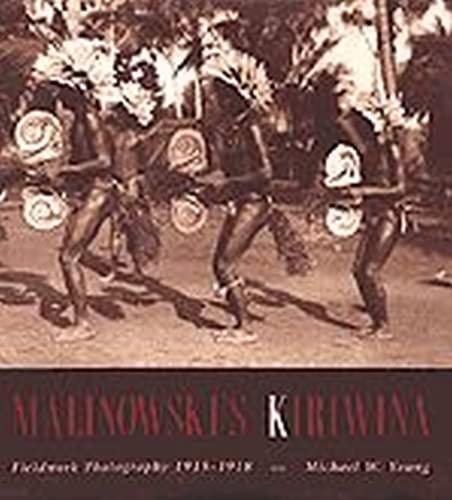
Title
Malinowski's Kiriwina: Fieldwork Photography 19151918,Used
Sold by Ergodebooks, an authorized reseller.
Returns accepted within 30 days | support@ergodebooks.com
Shipping Information
- Free Standard Shipping — United States only
- Processing Time: 3–5 business days
- Estimated Delivery: 6–10 business days after dispatch
- Double-boxed, fully insured & discreetly packaged
- Tracking number sent via email once dispatched
Returns & Refund
Returns accepted within 30 days of delivery.
Damaged or Defective Item
Free return shipping + replacement or full refund
Wrong Item Received
Free return shipping + replacement or full refund
Change of Mind
Return shipping at customer's expense · 25% restocking fee applies
Payment Option

Kiriwina, the largest of the Trobriand Islands in eastern Papua New Guinea, is anthropology's 'sacred place.' It was here that Bronislaw Malinowski conducted the pathbreaking fieldwork that enabled him to revolutionize British social anthropology. And it was here that he developed one of anthropology's most important tools: photography.Malinowski's Kiriwina presents nearly two hundred of Malinowski's previously unpublished photographs, taken between 1915 and 1918, of the Trobriand Islanders. The images are more than embellishments of his ethnography; they are a recreation in striking detail of a distant world. Michael Young, an anthropologist and Malinowski's authorized biographer, has selected the photographs based on one of Malinowski's unpublished studies of the region, and the plan of that abandoned project has helped structure this book.Divided into fourteen sections, Malinowski's Kiriwina is a series of linked photoessays based on Trobriand institutions and cultural themes as described by Malinowski. The introductory essay by Young appraises the founding anthropologist's photographic oeuvre, explains the historical circumstances and technical aspects of the images, and puts them in their colonial context. Young illuminates the photographs with quotations from Malinowski's diaries, letters, and field notes, thereby giving a biographical dimension to the collection. Commentaries on the images by contemporary Trobrianders add a further layer of interpretation. The result is a stunning record not only of a fascinating place, but of the mutual relationship between ethnography and the visual.
⚠️ WARNING (California Proposition 65):
This product may contain chemicals known to the State of California to cause cancer, birth defects, or other reproductive harm.
For more information, please visit www.P65Warnings.ca.gov.