
Title
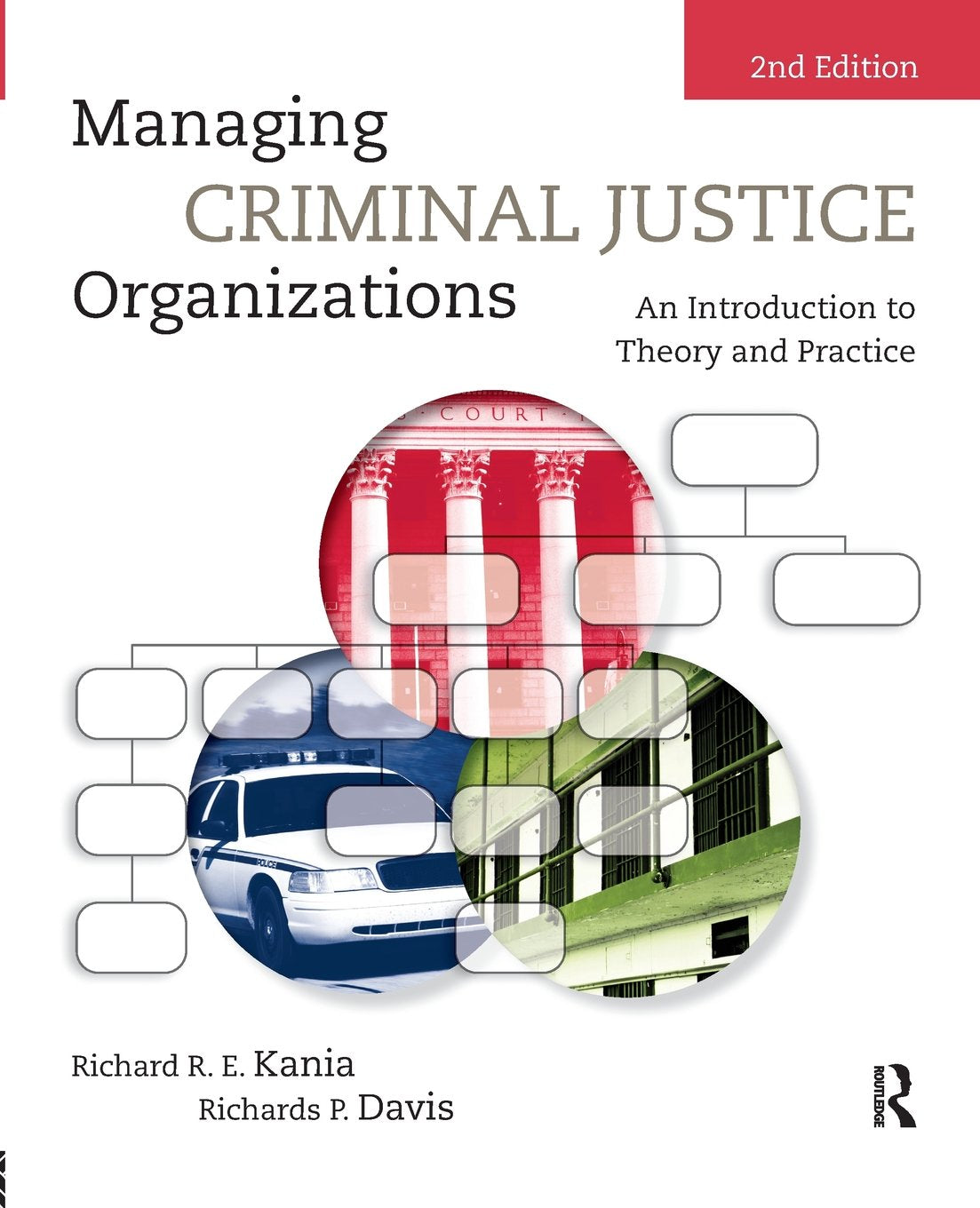
Managing Criminal Justice Organizations, Second Edition: An Introduction to Theory and Practice,Used
Sold by Ergodebooks, an authorized reseller.
Returns accepted within 30 days | support@ergodebooks.com
Shipping Information
- Free Standard Shipping — United States only
- Processing Time: 3–5 business days
- Estimated Delivery: 6–10 business days after dispatch
- Double-boxed, fully insured & discreetly packaged
- Tracking number sent via email once dispatched
Returns & Refund
Returns accepted within 30 days of delivery.
Damaged or Defective Item
Free return shipping + replacement or full refund
Wrong Item Received
Free return shipping + replacement or full refund
Change of Mind
Return shipping at customer's expense · 25% restocking fee applies
Payment Option

Managing Criminal Justice Organizations: An Introduction to Theory and Practice, Second Edition, provides an introduction to the administration, organization, and management of criminal justice organizations. This management aspect is the key to ensuring the proper running of criminal justice agencies in their efforts to combat crime.The book begins by discussing the eight principles of public management: leading, organizing, deciding, evaluating, staffing, training, allocating, and reporting. It then describes management positions in criminal justice. These include police and law enforcement management; managing the prosecution of criminal suspects; managing bail, bond, and pretrial detention services; managing victim and witness services; managing the judicial system; and managing adult corrections. The remaining chapters cover the pioneers and predecessors of modern public service management theory; leadership in criminal justice; bureaucracies and organizational principles; decision making and planning; performance evaluation, appraisal , and assessment; staffing and personnel issues; training and education for criminal justice; allocation of organizational resources; information management and organizational communications; and future issues in criminal justice management.NEW TO THIS EDITION: More information on the management of the judiciary and community corrections Additional discussion of contingency theory and how criminal justice management must remain flexible in dealing with outside forces An examination of employee turnover, its causes, and how to deal with it Thorough discussion of training opportunities and the impact of college education New text boxes highlighting important figures in the field
⚠️ WARNING (California Proposition 65):
This product may contain chemicals known to the State of California to cause cancer, birth defects, or other reproductive harm.
For more information, please visit www.P65Warnings.ca.gov.
- Q: What is the main focus of 'Managing Criminal Justice Organizations, Second Edition'? A: The book focuses on the administration, organization, and management of criminal justice organizations, emphasizing the principles of public management essential for effective crime combat.
- Q: Who is the author of this book? A: The author of 'Managing Criminal Justice Organizations, Second Edition' is Richard R.E. Kania.
- Q: How many pages does this book have? A: This book contains a total of 320 pages.
- Q: What are the key topics covered in this edition? A: Key topics include public management principles, leadership in criminal justice, decision-making, performance evaluation, and management of various criminal justice sectors.
- Q: Is this book suitable for beginners in criminal justice management? A: Yes, this book serves as an introduction, making it suitable for beginners interested in understanding criminal justice management.
- Q: What is new in the second edition? A: The second edition includes more information on judiciary management, discussions on contingency theory, employee turnover, training opportunities, and highlights important figures in the field.
- Q: What type of binding does this book have? A: This book is available in paperback binding.
- Q: In what condition is this used book offered? A: This used book is offered in good condition.
- Q: When was this book published? A: The book was published on October 12, 2011.
- Q: What category does this book fall under? A: This book falls under the category of Management.