
Title
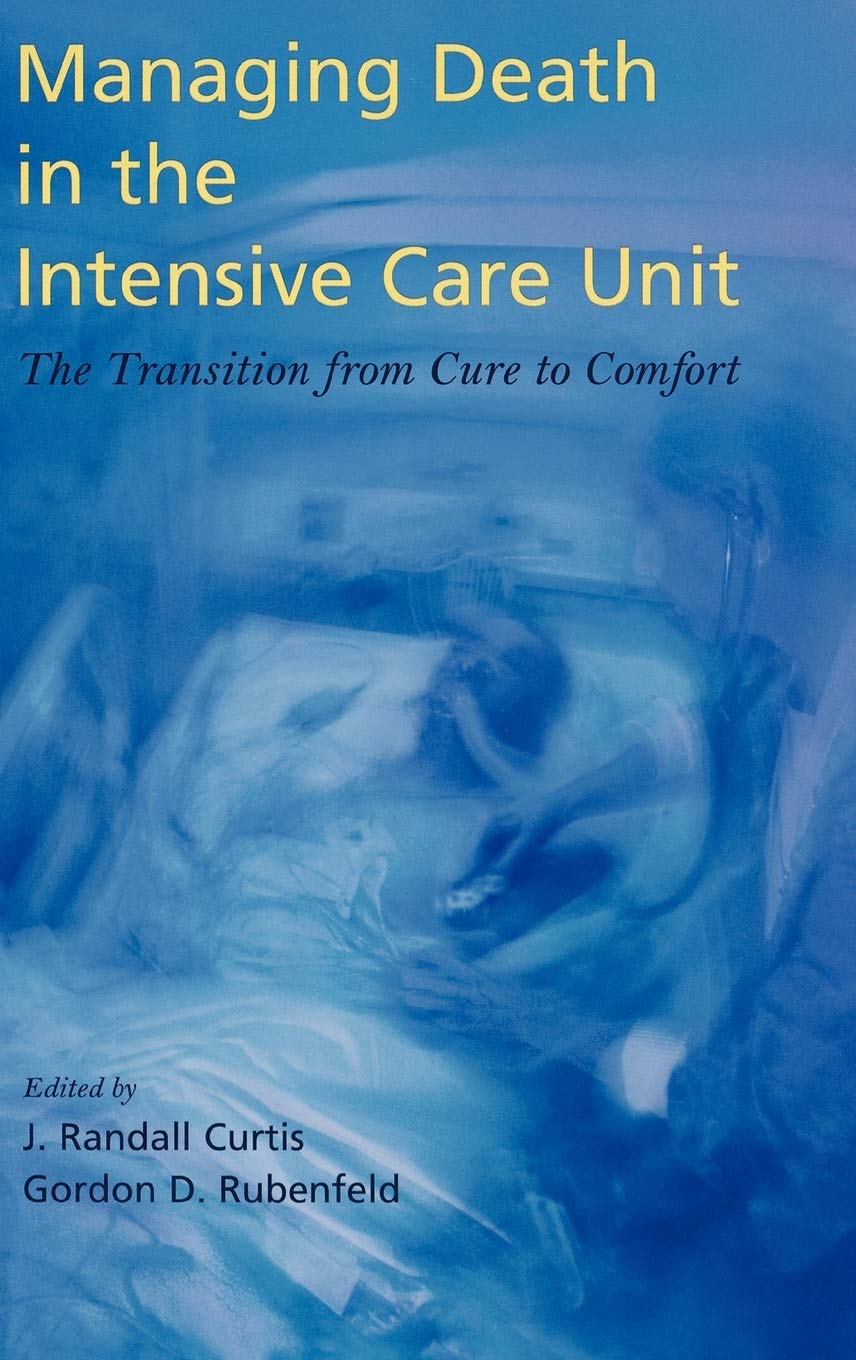
Managing Death in the Intensive Care Unit: The Transition from Cure to Comfort,New
Sold by Ergodebooks, an authorized reseller.
Returns accepted within 30 days | support@ergodebooks.com
Shipping Information
- Free Standard Shipping — United States only
- Processing Time: 3–5 business days
- Estimated Delivery: 6–10 business days after dispatch
- Double-boxed, fully insured & discreetly packaged
- Tracking number sent via email once dispatched
Returns & Refund
Returns accepted within 30 days of delivery.
Damaged or Defective Item
Free return shipping + replacement or full refund
Wrong Item Received
Free return shipping + replacement or full refund
Change of Mind
Return shipping at customer's expense · 25% restocking fee applies
Payment Option

This volume reviews the state of the art in caring for patients dying in the ICU, focusing on both clinical aspects of managing pain and other symptoms, as well as ethical and societal issues that affect the standards of care received. The book also addresses the changing epidemiology of death in this setting related to managed care, practical skills needed to provide the highest quality of care to terminal patients, communicating with patients and families, the mechanics of withdrawing lifesupporting therapies, and the essential role of palliative care specialists in the ICU. The book briefly describes unique issues that arise when caring for patients with some of the more common diseases that precipitate death in the ICU. Contributors for the book were chosen because they have experience caring for patients in the ICU and are also conducting current research to find ways of improving care for terminal patients in this setting.
⚠️ WARNING (California Proposition 65):
This product may contain chemicals known to the State of California to cause cancer, birth defects, or other reproductive harm.
For more information, please visit www.P65Warnings.ca.gov.
- Q: What is the page count of this book? A: This book has four hundred eight pages. It provides an in-depth exploration of managing death in an intensive care unit.
- Q: What is the binding type of this book? A: The binding type is hardcover. This ensures durability and a professional appearance, making it suitable for both personal and institutional libraries.
- Q: Who is the author of this book? A: The author is J. Randall Curtis. He is recognized for his expertise in critical care and palliative medicine.
- Q: What topics does this book cover? A: This book covers topics related to managing end-of-life care, including pain management and ethical considerations. It also discusses the role of palliative care specialists.
- Q: What is the size of this book? A: The book measures nine and a half inches in length, six point four two inches in width, and nine hundred twenty thousand inches in height. This size is standard for hardcover books.
- Q: What age group is this book suitable for? A: This book is intended for adults and professionals in healthcare. It addresses complex topics related to death and dying in intensive care.
- Q: How should I approach reading this book? A: To get the most out of this book, approach it with an understanding of medical terminology. It is best suited for healthcare providers and students.
- Q: Is this book useful for healthcare professionals? A: Yes, this book is highly useful for healthcare professionals. It provides insights into ethical and practical aspects of end-of-life care in the ICU.
- Q: Can I use this book for academic purposes? A: Yes, this book can be used for academic purposes. It is a valuable resource for courses focused on critical care and palliative medicine.
- Q: How do I store this book to keep it in good condition? A: Store this book upright on a shelf in a cool, dry place. Avoid direct sunlight to prevent fading of the cover and pages.
- Q: What if the book arrives damaged? A: If the book arrives damaged, you should contact the seller for a return or replacement. Most sellers have a policy in place for damaged items.
- Q: Can this book be used as a reference in medical writing? A: Yes, this book serves as a credible reference in medical writing. It addresses important issues in palliative care and critical illness.
- Q: Is there any specific care needed for this book? A: No specific care is needed, but keeping it away from moisture and extreme temperatures is advisable to maintain its condition.
- Q: Does this book discuss the role of families in end-of-life care? A: Yes, the book discusses the importance of communication with families regarding end-of-life decisions. It emphasizes the need for familial support.
- Q: Is this book suitable for beginners in healthcare? A: No, this book is not particularly suitable for beginners. It is best suited for those with a foundational understanding of medical concepts.