If you have any questions, you are always welcome to contact us. We'll get back to you as soon as possible, withing 24 hours on weekdays.
Customer service
All questions about your order, return and delivery must be sent to our customer service team by e-mail at yourstore@yourdomain.com
Sale & Press
If you are interested in selling our products, need more information about our brand or wish to make a collaboration, please contact us at press@yourdomain.com
Help
If you have any questions, you are always welcome to contact us. We'll get back to you as soon as possible, withing 24 hours on weekdays.
Customer service
All questions about your order, return and delivery must be sent to our customer service team by e-mail at yourstore@yourdomain.com
Sale & Press
If you are interested in selling our products, need more information about our brand or wish to make a collaboration, please contact us at press@yourdomain.com
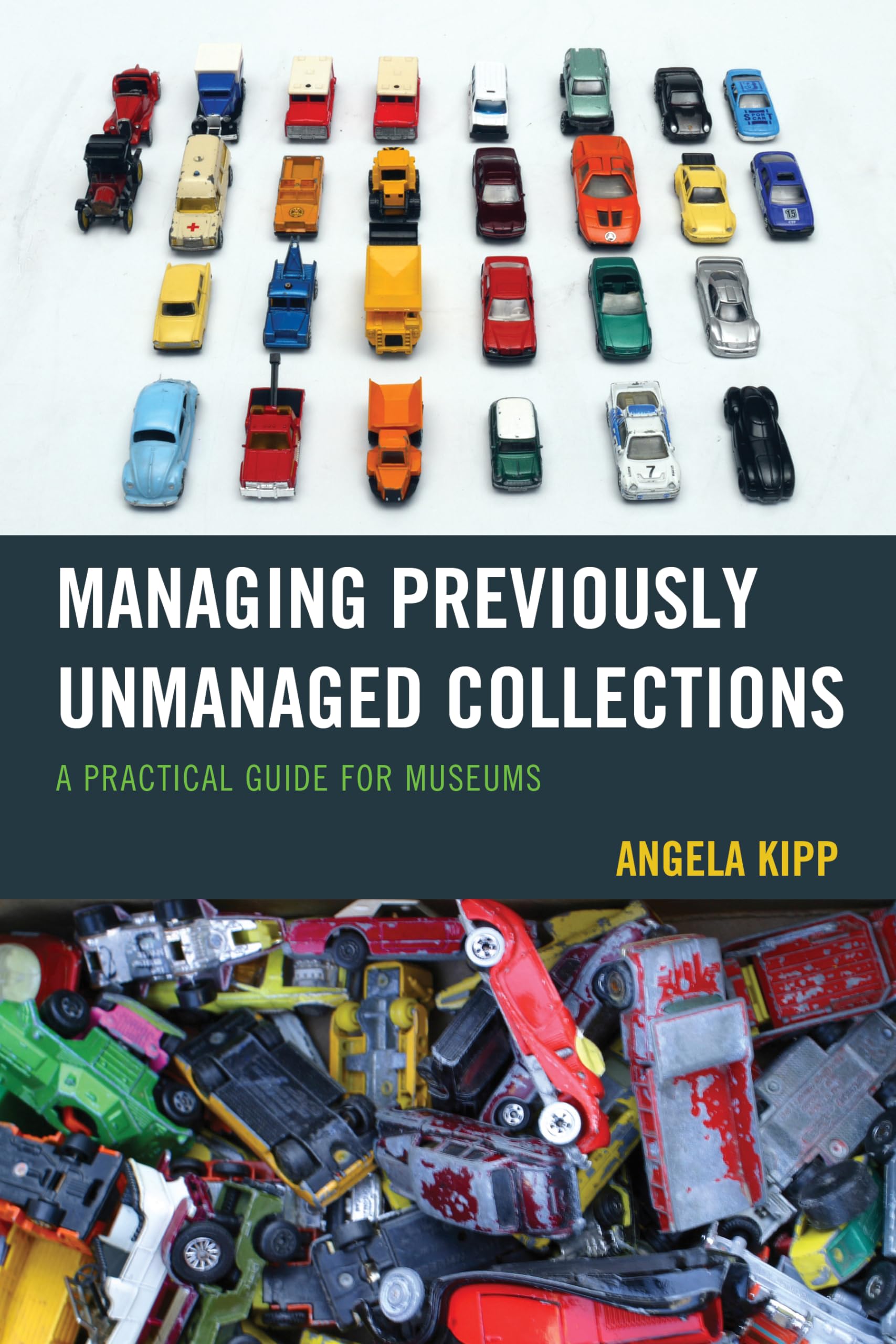
Managing previously unmanaged collections can be challenging. The process of securing the collection and making it accessible needs the mindset of a collections manager as well as the one of a project manager. The target audience are museum professionals with a basic training in collections care that are confronted with collections that are either large in numbers (1000+ artifacts) or stored confusingly, or both.The book is a stepbystep guide how to approach this situation, assuming that there's nothing to start with but a collection that has to be accessioned and the person who is assigned to do it. It is about how to bring order into the chaos, to define what is needed in terms of time, money, staff and material, to spot facility issues and potential dangers, and to use the power of networking to solve an otherwise unsolvable task.Many chapters conclude with logical exits, the points at which the collection in a condition that allows you to leave it for the next curator to take over. A common issue is that time frames are often so tight that the target of having the collection in good shape at the end of a contract or at a fixed date cant be met. Another common scenario may be that other projects become more important and you have to stop working on the collection, which might sound familiar to many directors of small museums. Logical exits are the points you can do this without risking that everything youve done so far or since the last logical exit was a waste of time. For contractors those logical exits might serve as orientation points when negotiating the work that has to be done on the collection.
⚠️ WARNING (California Proposition 65):
This product may contain chemicals known to the State of California to cause cancer,
birth defects, or other reproductive harm.
For MAP (Minimum Advertised Price) violations and Intellectual Property (IP) or Trademark concerns, please contact:
support@ergodebooks.com
⚠️ California Proposition 65 Warning: Some products sold on this website may expose you to chemicals known to the State of California to cause cancer, birth defects, or other reproductive harm. For more information, visit www.P65Warnings.ca.gov.