
Title

Managing the Human Factor: The Early Years of Human Resource Management in American Industry,Used
Sold by Ergodebooks, an authorized reseller.
Returns accepted within 30 days | support@ergodebooks.com
Shipping Information
- Free Standard Shipping — United States only
- Processing Time: 3–5 business days
- Estimated Delivery: 6–10 business days after dispatch
- Double-boxed, fully insured & discreetly packaged
- Tracking number sent via email once dispatched
Returns & Refund
Returns accepted within 30 days of delivery.
Damaged or Defective Item
Free return shipping + replacement or full refund
Wrong Item Received
Free return shipping + replacement or full refund
Change of Mind
Return shipping at customer's expense · 25% restocking fee applies
Payment Option

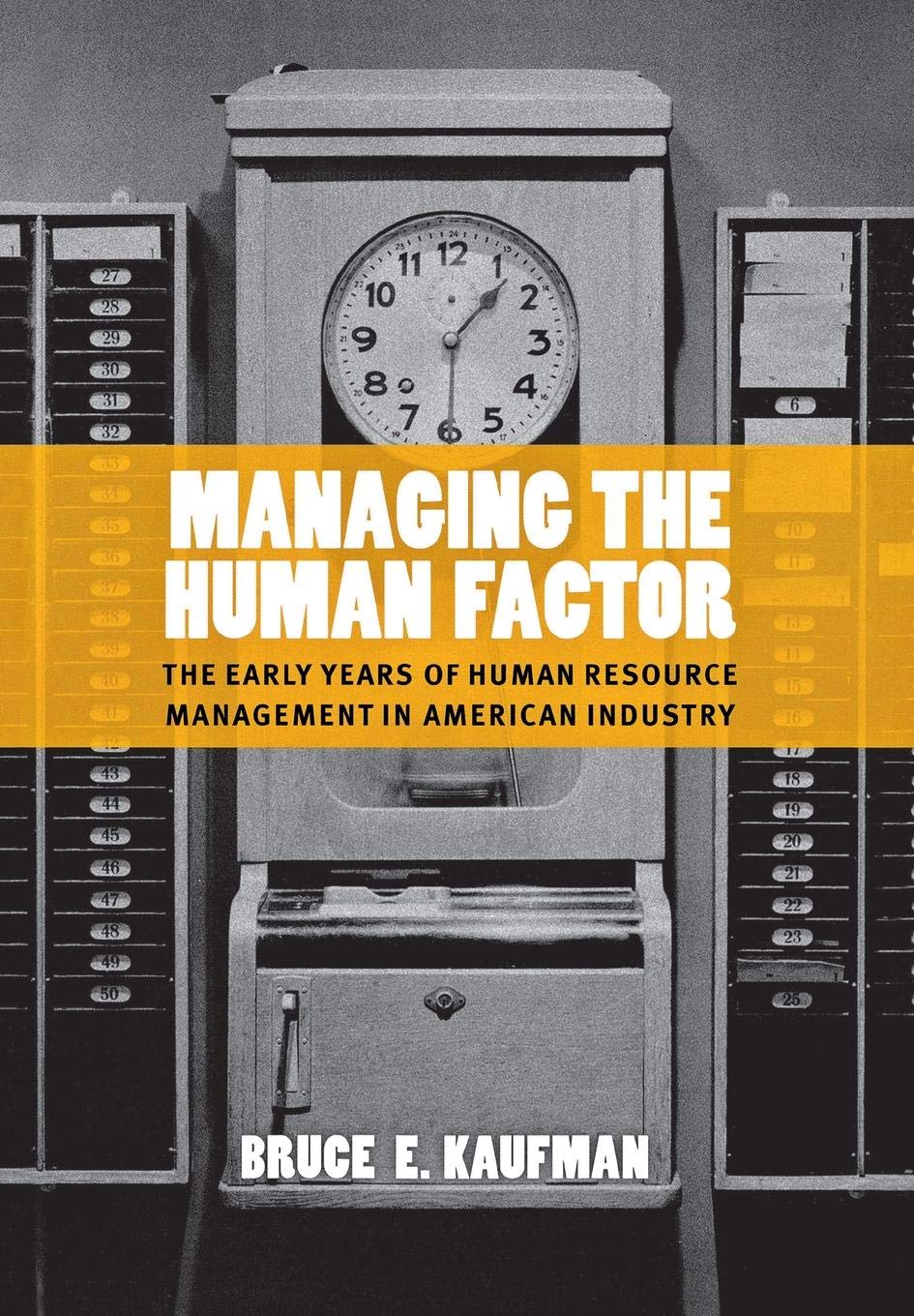
Human resource departments are key components in the people management system of nearly every mediumtolarge organization in the industrial world. They provide a wide range of essential services relating to employees, including recruitment, compensation, benefits, training, and labor relations. A century ago, however, before the concept of human resource management had been invented, the supervision and care of employees at even the largest companies were conducted without written policies or formal planning, and often in harsh, arbitrary, and counterproductive ways. How did companies such as United States Steel manage a workforce of 160,000 employees at dozens of plants without a specialized personnel or industrial relations department? What led some of these organizations to introduce human resources practices at the end of the nineteenth century? How were the earliest personnel departments structured and what were their responsibilities? And how did the theory and implementation of human resources management evolve, both within industry and as an academic field of research and teaching?In Managing the Human Factor, Bruce E. Kaufman chronicles the origins and early development of human resource management (HRM) in the United States from the 1870s, when the Labor Problem emerged as the nation's primary domestic policy concern, to 1933 and the start of the New Deal. Through new archival research, an extensive review and synthesis of the historical and contemporary literatures, and case studies illustrating best (and worst) practices during this period, Kaufman identifies the fourteen ideas, events, and movements that led to the creation of specialized HRM departments in the late 1910s, as well as their further growth and development into strategic business units in the welfare capitalism period of the 1920s. The research presented in this book not only uncovers many new aspects of the early development of personnel and industrial relations but also challenges central parts of the contemporary interpretation of the concept and evolution of HRM. Rich with insights on both the present and past of human resource management, Managing the Human Factor will be widely regarded as the definitive account of the early history of employee management in American companies and a mustread for all those interested in the indispensable function of managing people in organizations.
⚠️ WARNING (California Proposition 65):
This product may contain chemicals known to the State of California to cause cancer, birth defects, or other reproductive harm.
For more information, please visit www.P65Warnings.ca.gov.