
Title
Managing the President's Program: Presidential Leadership and Legislative Policy Formulation (Princeton Studies in American Poli,New
Sold by Ergodebooks, an authorized reseller.
Returns accepted within 30 days | support@ergodebooks.com
Shipping Information
- Free Standard Shipping — United States only
- Processing Time: 3–5 business days
- Estimated Delivery: 6–10 business days after dispatch
- Double-boxed, fully insured & discreetly packaged
- Tracking number sent via email once dispatched
Returns & Refund
Returns accepted within 30 days of delivery.
Damaged or Defective Item
Free return shipping + replacement or full refund
Wrong Item Received
Free return shipping + replacement or full refund
Change of Mind
Return shipping at customer's expense · 25% restocking fee applies
Payment Option

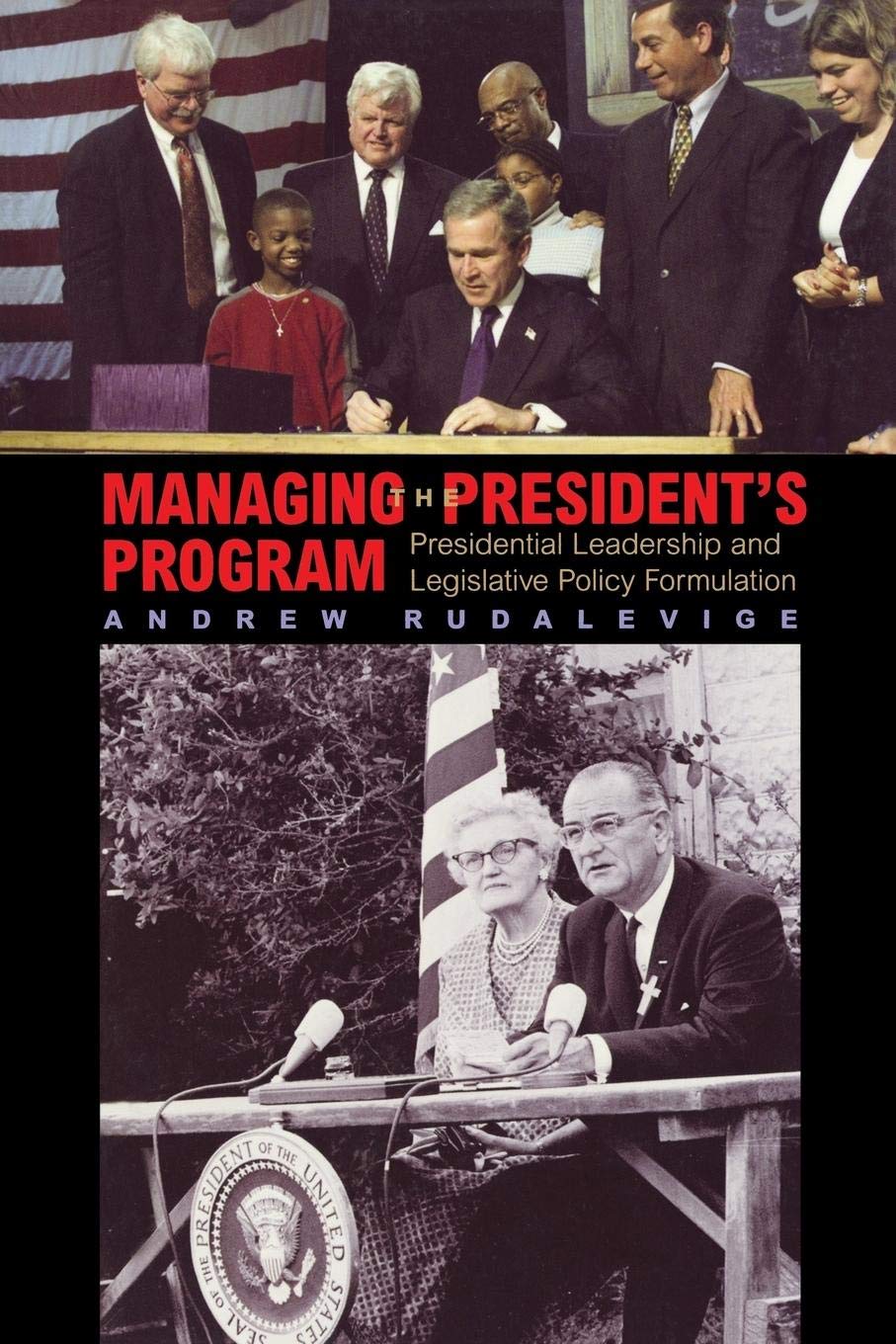
The belief that U.S. presidents' legislative policy formation has centralized over time, shifting inexorably out of the executive departments and into the White House, is shared by many who have studied the American presidency. Andrew Rudalevige argues that such a linear trend is neither at all certain nor necessary for policy promotion. In Managing the President's Program, he presents a far more complex and interesting picture of the use of presidential staff. Drawing on transaction cost theory, Rudalevige constructs a framework of 'contingent centralization' to predict when presidents will use White House and/or departmental staff resources for policy formulation. He backs his assertions through an unprecedented quantitative analysis of a new data set of policy proposals covering almost fifty years of the postwar era from Truman to Clinton.Rudalevige finds that presidents are not bound by a relentless compulsion to centralize but follow a more subtle strategy of staff allocation that makes efficient use of limited bargaining resources. New items and, for example, those spanning agency jurisdictions, are most likely to be centralized; complex items follow a mixed process. The availability of expertise outside the White House diminishes centralization. However, while centralization is a management strategy appropriate for engaging the wider executive branch, it can imperil an item's fate in Congress. Thus, as this wellwritten book makes plain, presidential leadership hinges on hard choices as presidents seek to simultaneously manage the executive branch and attain legislative success.
⚠️ WARNING (California Proposition 65):
This product may contain chemicals known to the State of California to cause cancer, birth defects, or other reproductive harm.
For more information, please visit www.P65Warnings.ca.gov.