
Title
Managing Urban Expansion In Mongolia: Best Practices In Scenariobased Urban Planning,New
Sold by Ergodebooks, an authorized reseller.
Returns accepted within 30 days | support@ergodebooks.com
Shipping Information
- Free Standard Shipping — United States only
- Processing Time: 3–5 business days
- Estimated Delivery: 6–10 business days after dispatch
- Double-boxed, fully insured & discreetly packaged
- Tracking number sent via email once dispatched
Returns & Refund
Returns accepted within 30 days of delivery.
Damaged or Defective Item
Free return shipping + replacement or full refund
Wrong Item Received
Free return shipping + replacement or full refund
Change of Mind
Return shipping at customer's expense · 25% restocking fee applies
Payment Option

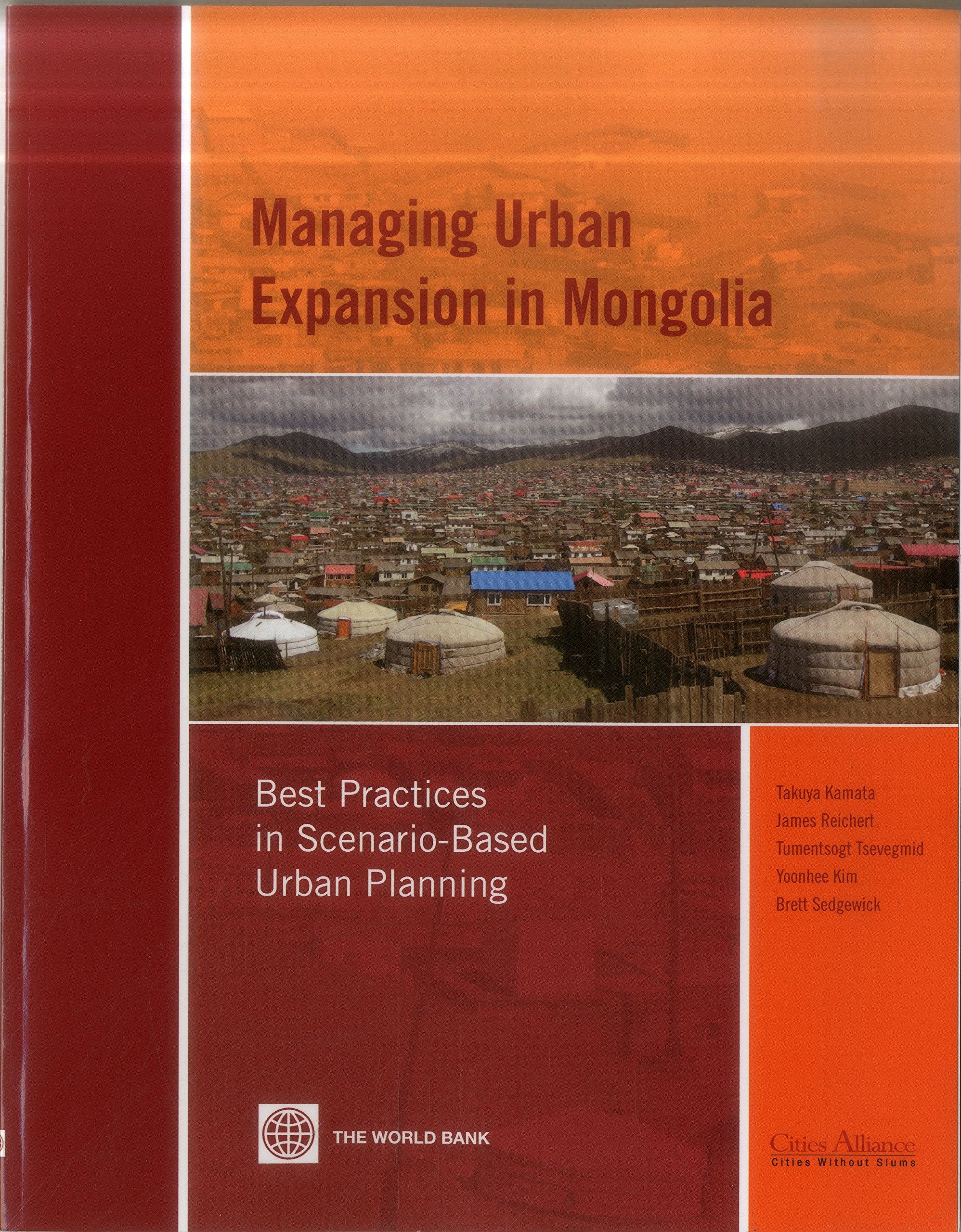
The sustainable development of ger areas in Ulaanbaatar, the capital of Mongolia, is one of the critical development issues facing the country. The ger areas host 60% of the population of Ulaanbaatar, and they have expanded 35 times larger than the original center of the city. Provision of basic services (e.g. heating and water supply) is very limited or nonexistent in ger areas. The lack of basic public services resulted in air and water pollution as well as serious health risks to residents. The government tries to control expansion of the city, particularly ger areas, but its policy practices have been inconsistent. These inconsistent actions are, in part, a result of limited awareness and understanding by the general public, as well as by the policy makers, of the public costs of their actions. There is high susceptibility to adhoc behaviors that place premiums on shortterm private gains over longterm valuecreation in public goods. Many supporting mechanisms, including land valuation and taxation, have not yet been developed to create incentives for longterm value creation. Mongolia: Enhancing Policies and Practices for Ger Area Development in Ulaanbaatar aims at helping policy makers and citizens of Ulaanbaatar to improve their understanding of the consequences of their choices of policies and practices. Specifically, it intends to provide clear cost and benefit implications of three different development paths (central, midtier, and fringe gers) for seven sectors (land and housing, water supply, roads and public transport, heating, electricity, solid waste, and social services). The report is a best practice in urban planning exercise which provides useful information that can apply for other big cities.
⚠️ WARNING (California Proposition 65):
This product may contain chemicals known to the State of California to cause cancer, birth defects, or other reproductive harm.
For more information, please visit www.P65Warnings.ca.gov.