
Title
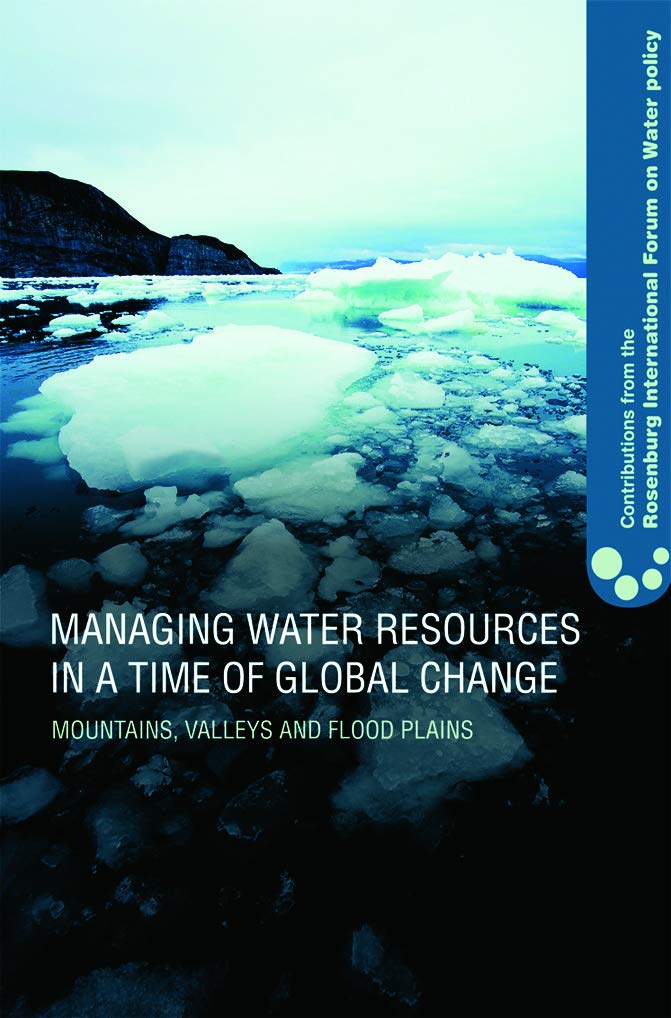
Managing Water Resources in a Time of Global Change: Contributions from the Rosenberg International Forum on Water Policy,Used
Sold by Ergodebooks, an authorized reseller.
Returns accepted within 30 days | support@ergodebooks.com
Shipping Information
- Free Standard Shipping — United States only
- Processing Time: 3–5 business days
- Estimated Delivery: 6–10 business days after dispatch
- Double-boxed, fully insured & discreetly packaged
- Tracking number sent via email once dispatched
Returns & Refund
Returns accepted within 30 days of delivery.
Damaged or Defective Item
Free return shipping + replacement or full refund
Wrong Item Received
Free return shipping + replacement or full refund
Change of Mind
Return shipping at customer's expense · 25% restocking fee applies
Payment Option

Global change possesses serious challenges for water managers and scientists. In mountain areas, where water supplies for half of the world population originate, climate and hydrologic models are still subject to considerable uncertainty. And yet, critical decisions have to be taken to ensure adequate and safe water supplies to billions of people, millions of farmers and industries, without further deteriorating rivers and water bodies. While global warming is known to cause glaciers retreat and reduced snow packs around the world, it is not clear that mountain discharge will be lower. What is widely recognised is that water management must be adapted to accommodate significant regime changes. However, this inevitably involves managing transboundary rivers, adding further complexity to putting principles in practice.This book takes global warming and the importance of mountain areas in world water resources as the starting point. First, it provides detailed reviews of the processes going on in several rivers systems and world regions in Europe (Rhne and Ebro), North America (Canadian Rockies, Western US and Mexico), the Middle East (Jordan), Africa (Tunisia, Kenya and South Africa). These contexts provide case studies and examples that show the difficulties and potential for adaptation to global change. Landuse, economics, numerous modeling approaches are some of the crosscutting issues covered in the chapters. The volume also includes the views of water practitioners, with two chapters authored by members of the USCanada International Joint Commission, an industrialist from Western Canada and an environmental leader in Spain.By combining a rich set of contexts and approaches, the volume succeeds in offering a view of the global challenges faced by water agencies, international donors and researchers around the world. A case is made in some chapters to seek adaptive strategies rather than trying to reduce or control resources variability. This requires factoring in landuse, social and economic aspects, especially in developing countries. Another conclusion is that complex problems can and must be posed and negotiated with the help of models, mapping techniques and sciencebased facts. However complex these may be, there are ways to translate them to easily interpretable and visualisations of alternative scenarios and courses of action. This book provides numerous examples of the potential of such approaches to draft environmental programmes solve transboundary disputes and reduce the economic consequences of droughts and climate instability.
⚠️ WARNING (California Proposition 65):
This product may contain chemicals known to the State of California to cause cancer, birth defects, or other reproductive harm.
For more information, please visit www.P65Warnings.ca.gov.