If you have any questions, you are always welcome to contact us. We'll get back to you as soon as possible, withing 24 hours on weekdays.
Customer service
All questions about your order, return and delivery must be sent to our customer service team by e-mail at yourstore@yourdomain.com
Sale & Press
If you are interested in selling our products, need more information about our brand or wish to make a collaboration, please contact us at press@yourdomain.com
Help
If you have any questions, you are always welcome to contact us. We'll get back to you as soon as possible, withing 24 hours on weekdays.
Customer service
All questions about your order, return and delivery must be sent to our customer service team by e-mail at yourstore@yourdomain.com
Sale & Press
If you are interested in selling our products, need more information about our brand or wish to make a collaboration, please contact us at press@yourdomain.com
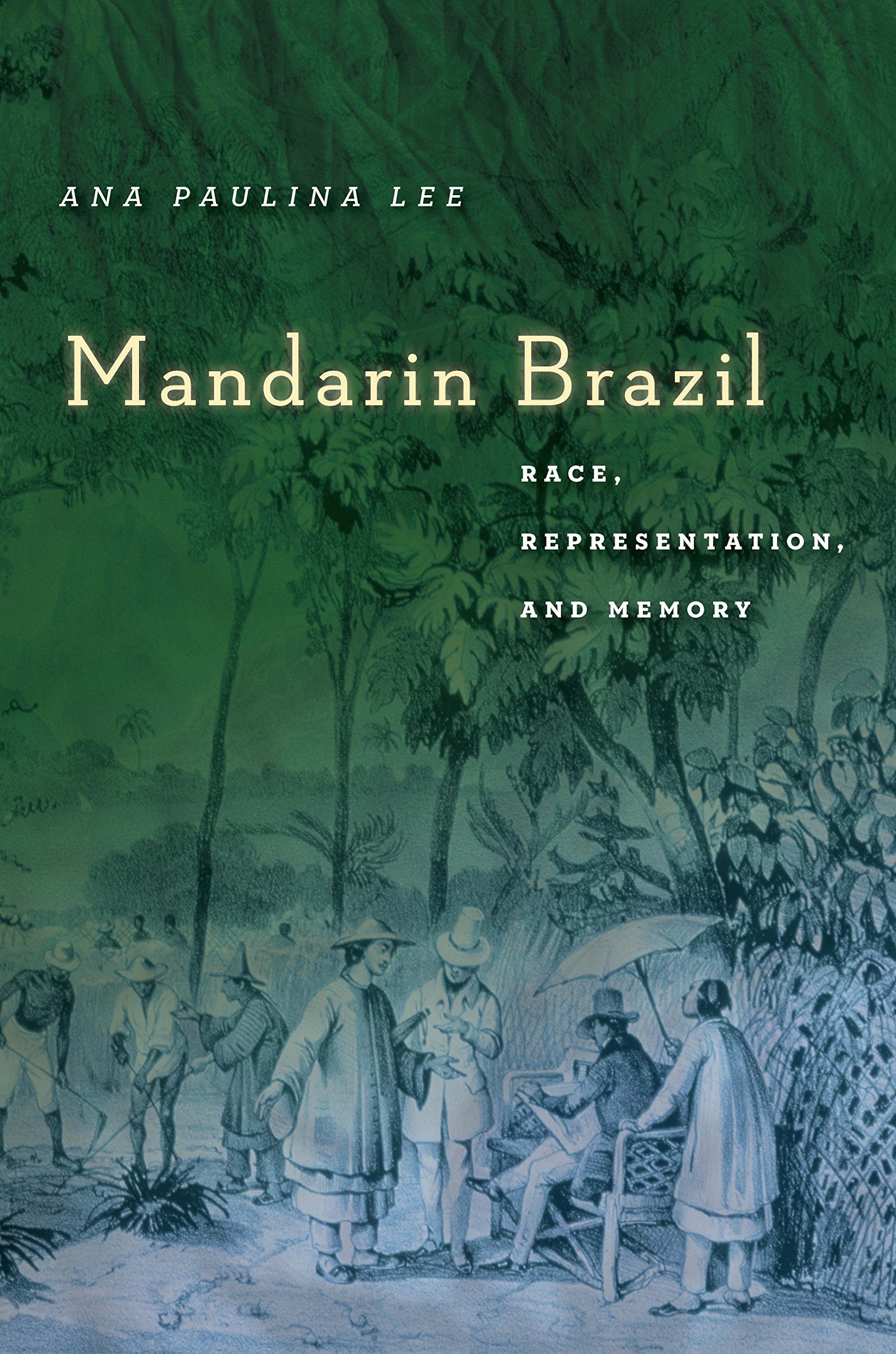
In Mandarin Brazil, Ana Paulina Lee explores the centrality of Chinese exclusion to the Brazilian nationbuilding project, tracing the role of cultural representation in producing racialized national categories. Lee considers depictions of Chineseness in Brazilian popular music, literature, and visual culture, as well as archival documents and Brazilian and Qing dynasty diplomatic correspondence about opening trade and immigration routes between Brazil and China. In so doing, she reveals how Asian racialization helped to shape Brazil's image as a racial democracy. Mandarin Brazil begins during the second half of the nineteenth century, during the transitional period when enslaved labor became unfree laboran era when black slavery shifted to 'yellow labor' and racial anxieties surged. Lee asks how colonial paradigms of racial labor became a part of Brazil's nationbuilding project, which prioritized 'whitening,' a fundamentally white supremacist ideology that intertwined the colonial racial caste system with new immigration labor schemes. By considering why Chinese laborers were excluded from Brazilian nationbuilding efforts while Japanese migrants were welcomed, Lee interrogates how Chinese and Japanese imperial ambitions and Asian ethnic supremacy reinforced Brazil's whitening project. Mandarin Brazil contributes to a new conversation in Latin American and Asian American cultural studies, one that considers Asian diasporic histories and racial formation across the Americas.
⚠️ WARNING (California Proposition 65):
This product may contain chemicals known to the State of California to cause cancer,
birth defects, or other reproductive harm.
For MAP (Minimum Advertised Price) violations and Intellectual Property (IP) or Trademark concerns, please contact:
support@ergodebooks.com
⚠️ California Proposition 65 Warning: Some products sold on this website may expose you to chemicals known to the State of California to cause cancer, birth defects, or other reproductive harm. For more information, visit www.P65Warnings.ca.gov.