
Title
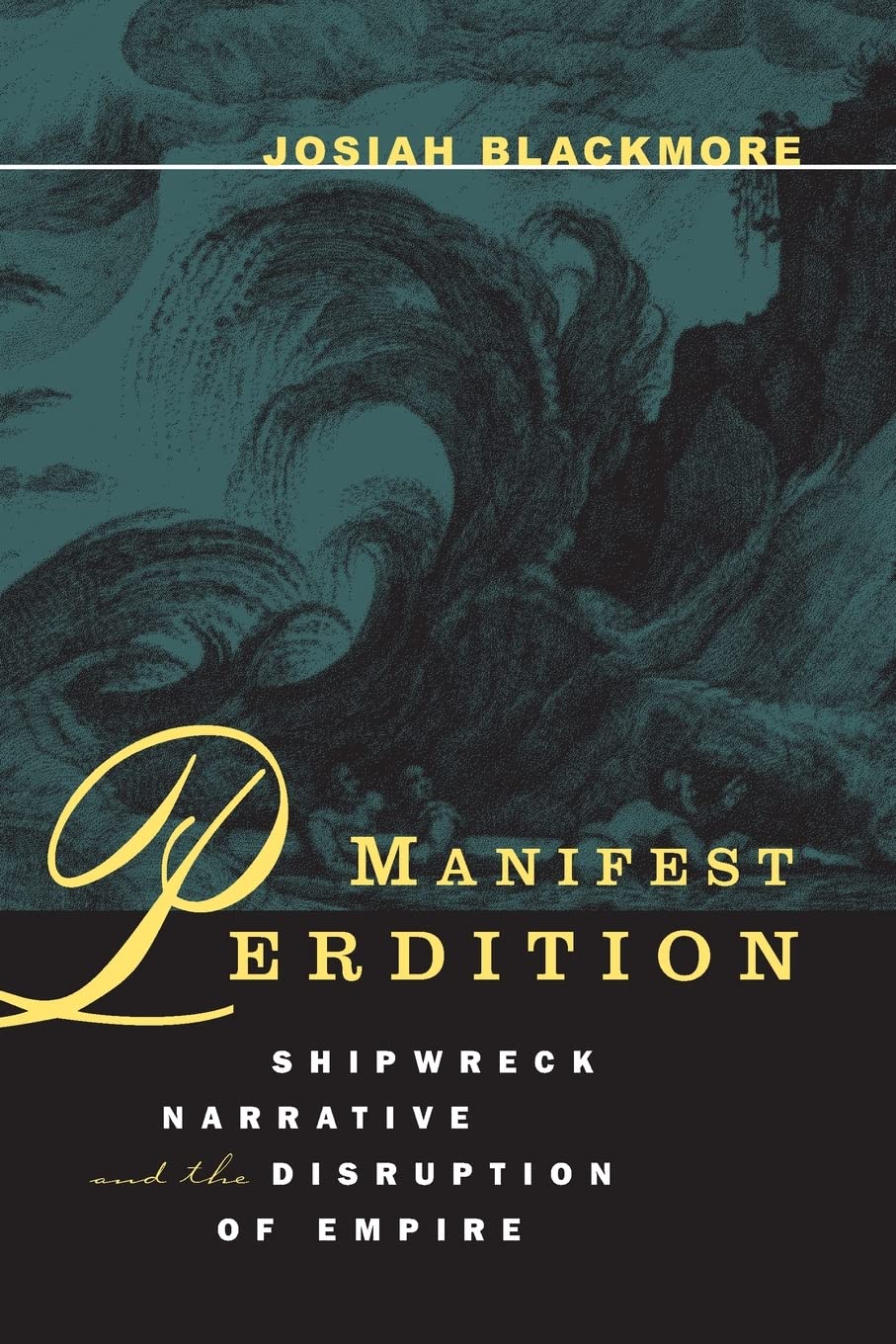
Manifest Perdition: Shipwreck Narrative And The Disruption Of Empire,New
Sold by Ergodebooks, an authorized reseller.
Returns accepted within 30 days | support@ergodebooks.com
Shipping Information
- Free Standard Shipping — United States only
- Processing Time: 3–5 business days
- Estimated Delivery: 6–10 business days after dispatch
- Double-boxed, fully insured & discreetly packaged
- Tracking number sent via email once dispatched
Returns & Refund
Returns accepted within 30 days of delivery.
Damaged or Defective Item
Free return shipping + replacement or full refund
Wrong Item Received
Free return shipping + replacement or full refund
Change of Mind
Return shipping at customer's expense · 25% restocking fee applies
Payment Option

Shipwreck, death, and survival; terror, hunger, and salvationthese are the experiences of the passengers onboard merchant Portuguese ships sailing the high seas in the sixteenth and seventeenth centuries. And this is the stuff of the stories committed to print by survivors upon their return to the homeland. These Portuguese shipwreck narratives, rescued for all time in the eighteenth century by Bernardo Gomes de Brito in Histria TrgicoMartima (173536), or Tragic History of the Sea, are the subject of Manifest Perdition, a work that reveals their importantand until now, largely ignoredplace in literary history.In this book we see how the dramatic, compelling, and often gory accounts of shipwreck, depicting a world out of control, challenge statesponsored versions of events in the prevailing historiographic culture. Written during the heyday of Iberian maritime expansion and colonialism, the shipwreck narrative builds an alternative historical record to the vision and reality of empire elaborated by the official chroniclers of the realm. Manifest Perdition presents both theoretical considerations this genre and close readings of several texts, readings that disclose a poetics of the shipwreck text, of how survivors characteristically yet multifariously narrated their world.Included is a study of the medieval Iberian poetic predecessors of the shipwreck tale, as well as an exploration of the Portuguese Inquisition's attempt to commandeer and steer the reading of the unruly narratives. The book engages issues of literary theory, historiography, and colonialism to portray the Portuguese shipwreck narrative for the first time as both a product of, and a resistance to, the prolific culture of sixteenth and seventeenthcentury expansionist history.Josiah Blackmore is associate professor of Portuguese at the University of Toronto. He is the coeditor (with Gregory S. Hutcheson) of Queer Iberia: Sexualities, Cultures, and Crossings from the Middle Ages to the Renaissance (1999) and editor of a new edition of The Tragic History of the Sea by C. R. Boxer (Minnesota, 2001).
⚠️ WARNING (California Proposition 65):
This product may contain chemicals known to the State of California to cause cancer, birth defects, or other reproductive harm.
For more information, please visit www.P65Warnings.ca.gov.